
Why Indoor Air Quality Testing Is Essential for Every Homeowner
Indoor air quality testing can help evaluate mold, VOCs, formaldehyde, radon, particulates, moisture conditions, ventilation, and other concerns that may affect the indoor environment. Here’s what homeowners should know and when professional testing may be useful.
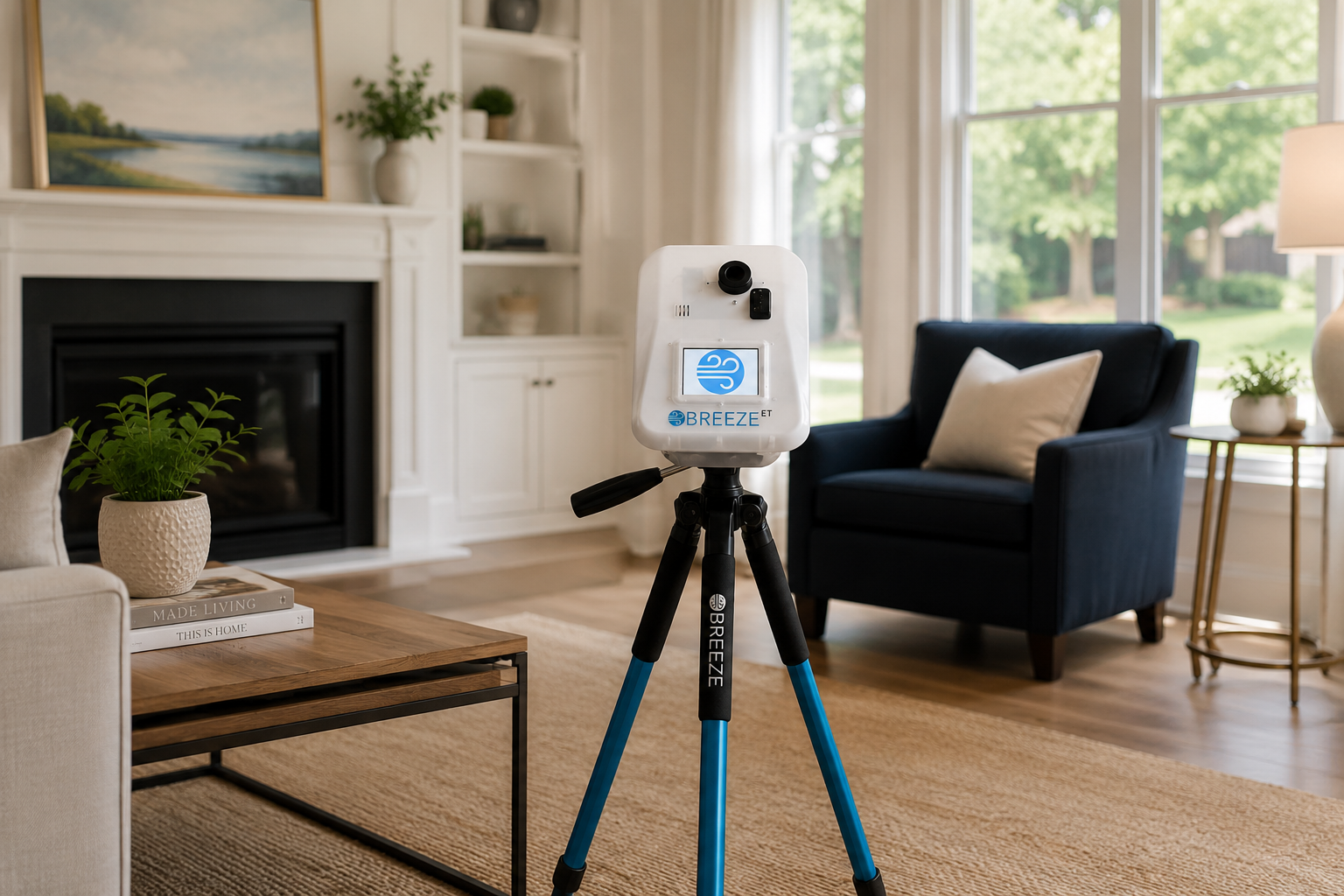
Homeowners spend a significant amount of time indoors, yet many indoor environmental concerns are not visible.
Mold spores, volatile organic compounds, formaldehyde, radon, particulates, moisture conditions, and ventilation issues may all affect the indoor environment depending on the property.
Professional indoor air quality testing can provide objective information about specific concerns when the right testing method is selected.
Key point: Indoor air quality testing is not one universal test. The inspection and testing scope should be selected based on the property, reported concerns, and the specific information being requested.
What Is Indoor Air Quality Testing?
Indoor air quality testing is an evaluation of specific environmental conditions or pollutants inside a building.
Depending on the concern, an assessment may include:
- Mold air sampling
- Surface sampling
- VOC testing
- Formaldehyde testing
- Radon testing
- Particle identification
- Moisture readings
- Thermal imaging where applicable
- Evaluation of ventilation and building conditions
The goal is not to test for everything automatically, but to select the methods most relevant to the concern.
Why Indoor Air Quality Testing Matters
Many indoor environmental conditions cannot be identified through appearance alone.
A room may look clean while still having concerns related to:
You Cannot See Every Indoor Air Concern
Some indoor environmental concerns are obvious, while others are not.
Visible mold growth, water staining, or strong chemical odors may point to a specific issue, but many airborne pollutants cannot be identified simply by looking at the room.
Testing can provide measured or laboratory-based information when visual inspection alone cannot answer the question.
Mold and Indoor Air Quality
Mold spores naturally occur indoors and outdoors.
Indoor mold growth becomes a concern when sufficient moisture is available for fungal growth on building materials.
Potential moisture sources may include:
- Plumbing leaks
- Roof leaks
- Basement seepage
- Elevated humidity
- Condensation
- Flooding
- HVAC condensation
- Previous water damage
When mold is the primary concern, a professional mold inspection can evaluate accessible conditions before determining whether sampling may be appropriate.
When laboratory analysis is useful, mold testing may include air samples, tape lifts, swabs, or other targeted sampling methods.
VOC and Formaldehyde Testing
Indoor chemical concerns may arise after renovations or installation of new materials.
Potential sources may include:
- New flooring
- Cabinetry
- Furniture
- Paint
- Adhesives
- Cleaning products
- Spray foam
- Coatings and finishes
- Composite wood products
Persistent chemical odors may also lead homeowners to consider professional VOC and formaldehyde testing.
Radon Testing
Radon is a naturally occurring radioactive gas that can enter buildings through the soil beneath the foundation.
Because radon cannot be seen or smelled, testing is required to determine the indoor concentration.
Radon testing may be useful during a real estate transaction, after foundation changes, after basement finishing, or when a home has never been tested.
Moisture and Water Intrusion
Moisture conditions are closely connected to many indoor environmental concerns.
Water intrusion may affect drywall, plaster, flooring, insulation, wood framing, cabinetry, and other materials.
Where documentation is needed, moisture mapping and water intrusion documentation can help record moisture readings and affected locations.
When Should a Homeowner Consider Indoor Air Quality Testing?
Testing is most useful when there is a specific concern or question.
Examples may include:
- Persistent musty odors
- Persistent chemical odors
- Previous water damage
- Visible mold-like growth
- Recent renovations
- New flooring or cabinetry
- New furniture
- Spray foam installation
- Moisture or condensation concerns
- Radon concerns
- Suspected concealed mold
- A need for independent environmental documentation
What Happens During a Professional Indoor Air Quality Evaluation?
The process should begin with understanding the concern rather than automatically collecting random samples.
1. Property Review
The inspector discusses the reported concern, property history, recent renovations, water events, odors, visible conditions, and other relevant information.
2. Visual Inspection
Accessible areas may be evaluated for moisture, staining, visible mold-like growth, ventilation conditions, or other environmental indicators.
3. Measurements and Sampling
Testing may include moisture readings, thermal imaging, mold sampling, VOC sampling, formaldehyde sampling, radon measurement, or other appropriate methods depending on the concern.
4. Laboratory Analysis
When samples are collected, they are submitted for the appropriate analytical method based on the sample type.
5. Results and Documentation
Findings are reviewed alongside the inspection observations, measurements, and laboratory results applicable to the testing scope.
Indoor Air Quality After Renovations
Renovations can introduce new building materials and products into the indoor environment.
These may include:
- Flooring
- Cabinetry
- Paint
- Adhesives
- Insulation
- Furniture
- Coatings
- Spray foam
When persistent chemical odors or other concerns remain after renovation, targeted VOC or formaldehyde testing may provide additional information.
Indoor Air Quality After Water Damage
Water events can create conditions that affect both building materials and indoor environmental quality.
An evaluation may include visual observations, moisture readings, thermal imaging where applicable, and mold sampling when appropriate.
The exact testing scope depends on what occurred and what information is needed.
Can Indoor Air Quality Testing Diagnose Health Problems?
No.
Indoor environmental testing evaluates the property and collected samples.
It does not diagnose medical conditions or determine whether a particular environmental result caused a person's symptoms.
Health concerns: Anyone experiencing medical symptoms should discuss those concerns with an appropriate healthcare professional. Environmental testing provides information about the property, not a medical diagnosis.
Do You Need Indoor Air Quality Testing Every Year?
There is no universal schedule that applies to every home.
Testing is generally more useful when there is a defined reason, such as:
- A water event
- Persistent odors
- Recent renovation
- New materials
- Suspected mold
- Radon concerns
- Other specific indoor environmental questions
A targeted approach helps ensure that the testing performed is capable of answering the homeowner's actual question.
Can Air Purifiers Improve Indoor Air Quality?
Air-cleaning performance depends on the pollutant and technology being used.
HEPA filters are primarily designed to capture particles.
Activated carbon and other gas-phase media may help adsorb certain chemical compounds, but performance varies based on the amount of media, airflow, contaminant type, concentration, and replacement interval.
Air filtration should be considered alongside source control, ventilation, and correction of moisture or building conditions where applicable.
Why Local Building Conditions Matter
Massachusetts and New Hampshire homes experience seasonal conditions that can affect the indoor environment.
Common regional factors include:
- Cold-weather condensation
- Seasonal humidity
- Basement moisture
- Ice dams
- Roof leaks
- Older plumbing
- Foundation seepage
- Storm-related water intrusion
Older housing stock and tightly closed winter conditions can also influence how indoor environmental concerns develop.
Indoor Air Quality Testing in Massachusetts & New Hampshire
Elite Home & Mold Inspections provides independent indoor air quality testing for residential, multifamily, and commercial properties throughout Massachusetts and New Hampshire.
Services may include mold inspection and testing, VOC and formaldehyde testing, particle identification, radon testing, moisture evaluation, and other targeted environmental testing based on the concern.
We are family-owned and operated with over 30 years of combined experience in the construction and environmental industries.
We do not perform mold remediation or asbestos abatement.
Learn more about our indoor air quality testing services or our broader environmental testing services.
Frequently Asked Questions About Indoor Air Quality Testing
What is indoor air quality testing?
Indoor air quality testing evaluates specific pollutants or environmental conditions using inspection, measurements, sampling, and laboratory analysis where appropriate.
What can indoor air quality testing include?
Depending on the concern, testing may include mold sampling, VOC testing, formaldehyde testing, radon testing, particle identification, moisture evaluation, and review of building or ventilation conditions.
Does every indoor air quality inspection require laboratory testing?
No. The scope depends on the concern. Some evaluations may rely on inspection and measurements, while others require laboratory sampling.
Can indoor air quality testing find hidden mold?
Testing alone does not necessarily identify the physical location of concealed mold. Inspection, moisture evaluation, building history, and targeted sampling may all provide useful information.
Should I test after a renovation?
Testing may be useful when persistent chemical odors, new materials, spray foam, flooring, cabinetry, paint, or other renovation-related concerns remain.
Do you provide indoor air quality testing in Massachusetts and New Hampshire?
Yes. Elite Home & Mold Inspections provides independent indoor air quality testing throughout Massachusetts and New Hampshire, including Boston and Greater Boston.
Concerned About the Air Inside Your Home?
Elite Home & Mold Inspections provides independent indoor air quality testing, mold testing, VOC and formaldehyde testing, radon testing, and moisture evaluation throughout Massachusetts and New Hampshire.
Serving Massachusetts & New Hampshire