

Mold Testing in Massachusetts & New Hampshire
Professional mold testing can help identify whether mold spores or suspected microbial growth are present in a home or building. We provide independent mold testing using laboratory analysis, with testing available as a standalone service or as part of a comprehensive mold inspection.
- 500+ Five-Star Reviews
- 30+ Years of Combined Industry Experience
- Family-Owned & Operated
- Licensed, Certified & Fully Insured
Objective Mold Testing You Can Trust
Independent mold testing with clear, unbiased laboratory results. We do not perform mold remediation, helping avoid conflicts of interest.
Independent Mold Testing & Laboratory Analysis
Professional air and surface mold sampling with laboratory analysis for homes and properties throughout Massachusetts and New Hampshire.
Clear Results. No Remediation Conflict.
Receive straightforward mold testing results and documentation for property concerns, real estate transactions, and post-remediation verification.
Air & Surface Mold Testing
We offer air sampling, surface sampling, and laboratory analysis to help identify and document mold conditions when testing is appropriate.
Request an Inspection
Complete the form below and we will contact you shortly to confirm pricing, availability, and scheduling.
What Is Mold Testing?
Mold testing involves collecting air or surface samples to help identify and quantify mold spores present inside a home or building.
Testing may include:
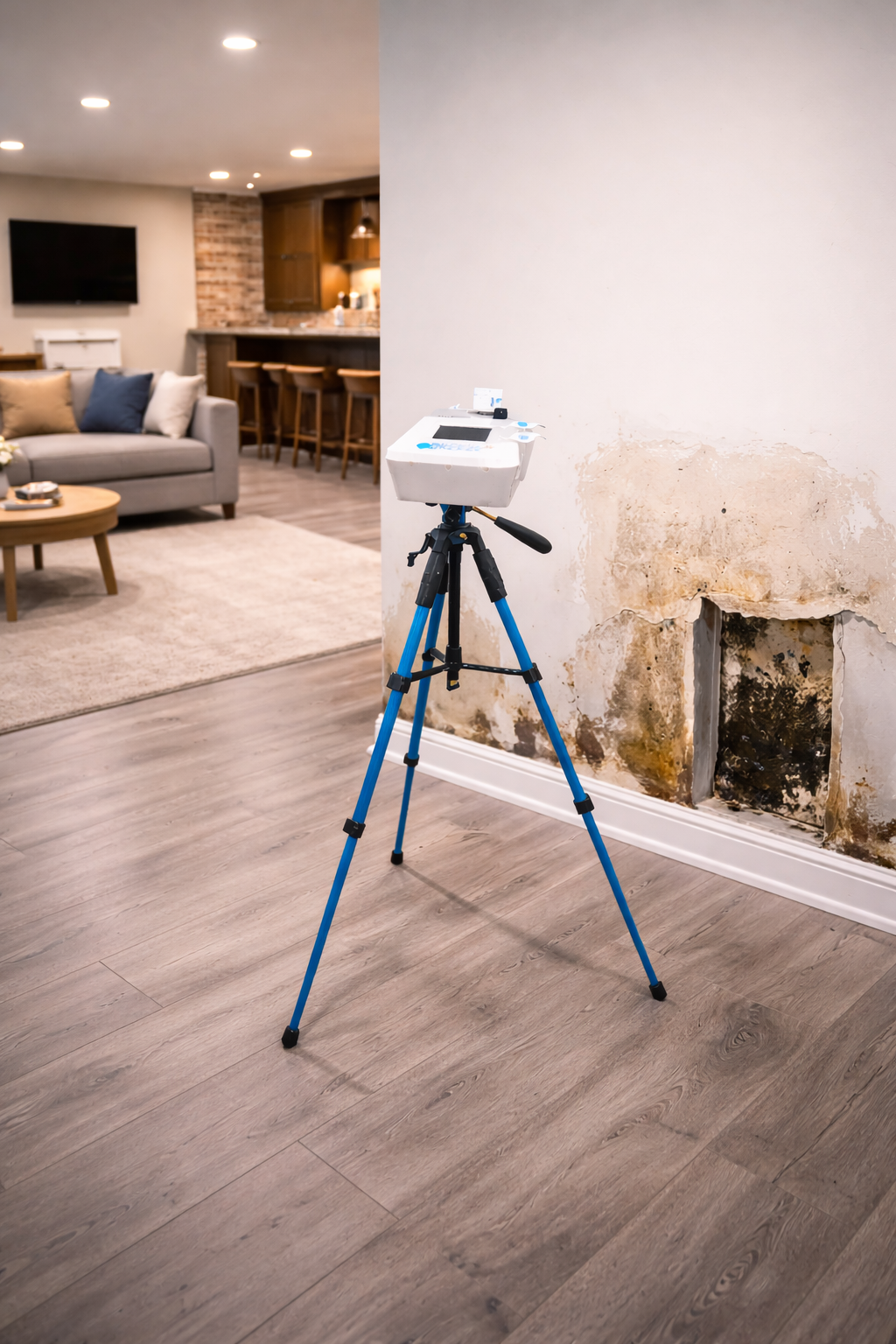
- Air sampling using calibrated pumps
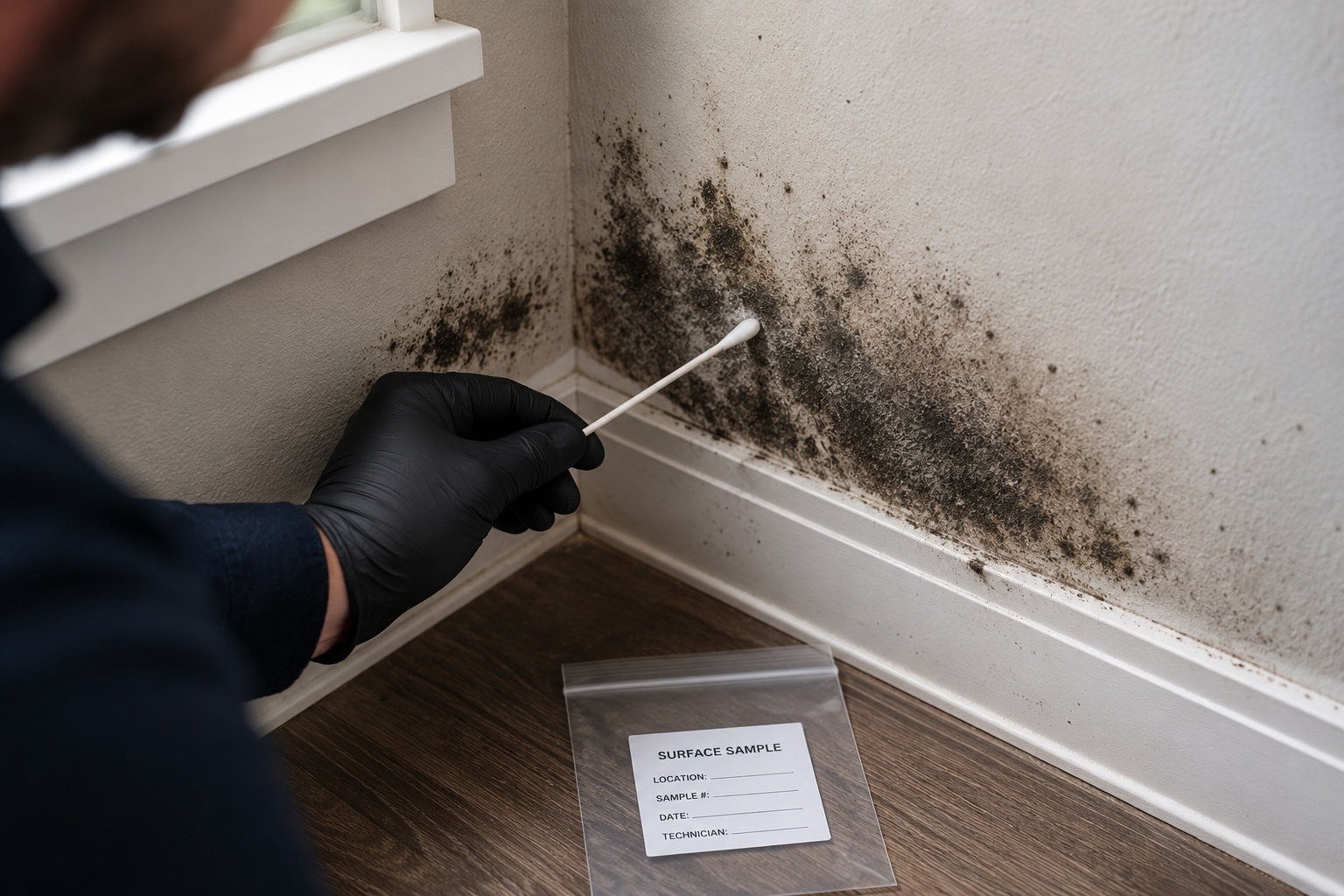
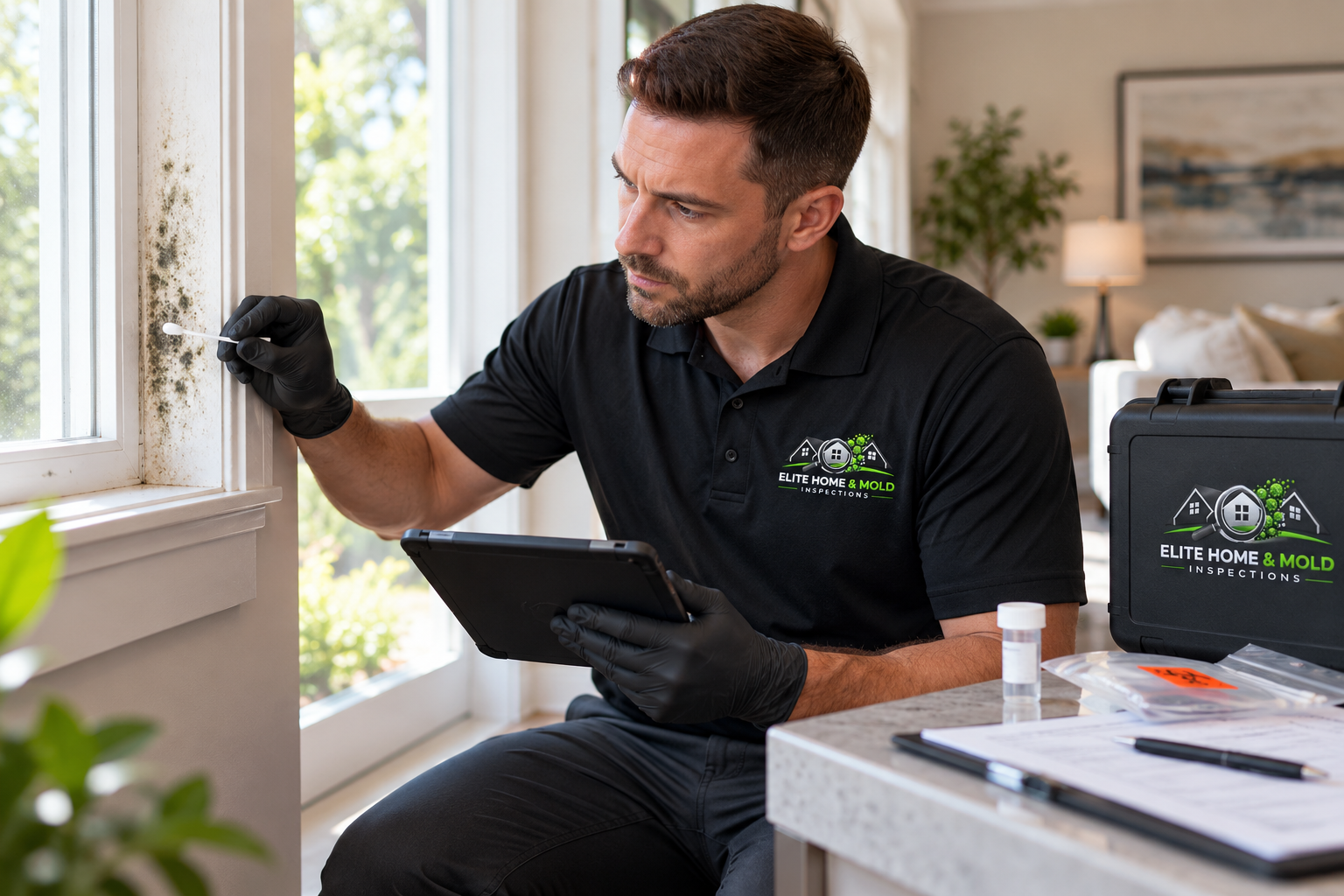
- Surface sampling using swabs or tape lifts
- Outdoor control samples for comparison
- Laboratory identification of mold types
- Spore count analysis
Laboratory results can help determine whether indoor mold spore levels are typical or elevated compared with outdoor conditions and can provide useful documentation when mold concerns are present.
500+ Five-Star Reviews from Massachusetts & New Hampshire Clients
Posted on Google![]()
Mike MTrustindex verifies that the original source of the review is Google.
Paul the owner was very detailed in his inspection process. I would 100% recommend themPosted on Google![]()
Susan LydonTrustindex verifies that the original source of the review is Google.
Evan was very easy to work with and clearly possesses a wealth of knowledge about home maintenance as well as potential issues that can arise!Posted on Google![]()
janet bejtlichTrustindex verifies that the original source of the review is Google.
Excellent experience with Elite Home and Mold inspection service. Abe was professional, extremely knowledgeable, and very informative throughout the entire process. He took the time to explain everything clearly and answered all of our questions with patience and honesty. We left feeling much more informed and at ease. Thank you! Highly recommend!Posted on Google![]()
Andrew HuynhTrustindex verifies that the original source of the review is Google.
Evan is a great guy. Was patient with my questions. Was very thorough with the inspection, explanations, and testing. He made sure I understand what was going on and know the potential consequences that could result. Very quick and efficient with time.Posted on Google![]()
Chris UnisTrustindex verifies that the original source of the review is Google.
Evan came by my house today. He was personable and took his time answering all my questions. He was knowledgeable, and we look forward to working with them to improve the air quality in my house.Posted on Google![]()
Julie ClarkTrustindex verifies that the original source of the review is Google.
Great experience and super helpful!
Mold Testing as Part of a Professional Mold Inspection
Mold testing is most effective when it is guided by a thorough inspection of the property and the conditions contributing to moisture or mold growth.
During a professional mold inspection, we may evaluate:
- Moisture intrusion and water-damage concerns
- Attic ventilation and condensation
- Basement and crawlspace humidity
- HVAC systems and airflow pathways
- Visible or suspected mold growth
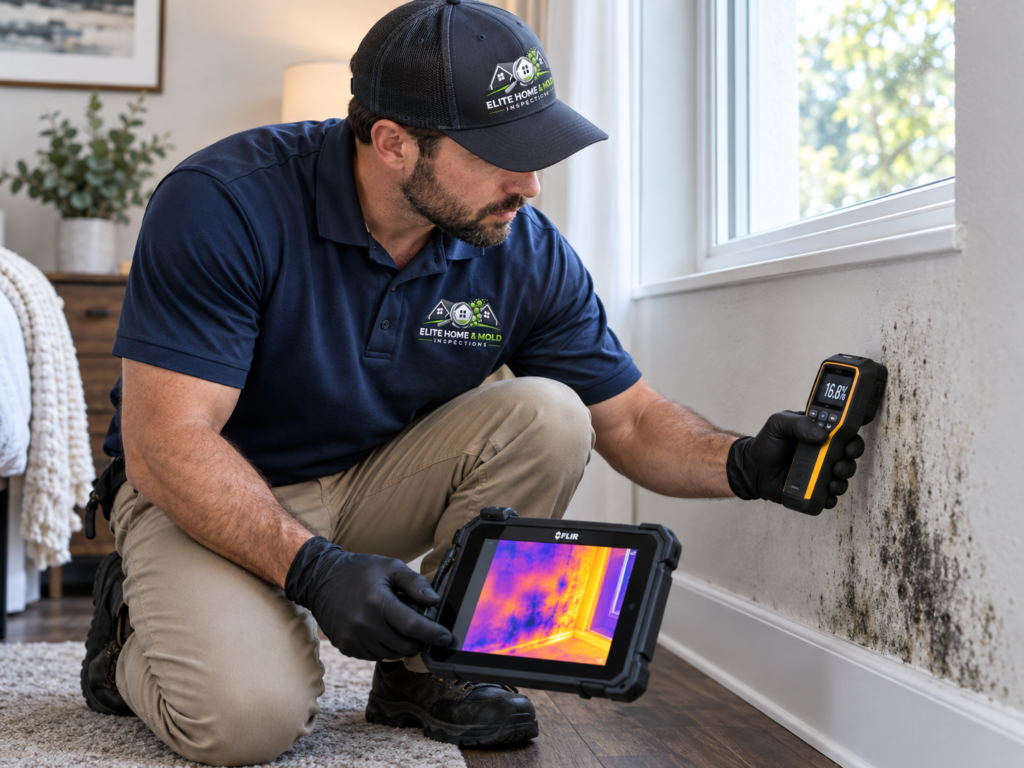
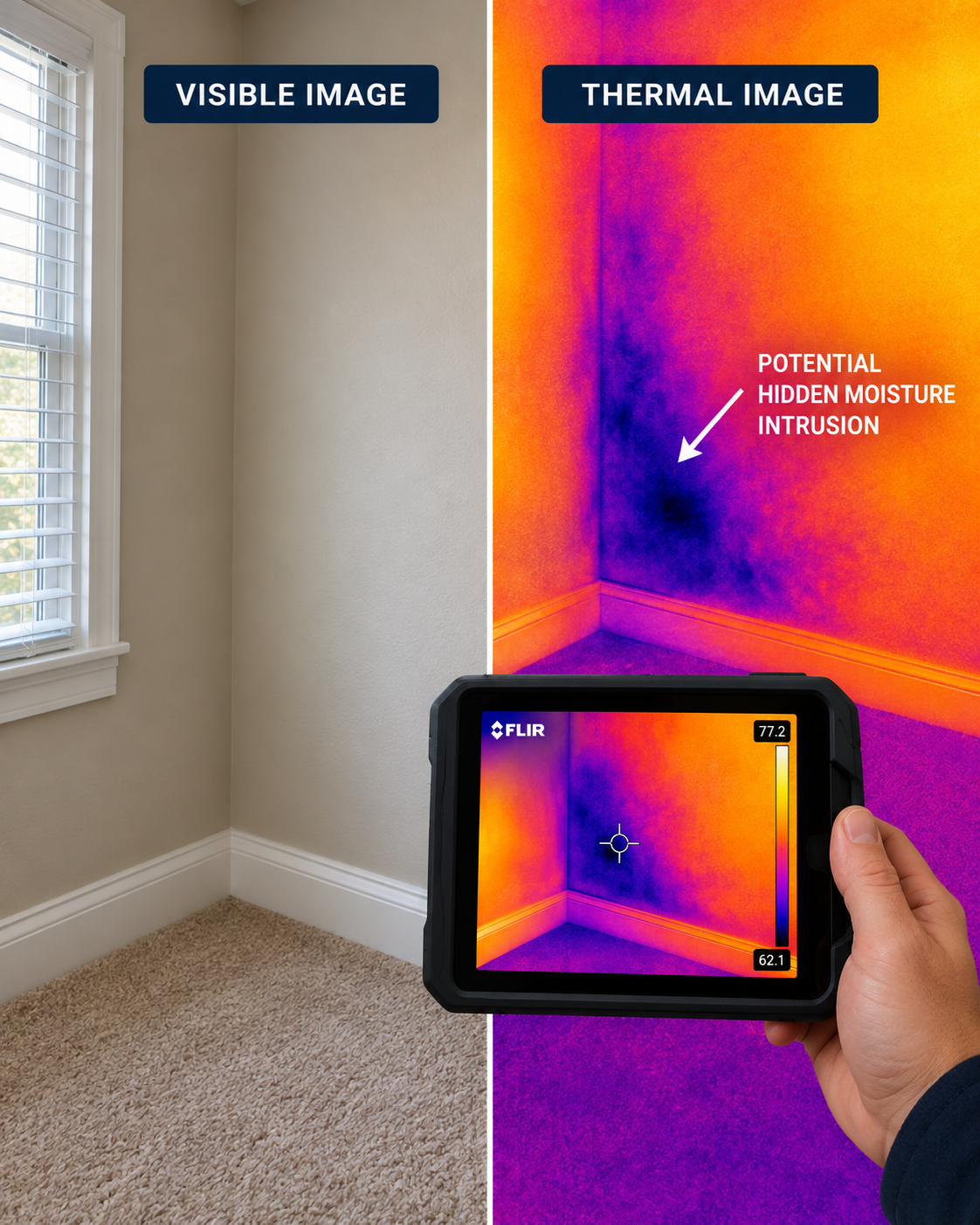
- Thermal imaging and moisture readings
Mold testing can then be used strategically to help confirm conditions, identify mold types, and document findings when laboratory analysis is appropriate.
When Is Standalone Mold Testing Appropriate?
Standalone mold testing may be appropriate when:
- Real estate transactions require documentation
- Post-remediation verification is needed
- A landlord or tenant requests independent laboratory data
- Musty odors are present without visible mold growth
- Insurance documentation is requested
In these situations, we can collect air or surface samples and provide clear laboratory results with professional interpretation.
Types of Mold Testing We Perform:
Air Mold Testing
Air mold testing measures airborne mold spore concentrations inside a home or building. Samples are collected using calibrated air sampling pumps and laboratory cassettes, then analyzed by an accredited laboratory.
Results can help compare indoor mold spore levels with outdoor baseline samples and provide useful information when evaluating suspected mold or indoor air quality concerns.
Air sampling is most useful when interpreted alongside moisture conditions, visible findings, HVAC operation, and other inspection data.
Common reasons for air mold testing include:
- Suspected hidden mold growth
- Persistent musty odors
- Recent water damage or flooding
- Indoor air quality concerns
- Real estate transactions
- Post-remediation verification
- Evaluating HVAC systems as a possible pathway for mold distribution
Surface Mold Testing
Surface mold testing is used to identify mold or suspected microbial growth on visible building materials and surfaces. Samples may be collected using swabs, tape lifts, or other surface sampling methods and analyzed by an accredited laboratory.
Surface sampling can help confirm whether discoloration or visible growth is mold and may provide additional information about the type of mold present.
Common reasons for surface mold testing include:
- Visible staining or suspected mold growth
- Material discoloration
- Confirming mold versus dirt, soot, or other contaminants
- Identifying the type of mold present
- Supporting remediation planning
- Documenting conditions for property transactions or insurance claims
- Verifying suspected microbial growth on building materials
Post-Remediation Verification (PRV) &
Mold Clearance Testing
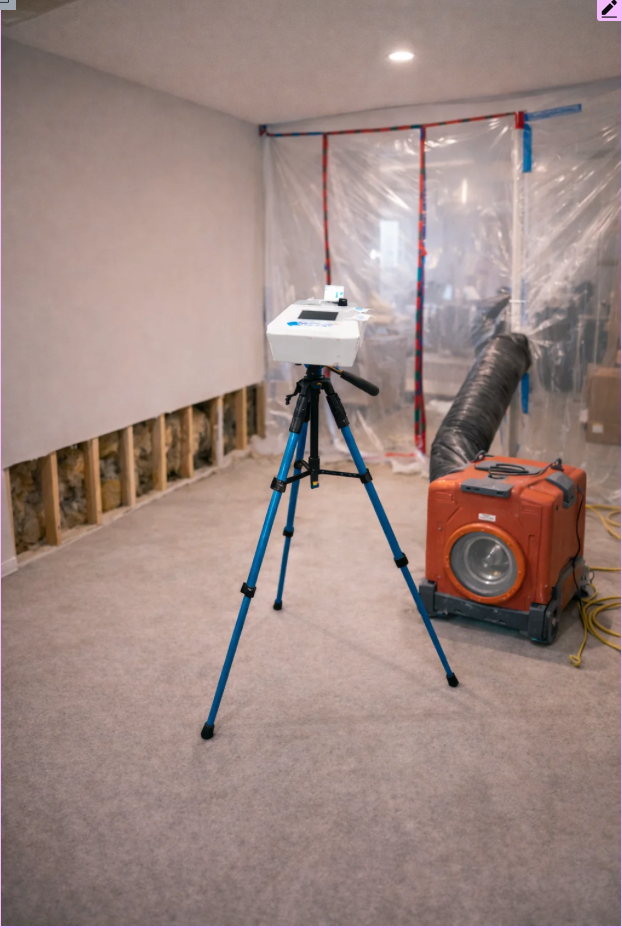
Post-remediation verification testing, also known as PRV testing or mold clearance testing, is performed after mold remediation to help determine whether the affected areas have been properly cleaned and whether remediation goals have been achieved.
We provide independent post-remediation mold testing throughout Massachusetts and New Hampshire for homeowners, property managers, buyers, contractors, and commercial properties. Because we do not perform mold remediation, our role is to provide objective third-party testing without a remediation conflict of interest.
PRV testing may include a visual assessment of the remediated area, moisture evaluation, air sampling, surface sampling, and laboratory analysis depending on the scope of work and project requirements.
Common reasons for post-remediation verification testing include:
- Mold clearance testing after remediation
- Verification that remediation work was completed successfully
- Air testing after mold remediation
- Surface testing after mold remediation
- Clearance testing before reconstruction begins
- Confirmation that moisture conditions have been addressed
- Independent documentation for homeowners, buyers, tenants, or contractors
- Third-party verification for real estate or insurance-related projects
Post-remediation testing can help provide clear documentation of conditions after remediation and determine whether additional cleaning, correction, or testing may be necessary before reconstruction or reoccupancy.
If you need independent mold clearance testing or post-remediation verification in Massachusetts or New Hampshire, we can evaluate the project and recommend the appropriate testing approach based on the remediation scope and conditions observed.
ERMI Mold Testing in Massachusetts &
New Hampshire
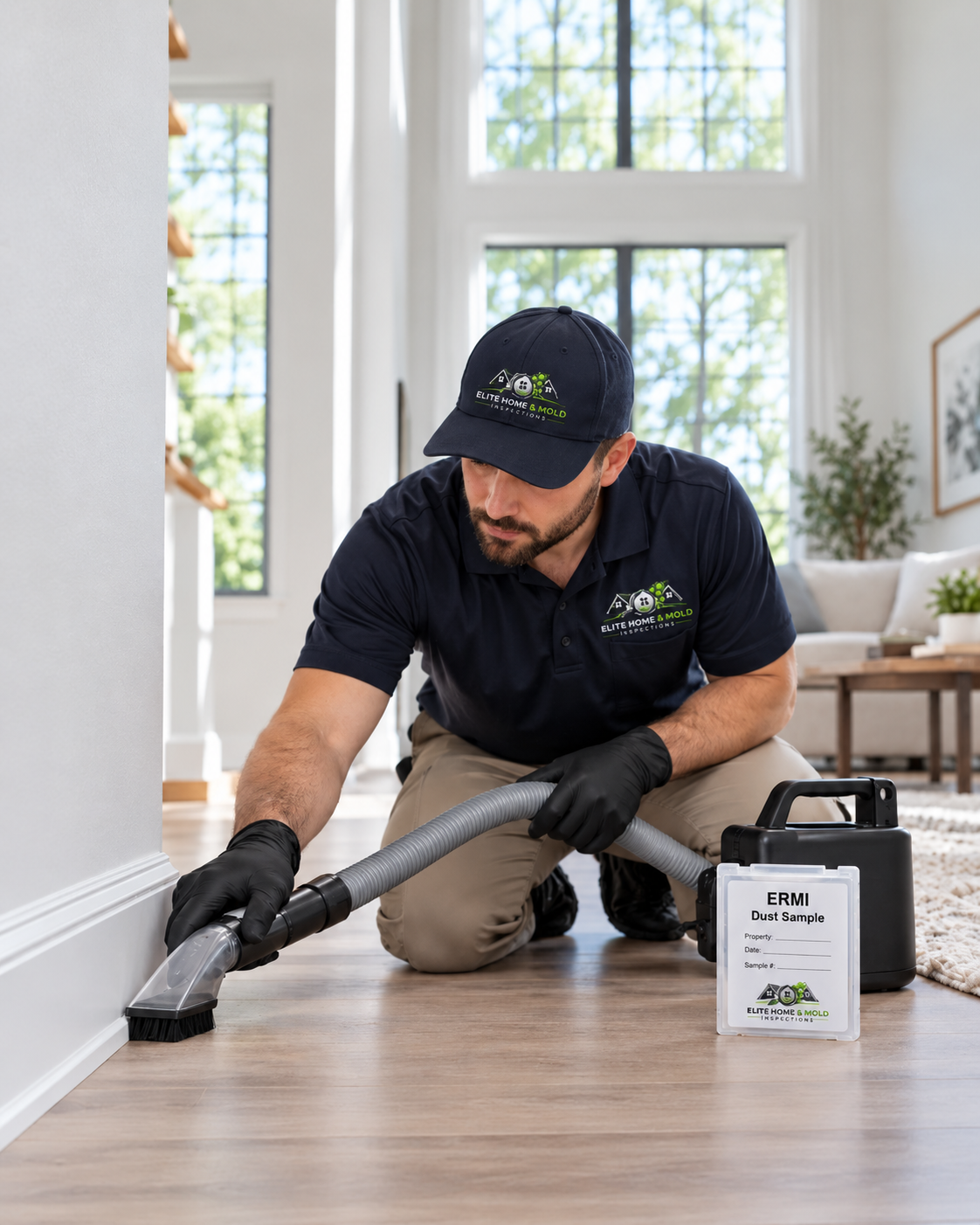
ERMI mold testing, or Environmental Relative Moldiness Index testing, uses dust samples and DNA-based laboratory analysis to evaluate specific mold species that may be associated with water-damaged buildings.
We provide ERMI testing throughout Massachusetts and New Hampshire for homeowners, buyers, property managers, and clients seeking more detailed environmental mold data. ERMI testing can be useful when there is a history of water damage, persistent mold concerns, or a need for additional laboratory documentation.
ERMI samples are typically collected from settled dust within the property and analyzed by a laboratory using DNA-based testing methods. The results identify and quantify specific mold species and generate an Environmental Relative Moldiness Index score that can help provide additional context about the mold profile of the property.
Common reasons for ERMI mold testing include:
- Homes with a history of water damage or moisture intrusion
- Persistent mold concerns with limited visible growth
- Long-term mold or indoor environmental investigations
- Real estate due diligence and property evaluations
- Detailed mold species identification
- Additional environmental documentation for property owners or buyers
- Situations where standard air or surface testing may not provide enough information
ERMI testing is best interpreted alongside building conditions, moisture history, visible findings, and other inspection data. An ERMI score should not be viewed by itself as a complete diagnosis of a property.
If you need ERMI mold testing in Massachusetts or New Hampshire, we can help determine whether ERMI testing is appropriate for your property and explain how the laboratory results should be interpreted.
MVOC Testing in Massachusetts & New Hampshire
Microbial Volatile Organic Compound (MVOC) testing evaluates airborne volatile compounds that may be associated with microbial activity inside a home or building. MVOC testing may be considered when persistent musty or mold-like odors are present but the source has not been identified through visual inspection or conventional mold testing.
We provide MVOC testing throughout Massachusetts and New Hampshire as part of indoor environmental and mold investigations. Air samples are collected and submitted for laboratory analysis to evaluate compounds that may be associated with microbial growth.
MVOC testing may be useful when:
- Persistent musty odors are present with no visible mold growth
- The source of an indoor odor has not been identified
- There is a history of water damage or moisture intrusion
- Hidden microbial growth is suspected
- Additional laboratory data is needed during a mold investigation
- Indoor environmental conditions require further evaluation
MVOC results must be interpreted carefully because volatile compounds can also originate from building materials, furnishings, cleaning products, adhesives, and other non-microbial sources. For this reason, MVOC testing is most useful when evaluated alongside moisture conditions, building history, inspection findings, and other laboratory testing.
If you need MVOC testing in Massachusetts or New Hampshire, we can help determine whether this type of testing is appropriate for the conditions present in your property.
Understanding Mold Testing Results
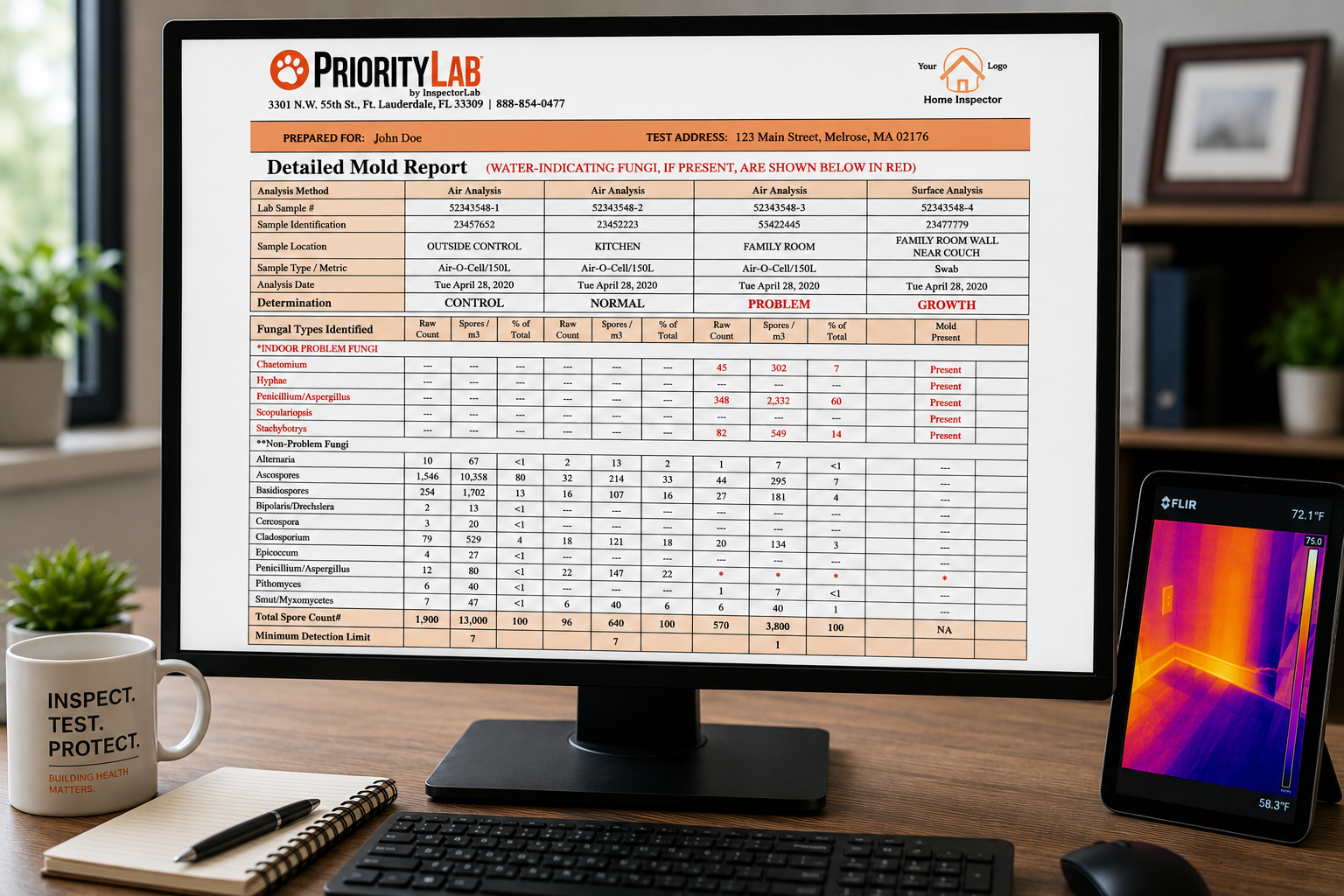
Laboratory mold testing reports provide information about the types and concentrations of mold spores identified in a home or building. Results are most useful when reviewed alongside inspection findings, moisture conditions, ventilation, HVAC operation, and the overall history of the property.
Mold laboratory reports may include:
- Total mold spore counts
- Identification of mold genera
- Comparison with outdoor control samples
- Identification of water-damage indicator molds
- Relative concentrations of indoor and outdoor mold spores
Mold test results should not be interpreted by spore counts alone. Elevated levels may indicate a concern, but laboratory data by itself does not identify the moisture source, determine the full extent of hidden mold growth, or explain why the condition developed.
This is why mold testing is most effective when combined with a professional mold inspection. Evaluating moisture intrusion, humidity, ventilation, HVAC systems, and building conditions helps place laboratory findings into context and supports more accurate recommendations.
Our Mold Inspection & Testing Process
Consultation & Property Evaluation
We review your concerns, property history, moisture conditions, musty odors, visible growth, and areas of interest to determine the most appropriate mold inspection and testing approach.
Mold Sampling & Building Evaluation
Air, surface, or other mold samples are collected when appropriate. We also evaluate moisture conditions, ventilation, HVAC operation, and visible building conditions that may contribute to mold growth.
Accredited Laboratory Analysis
Samples are submitted to an accredited environmental laboratory for analysis to identify mold types, spore concentrations, and other relevant laboratory findings.
Results & Recommendations
We review your mold testing results in the context of the inspection findings and provide clear explanations, documentation, and practical next-step recommendations.
Limitations of Mold Testing
Mold testing provides a snapshot of airborne or surface conditions at the time samples are collected. Mold spore concentrations can change based on weather, humidity, ventilation, HVAC operation, and activity within the building.
Air sampling can help identify elevated airborne mold levels, but it does not pinpoint the exact location of hidden mold growth. Surface sampling can confirm mold on a material, but it does not determine the full extent of contamination inside walls, ceilings, floors, or other concealed areas.
For these reasons, mold testing is most effective when combined with a professional mold inspection. Evaluating moisture intrusion, ventilation, humidity, HVAC systems, and overall building conditions helps place laboratory findings into proper context.
Key limitations of mold testing include:
- Results represent conditions at the time of sampling
- Mold spore levels can fluctuate over time
- Air testing does not locate hidden mold
- Surface testing does not determine the full extent of contamination
- Testing alone does not identify the source of moisture
- Laboratory results should be interpreted alongside inspection findings
Mold Testing in Massachusetts & New Hampshire Homes
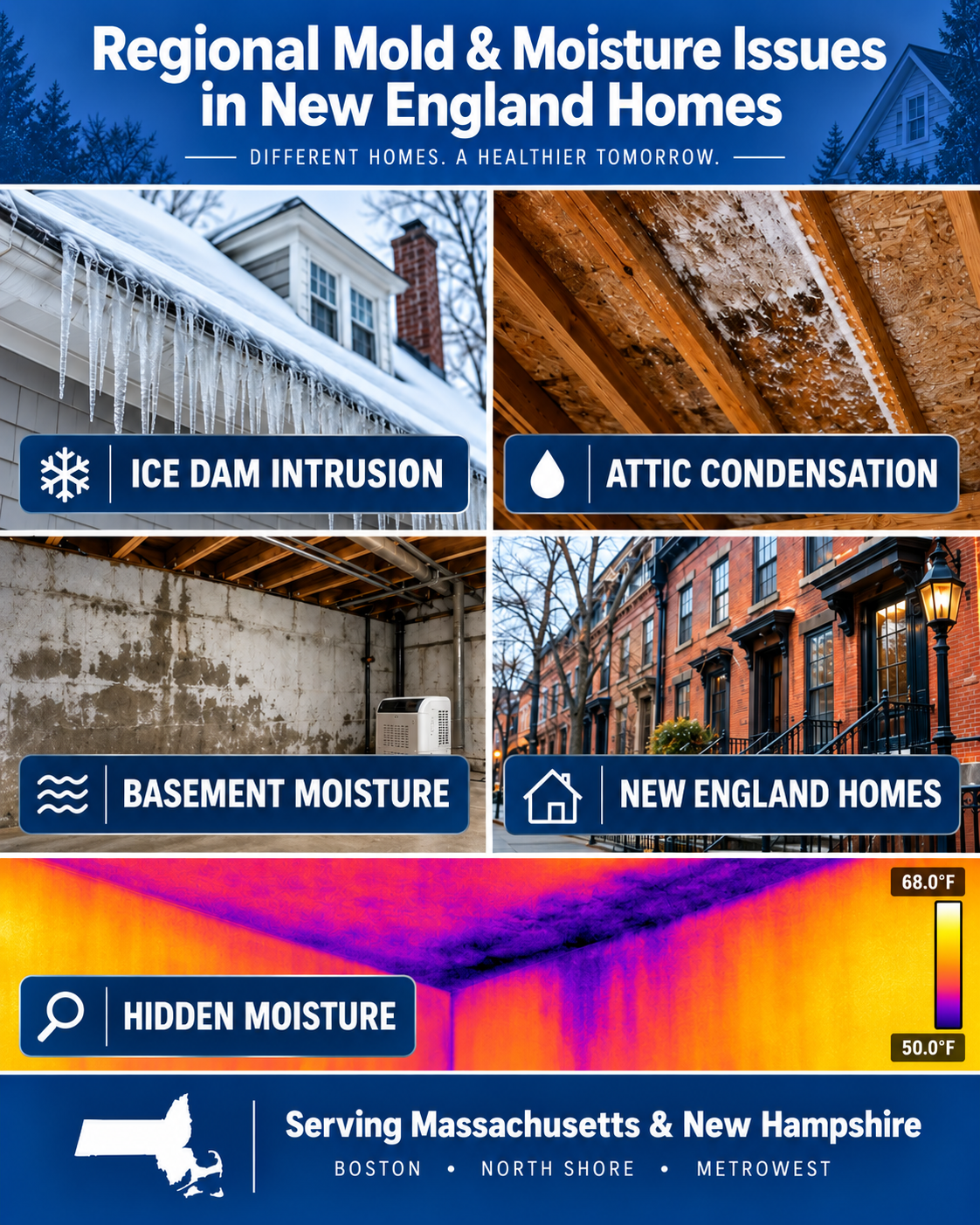
New England homes face environmental conditions that can contribute to moisture and mold growth, including:
- Cold-weather attic condensation
- Basement moisture and vapor migration
- Ice dam and roof leakage
- High indoor humidity
- Air leakage and ventilation deficiencies
- Hidden moisture within walls and building materials
From older Boston-area homes to properties throughout Massachusetts and New Hampshire, mold testing should be interpreted within the context of regional building conditions and moisture patterns.
We provide independent mold testing for homeowners, buyers, property managers, and real estate professionals throughout Massachusetts and New Hampshire. Our approach combines laboratory testing with moisture evaluation and building-science inspection findings to provide clearer, more useful information than laboratory data alone.
Why Choose Elite Home & Mold Inspections for Mold Testing?
- Independent testing with no remediation conflict
- Licensed and certified inspectors
- Building-science based evaluations
- Accredited laboratory analysis
- Clear interpretation of mold testing results
- 500+ five-star reviews
- Serving Massachusetts & New Hampshire
Mold testing is most valuable when results are interpreted alongside moisture conditions, building history, ventilation, and inspection findings. Our independent approach provides clear, practical information without remediation bias.
MASSACHUSETTS & NEW HAMPSHIRE
Service Areas
Mold Testing Throughout Massachusetts & New Hampshire
We provide professional mold testing, air sampling, surface sampling, and laboratory analysis for residential and commercial properties throughout Massachusetts and New Hampshire, including the following service areas:
Greater Boston
- Boston
- Cambridge
- Somerville
- Brookline
- Newton
- Medford
- Malden
- Arlington
- Belmont
- Watertown
- Quincy
- Milton
- Westwood
North Shore
- Melrose
- Wakefield
- Stoneham
- Reading
- North Reading
- Lynnfield
- Peabody
- Salem
- Marblehead
- Swampscott
- Beverly
- Danvers
- Hamilton
- Wenham
- Topsfield
- Manchester-by-the-Sea
- Gloucester
- Ipswich
- Newburyport
MetroWest
- Wellesley
- Weston
- Needham
- Dover
- Sherborn
- Wayland
- Sudbury
- Concord
- Lincoln
- Natick
- Framingham
- Acton
- Westborough
- Southborough
- Hopkinton
- Ashland
North of Boston
- Lexington
- Winchester
- Woburn
- Burlington
- Wilmington
- Tewksbury
- Andover
- North Andover
- Billerica
- Chelmsford
- Westford
New Hampshire
- Manchester
- Nashua
- Salem
- Windham
- Londonderry
- Derry
- Bedford
- Merrimack
- Hudson
- Atkinson
- Pelham
- Hollis
- Amherst
- Exeter
- Portsmouth
Lakes Region & Central New Hampshire
- Concord
- Hooksett
- Wolfeboro
- Meredith
- Moultonborough
- Center Harbor
- Tuftonboro
- Alton
- Gilford
- Laconia
- Holderness
- New Hampton
- Ossipee
- North Conway
Mold Testing FAQs for Massachusetts & New Hampshire
Is mold testing necessary if I already see mold?
Not always. If visible mold growth is present, identifying and correcting the underlying moisture source is often more important than laboratory confirmation. Mold testing may still be useful when documentation, species identification, or post-remediation verification is needed.
Can mold testing detect hidden mold?
Air mold testing may reveal elevated or unusual spore concentrations that suggest hidden mold growth. However, testing alone cannot pinpoint the exact location of hidden mold. Moisture testing, thermal imaging, and a professional mold inspection are often needed to investigate the source.
What is considered a high mold spore count?
There is no single mold spore count that is considered high in every situation. Results are interpreted by comparing indoor samples with outdoor control samples, evaluating the types of mold present, and considering the building’s moisture and inspection conditions.
Does insurance require mold testing?
Some insurance companies may request mold testing, laboratory reports, or post-remediation clearance documentation as part of a claim. Requirements vary by insurance carrier, policy, and the circumstances of the loss.
Is mold testing required before buying a home?
Mold testing is generally not required before purchasing a home, but many buyers choose independent mold testing when there is visible staining, musty odor, previous water damage, elevated moisture, or other concerns.
Can new construction or spray foam insulation affect mold testing results?
Newer and tightly constructed homes can experience elevated humidity or limited air movement when ventilation and moisture control are inadequate. Spray foam insulation and other building systems can also change how moisture and air move through a structure. Mold testing should therefore be interpreted alongside ventilation, humidity, moisture readings, and building conditions.
Schedule Professional Mold Testing in Massachusetts & New Hampshire
If you need independent mold testing in Massachusetts or New Hampshire, we provide professional sampling, accredited laboratory analysis, and clear interpretation of results. Our inspection-first approach places laboratory findings in the context of the building, helping provide practical answers instead of test results alone.
- 🛡️ Licensed & Certified Inspectors
- ✅ Independent Mold Testing
- 🔬 Accredited Laboratory Analysis
- 📋 Fully Insured
- ⭐ 500+ Five-Star Reviews