Independent Indoor Air Quality Testing in Massachusetts &
New Hampshire
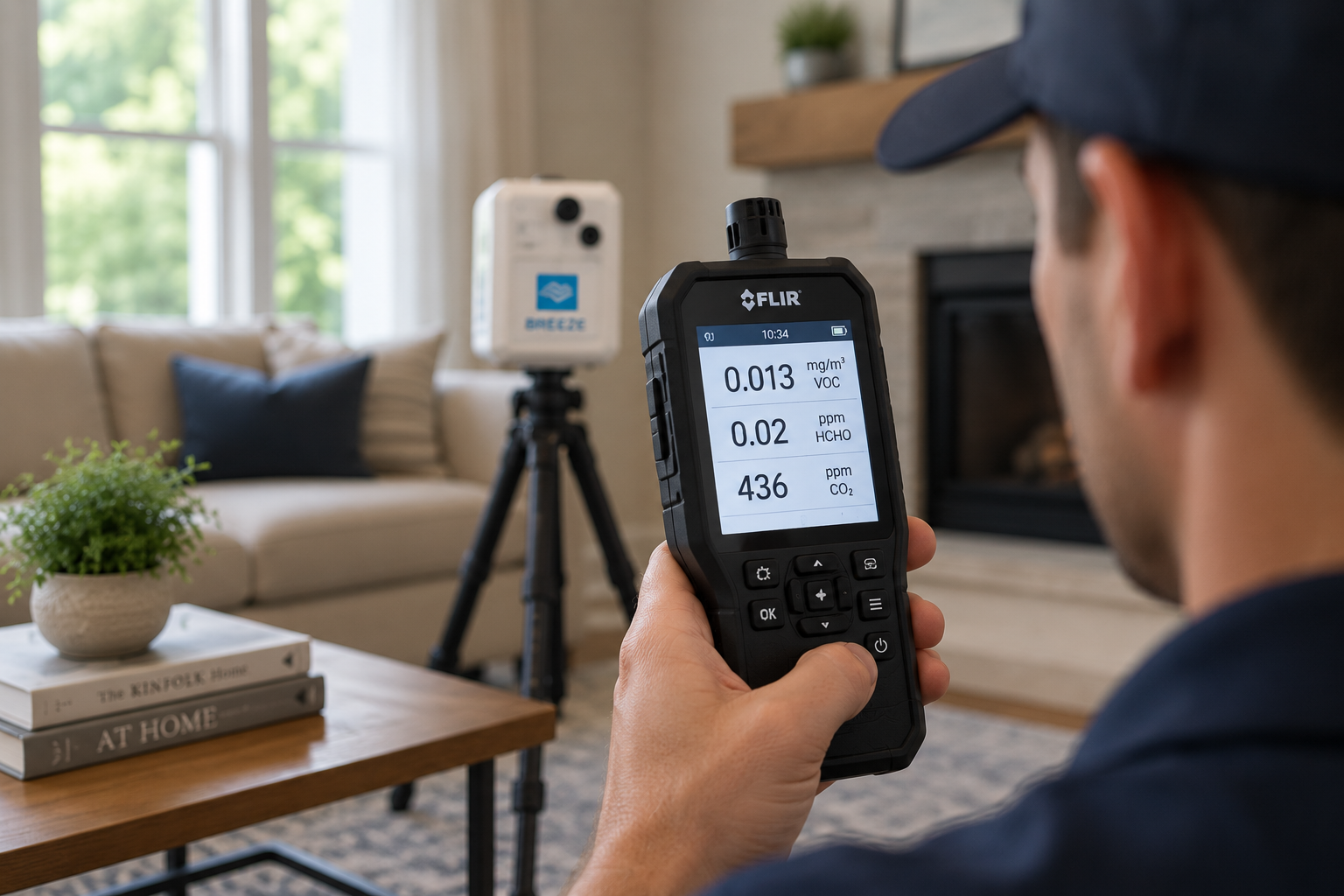
We provide independent, science-based indoor air quality testing throughout Massachusetts and New Hampshire. We are not tied to remediation services — our role is to deliver objective findings, clear documentation, and practical next steps based strictly on measured data.
- 500+ Five-Star Reviews
- 30+ Years of Combined Industry Experience
- Family-Owned & Operated
- Licensed, Certified & Fully Insured
Independent Indoor Air Quality Testing
Objective testing and building-science-based evaluations for mold, VOCs, formaldehyde, allergens, particulates, and other indoor environmental concerns.
Data-Driven Results, Not Guesswork
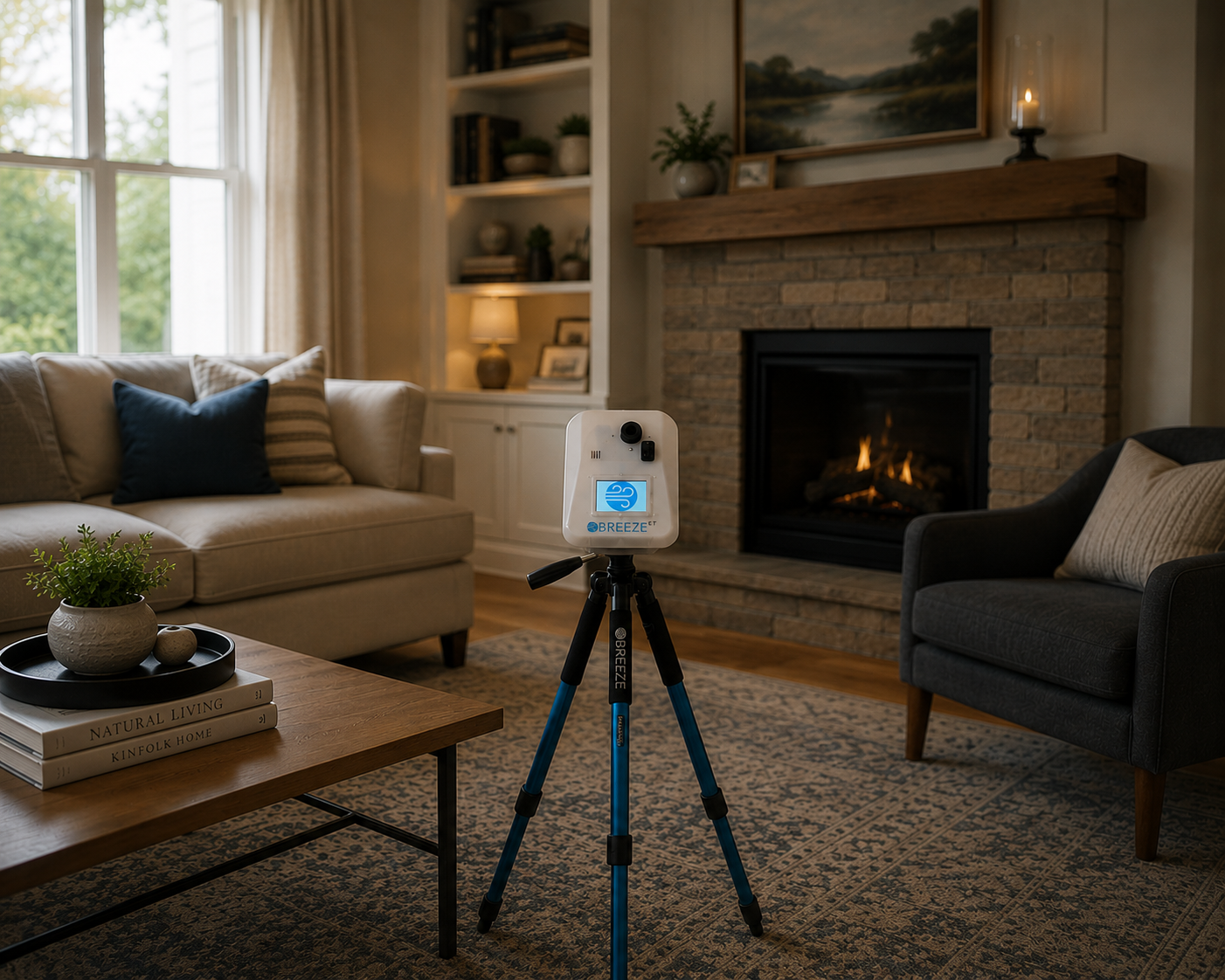
Professional sampling, calibrated equipment, and laboratory analysis provide measurable data to help identify potential indoor air quality concerns.
No Remediation Sales Pressure
We do not perform remediation or profit from remediation recommendations. Our role is to provide independent findings and practical next steps.
Detailed Reports & Expert Consultation
Receive clear documentation, laboratory results when applicable, and guidance from experienced inspectors with 30+ years of combined industry experience.
Request Indoor Air Quality Testing
Complete the form below and we’ll contact you to discuss your concerns, explain testing options, provide pricing, and answer any questions before scheduling.
INDOOR AIR QUALITY TESTING
What Is Indoor Air Quality Testing?
Indoor air quality testing evaluates airborne contaminants and environmental conditions that may affect comfort, odors, and overall indoor air quality. Testing can help identify potential concerns and provide objective data to guide next steps.
✓
Mold & Airborne Spores
Air sampling and targeted mold testing when appropriate.
✓
VOC Testing
Evaluation for volatile organic compounds from building materials and indoor sources.
✓
Formaldehyde
Targeted formaldehyde testing for indoor environmental concerns.
✓
Allergens & Particulates
Assessment of airborne particles and other indoor air quality concerns.
✓
Carbon Monoxide & CO₂
Evaluation of combustion and ventilation-related conditions when applicable.
✓
Temperature, Humidity & Ventilation
Evaluation of indoor conditions that may contribute to comfort, moisture, and air quality concerns.
Professional Testing & Laboratory Analysis
Testing is performed using professional-grade equipment and, when applicable, accredited laboratory analysis. Results are evaluated in the context of the building, occupant concerns, and recognized environmental guidelines.
500+ Five-Star Reviews for Indoor Air Quality & Environmental Inspections
Posted on Google![]()
Mike MTrustindex verifies that the original source of the review is Google.
Paul the owner was very detailed in his inspection process. I would 100% recommend themPosted on Google![]()
Susan LydonTrustindex verifies that the original source of the review is Google.
Evan was very easy to work with and clearly possesses a wealth of knowledge about home maintenance as well as potential issues that can arise!Posted on Google![]()
janet bejtlichTrustindex verifies that the original source of the review is Google.
Excellent experience with Elite Home and Mold inspection service. Abe was professional, extremely knowledgeable, and very informative throughout the entire process. He took the time to explain everything clearly and answered all of our questions with patience and honesty. We left feeling much more informed and at ease. Thank you! Highly recommend!Posted on Google![]()
Andrew HuynhTrustindex verifies that the original source of the review is Google.
Evan is a great guy. Was patient with my questions. Was very thorough with the inspection, explanations, and testing. He made sure I understand what was going on and know the potential consequences that could result. Very quick and efficient with time.Posted on Google![]()
Chris UnisTrustindex verifies that the original source of the review is Google.
Evan came by my house today. He was personable and took his time answering all my questions. He was knowledgeable, and we look forward to working with them to improve the air quality in my house.Posted on Google![]()
Julie ClarkTrustindex verifies that the original source of the review is Google.
Great experience and super helpful!
COMMON IAQ CONCERNS
Common Indoor Air Quality Problems in Massachusetts & New Hampshire
Homes throughout Massachusetts and New Hampshire can experience indoor air quality concerns related to seasonal humidity, moisture intrusion, ventilation, building materials, and modern construction practices.
✓
Limited Air Exchange
Tight homes can reduce natural air exchange and trap indoor contaminants.
✓
Humidity & Seasonal Moisture
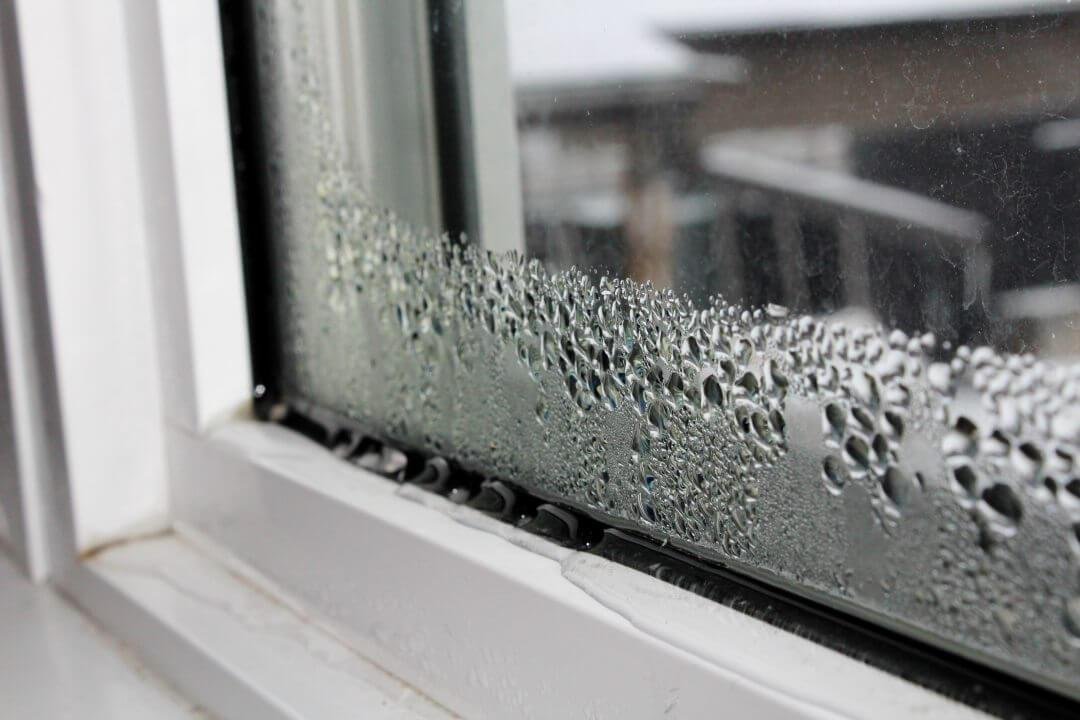
Elevated humidity can contribute to comfort and moisture concerns.
✓
Roof Leaks & Ice Dams
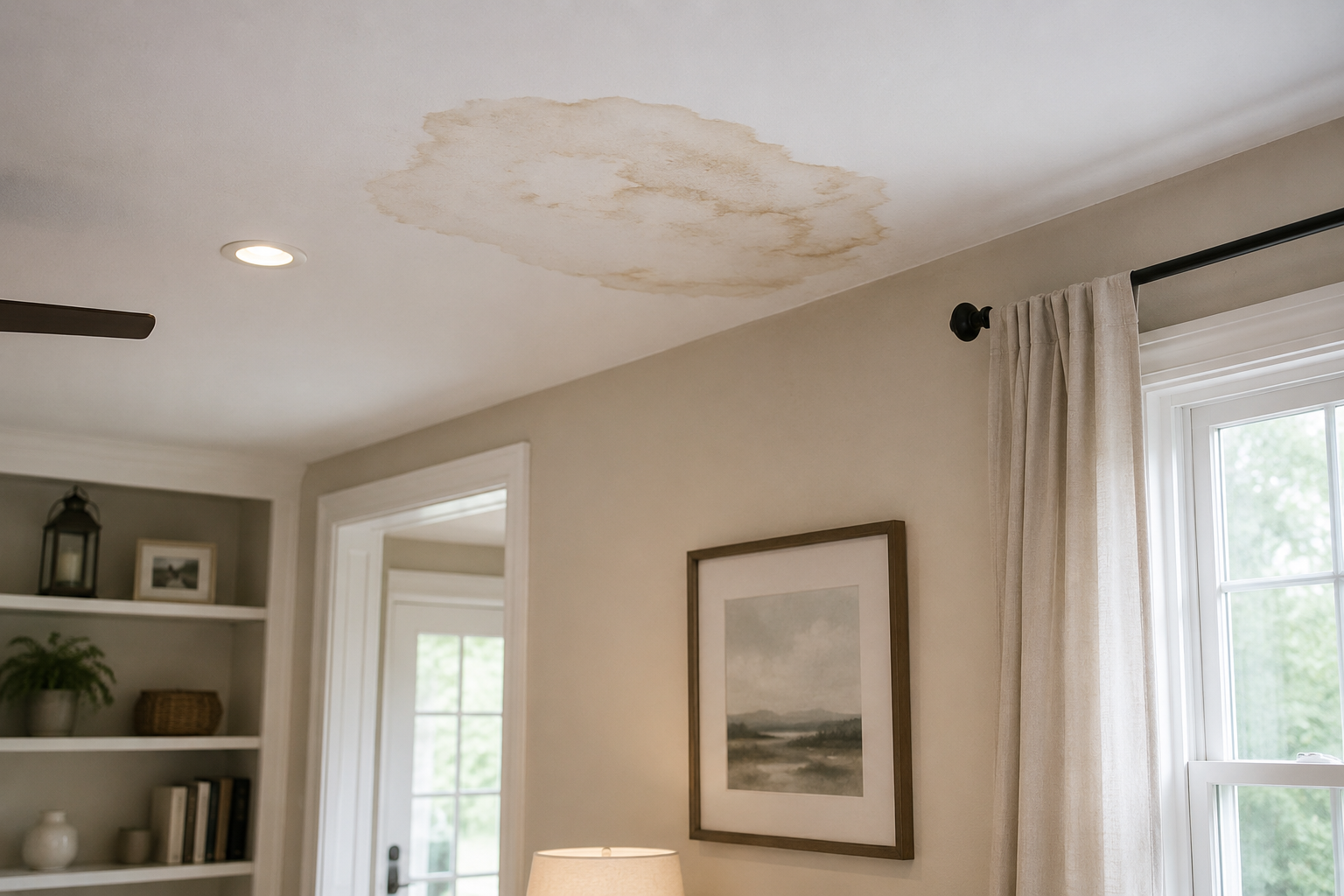
Water intrusion can create hidden moisture conditions.
✓
Poor Attic Ventilation
Insufficient ventilation can contribute to heat, humidity, and moisture buildup.
✓
Improper Exhaust Ventilation
Bath and kitchen exhaust systems may not adequately remove moisture and pollutants.
✓
Basement Moisture
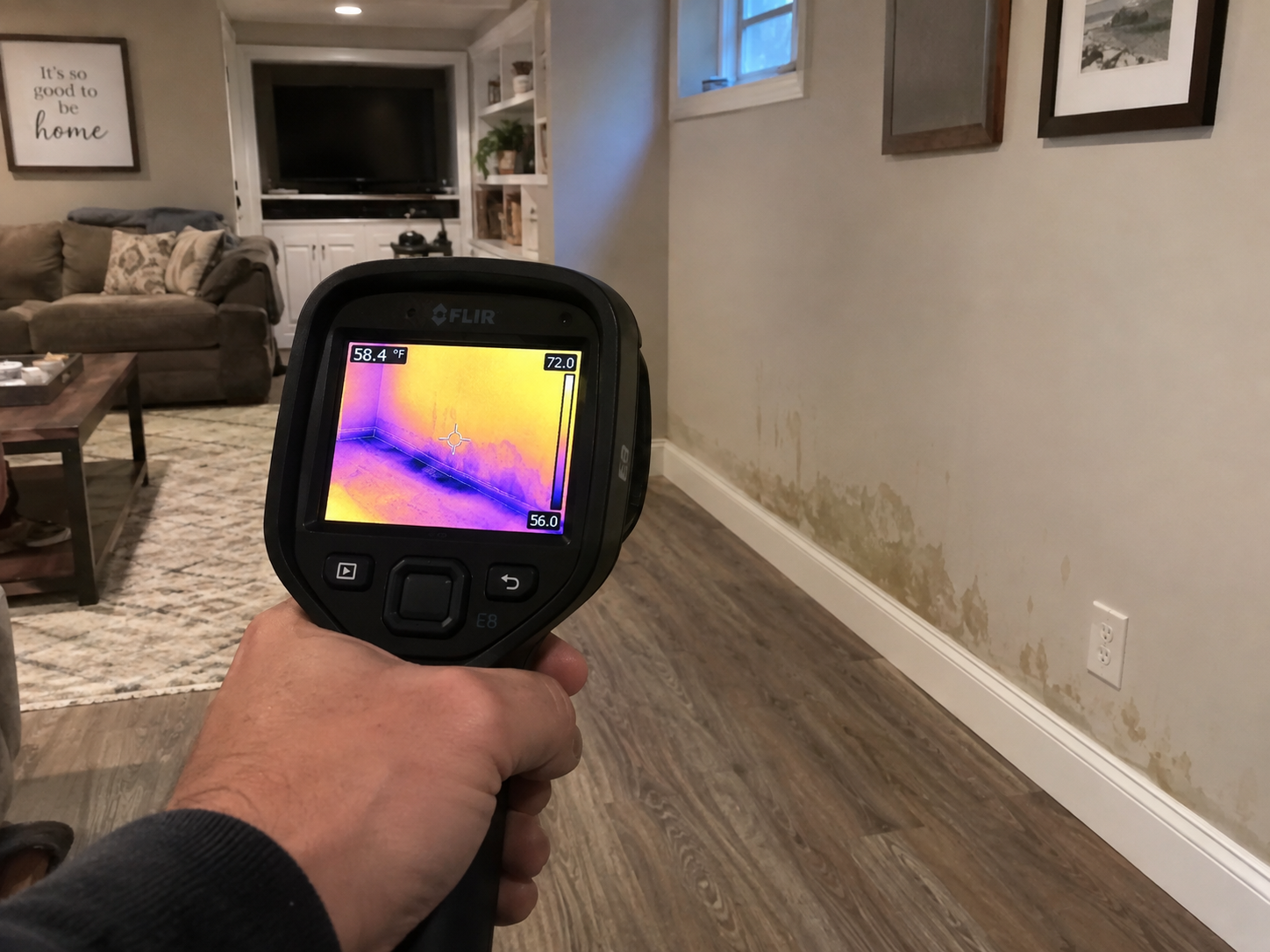
Foundation moisture and vapor migration can affect humidity and air quality.
✓
VOC Emissions
Flooring, cabinetry, furnishings, and coatings may release volatile organic compounds.
✓
Dust, Allergens & Particulates
Airborne particles from indoor and outdoor sources can affect overall air quality.
New England Homes Can Present Unique Conditions
From historic homes to modern high-performance construction, indoor air quality concerns can vary based on moisture, ventilation, occupant activities, and recent renovations. If active moisture intrusion, visible microbial growth, musty odors, or suspected mold are present, a professional mold inspection may also be appropriate.
WHEN TO CONSIDER TESTING
When Should You Consider Indoor Air Quality Testing?
Indoor air quality testing may be helpful when odors, moisture, recent renovations, ventilation concerns, or other changes affect the indoor environment.
✓
Persistent musty, chemical, or smoky odors
✓
Unexplained respiratory irritation or indoor discomfort
✓
Recent renovations, new flooring, cabinetry, or furnishings
✓
Water intrusion, leaks, elevated humidity, or moisture damage
✓
Concerns about mold, VOCs, particulates, or other indoor contaminants
✓
Ventilation, HVAC, or overall indoor comfort concerns
Objective Testing Provides Measurable Information
Testing can help identify indoor environmental concerns and provide clear data to support informed decisions and appropriate next steps.
TESTING + BUILDING SCIENCE
Testing Alone Doesn’t Tell the Whole Story
Indoor air quality testing provides objective measurements of specific airborne contaminants, but a complete evaluation also considers the building conditions that may be contributing to the problem.
✓
Ventilation & Fresh Air Exchange
We evaluate whether the property is receiving adequate fresh air and ventilation.
✓
HVAC Performance & Filtration
System operation, filtration, airflow, and related indoor air quality conditions are considered.
✓
Moisture & Humidity
Indoor humidity and moisture conditions can help explain recurring air quality concerns.
✓
Building Envelope Conditions
Air leakage, insulation, and building design can influence indoor environmental conditions.
✓
Combustion & Safety Concerns
Combustion appliances and related conditions may also be evaluated when appropriate.
Why Both Approaches Matter
Laboratory testing can identify airborne contaminants, while building science evaluation can help determine why those conditions may be occurring. When appropriate, both approaches are used together to provide a more complete understanding of the indoor environment.
WHAT WE TEST FOR
Indoor Air Quality Concerns We Test For
Indoor air quality concerns can come from many sources inside a home or building. Our testing and building science evaluations help identify measurable environmental conditions that may be contributing to poor indoor air quality.
✓
Mold Spores
Airborne mold spores and elevated mold-related conditions.
✓
VOC Exposure
Volatile organic compounds from materials, furnishings, cleaners, and renovations.
✓
Airborne Particulates
Fine particles including PM2.5, PM10, dust, and related airborne debris.
✓
Ventilation Concerns
Limited fresh air exchange, stale indoor air, and HVAC-related conditions.
✓
Combustion Pollutants
Conditions related to combustion appliances and indoor environmental safety.
✓
Allergens
Dust mites, pet dander, pollen, and other airborne allergen particles.
✓
Formaldehyde
Targeted testing for formaldehyde and other chemical contaminants.
✓
Moisture Conditions
Moisture and humidity conditions that may contribute to indoor air quality concerns.
Testing Is Tailored to the Property
Depending on the concern, testing may include air sampling, particulate measurements, VOC or formaldehyde testing, moisture evaluation, and review of ventilation or HVAC conditions.
Our Indoor Air Quality Testing Process
Initial Consultation
We discuss your concerns, property history, recent renovations, moisture events, odors, occupancy patterns, and other indoor air quality concerns.
Visual & Building Science Evaluation
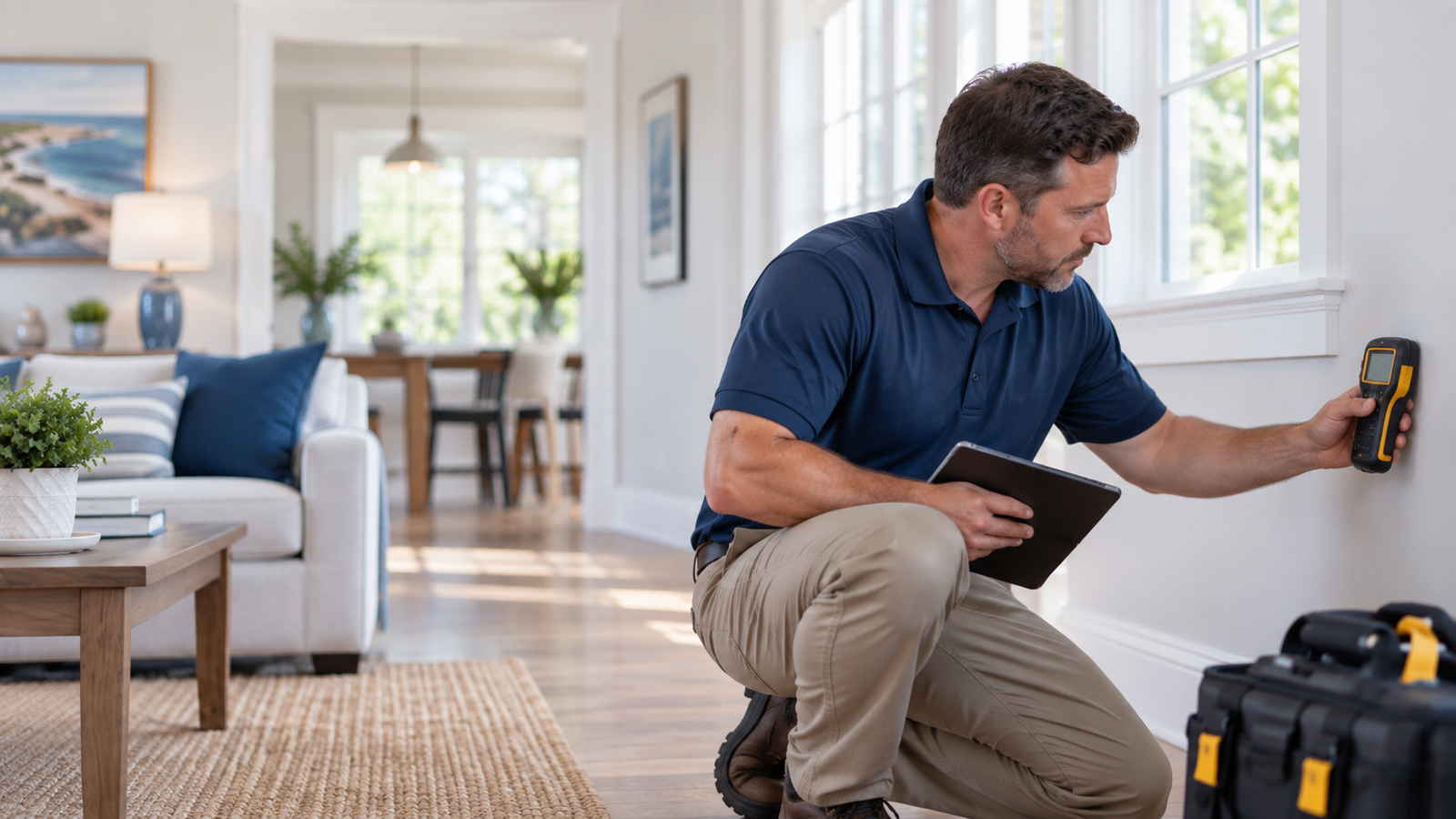
We evaluate accessible HVAC components, ventilation, attics, basements, crawl spaces, moisture conditions, combustion appliances, and other building factors that may affect indoor air quality.
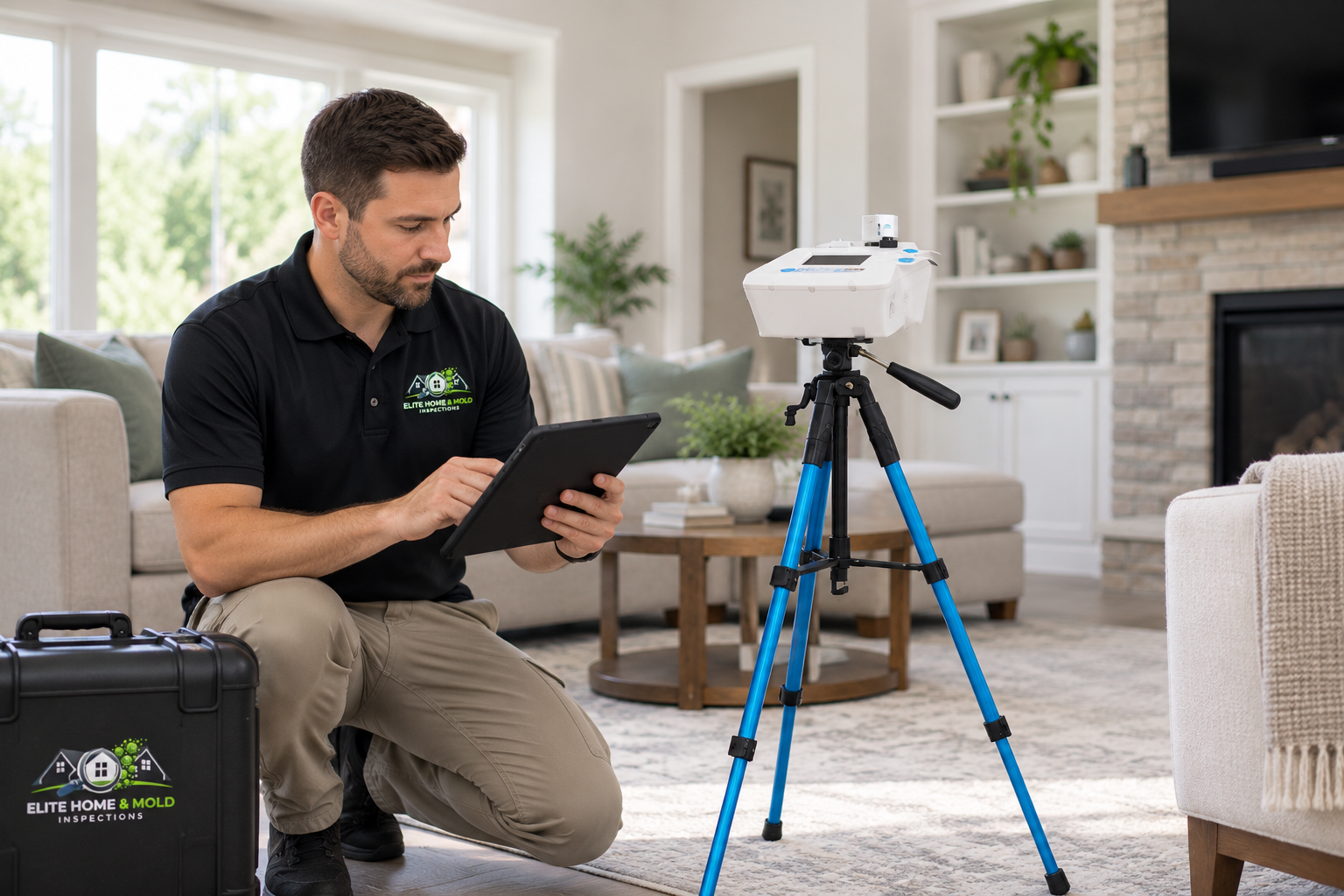
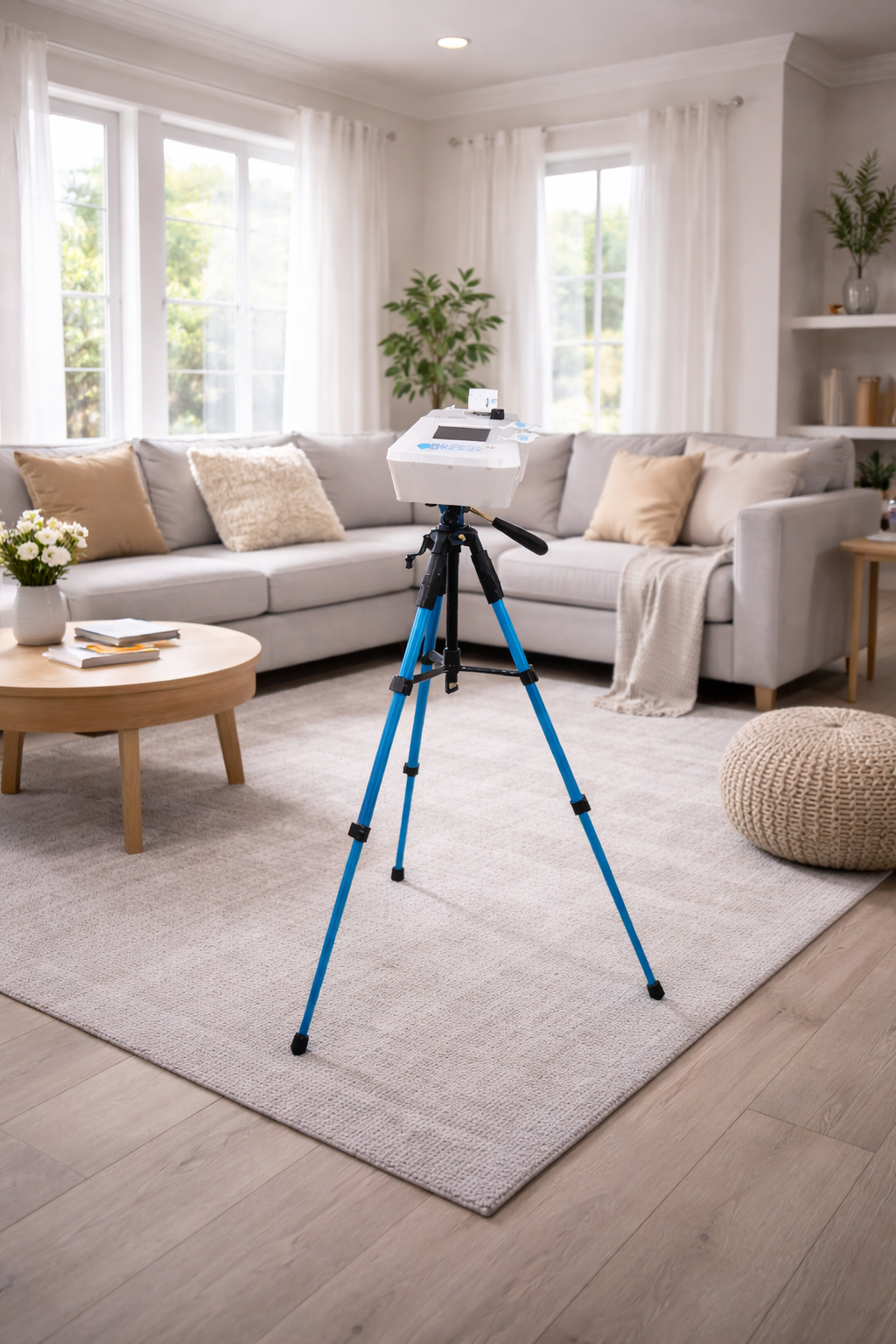
Air Quality Testing & Sampling
Testing may include mold air sampling, VOC testing, formaldehyde testing, particulate measurements, carbon monoxide and carbon dioxide measurements, and radon testing when requested.
Detailed Written Report
Receive laboratory results when applicable, documented findings, professional interpretation, and practical recommendations for next steps.
INDEPENDENT IAQ TESTING
Why Choose Elite Home & Mold Inspections for IAQ Testing?
We specialize in independent indoor air quality testing and environmental evaluations throughout Massachusetts and New Hampshire.
✓
Independent Evaluations
We do not perform remediation, so our findings remain focused on objective testing, building conditions, and practical next steps.
✓
Building-Science Focused
We evaluate moisture, ventilation, HVAC conditions, airborne contaminants, and other factors that may affect indoor air quality.
✓
Clear Reporting & Guidance
We provide detailed reporting and follow-up guidance so you understand the findings and what they mean for the property.
30+ Years of Combined Industry Experience Evaluating homes and businesses throughout Massachusetts & New Hampshire.
LICENSED & CERTIFIED
Professional Credentials & Qualifications
Independent environmental inspections backed by professional credentials, building science training, and 30+ years of combined industry experience.
30+ Years of Combined Experience
⌂ Family-Owned & Operated
✓ Licensed Home Inspectors in Massachusetts & New Hampshire
✓ Licensed Asbestos Inspectors in Massachusetts & New Hampshire
✓ Licensed Asbestos Consulting Firm in Massachusetts & New Hampshire
✓ ACAC Certified Indoor Environmentalist (CIE)
✓ NORMI – Certified Formaldehyde Screener (CFS)
✓ NORMI – Certified Microbial Inspector (CMI)
✓ MICRO – Certified Mold Inspector (CMI)
✓ BPI Building Science Principles Trained
✓ Massachusetts Registered Home Improvement Contractor (HIC)
✓ HUD 203(k) Consultant – U.S. Department of Housing and Urban Development
Indoor Air Quality Testing Service Areas
We provide indoor air quality testing throughout Massachusetts and New Hampshire, including Greater Boston, the North Shore, MetroWest, communities north of Boston, and areas throughout New Hampshire.
Greater Boston
- Boston
- Cambridge
- Somerville
- Brookline
- Newton
- Medford
- Malden
- Arlington
- Belmont
- Watertown
- Quincy
- Milton
- Westwood
North Shore
- Melrose
- Wakefield
- Stoneham
- Reading
- North Reading
- Lynnfield
- Peabody
- Salem
- Marblehead
- Swampscott
- Beverly
- Danvers
- Hamilton
- Wenham
- Topsfield
- Manchester-by-the-Sea
- Gloucester
- Ipswich
- Newburyport
MetroWest
- Wellesley
- Weston
- Needham
- Dover
- Sherborn
- Wayland
- Sudbury
- Concord
- Lincoln
- Natick
- Framingham
- Acton
- Westborough
- Southborough
- Hopkinton
- Ashland
North of Boston
- Lexington
- Winchester
- Woburn
- Burlington
- Wilmington
- Tewksbury
- Andover
- North Andover
- Billerica
- Chelmsford
- Westford
Southern New Hampshire
- Manchester
- Nashua
- Salem
- Windham
- Londonderry
- Derry
- Bedford
- Merrimack
- Hudson
- Atkinson
- Pelham
- Hollis
- Amherst
- Exeter
- Portsmouth
Lakes Region & Central New Hampshire
- Concord
- Hooksett
- Wolfeboro
- Meredith
- Moultonborough
- Center Harbor
- Tuftonboro
- Alton
- Gilford
- Laconia
- Holderness
- New Hampton
- Ossipee
- North Conway
Frequently Asked Questions
What does indoor air quality testing include?
Testing may include measurement of airborne contaminants such as mold spores, VOCs, formaldehyde, particulate matter, radon, and combustion gases, based on the specific concerns identified during your consultation.
Can high VOC levels occur after renovation?
Yes. New paint, flooring, adhesives, cabinetry, furniture, and other building materials can release volatile organic compounds (VOCs), particularly after renovation or new construction. Limited ventilation can allow these compounds to accumulate indoors.
Can basement humidity affect indoor air quality upstairs?
Yes. Moisture, odors, mold spores, and air from basements can migrate into upper living areas through stairways, wall cavities, ductwork, and other air pathways. Elevated basement humidity may also contribute to conditions that support mold growth.
Does attic ventilation impact indoor air quality?
Yes. Inadequate attic ventilation can contribute to excess heat, condensation, moisture accumulation, and mold growth. Depending on air leakage pathways between the attic and living space, these conditions may also affect indoor environmental quality.
Do newer homes experience indoor air quality problems?
Yes. Newer energy-efficient homes are often built with tighter building envelopes, which can reduce natural air exchange. Without adequate mechanical ventilation, VOCs, humidity, carbon dioxide, and other indoor contaminants may accumulate.
What is considered a normal indoor VOC level?
There is no single acceptable VOC level that applies to every indoor environment. VOC results depend on the specific compounds present, their concentrations, ventilation, occupancy, and potential sources. Testing provides measured data that can be evaluated against recognized environmental guidelines and laboratory reference information.
How long do VOCs remain elevated after renovation?
VOC levels may remain elevated for days, weeks, or longer depending on the materials involved, temperature, humidity, ventilation, and the rate of off-gassing. Indoor air quality testing can help determine whether VOC concentrations remain elevated after renovation or new construction.
Can poor ventilation increase carbon dioxide (CO₂) levels indoors?
Yes. Inadequate fresh-air exchange can allow carbon dioxide levels to increase as occupants breathe indoors. Elevated CO₂ can be an indicator of insufficient ventilation and may contribute to stuffiness and discomfort.
Can new construction or spray foam insulation affect indoor air quality?
Yes. New construction materials, including spray foam insulation, engineered wood products, adhesives, flooring, paints, and finishes, can release VOCs and, in some cases, formaldehyde during the off-gassing period. In tightly constructed homes with limited ventilation, these compounds may accumulate indoors. Indoor air quality testing can help measure VOCs, formaldehyde, and other environmental conditions.
Schedule Indoor Air Quality Testing Today
If you’re concerned about indoor air quality, VOCs, mold spores, formaldehyde, radon, or ventilation, we provide objective testing, clear results, and practical next steps. Identifying indoor environmental concerns early can help you make informed decisions about your home or property.
- 🧪 Independent Testing
- 🛡️ Licensed & Certified Inspectors
- 🔬 Professional Laboratory Analysis
- 📋 Fully Insured
- ⭐ 500+ Five-Star Reviews