
Top 5 Signs Your Home Needs Indoor Air Quality Testing
Odors, moisture problems, ventilation concerns, and recurring indoor environmental issues can all be reasons to take a closer look at the air inside your home.
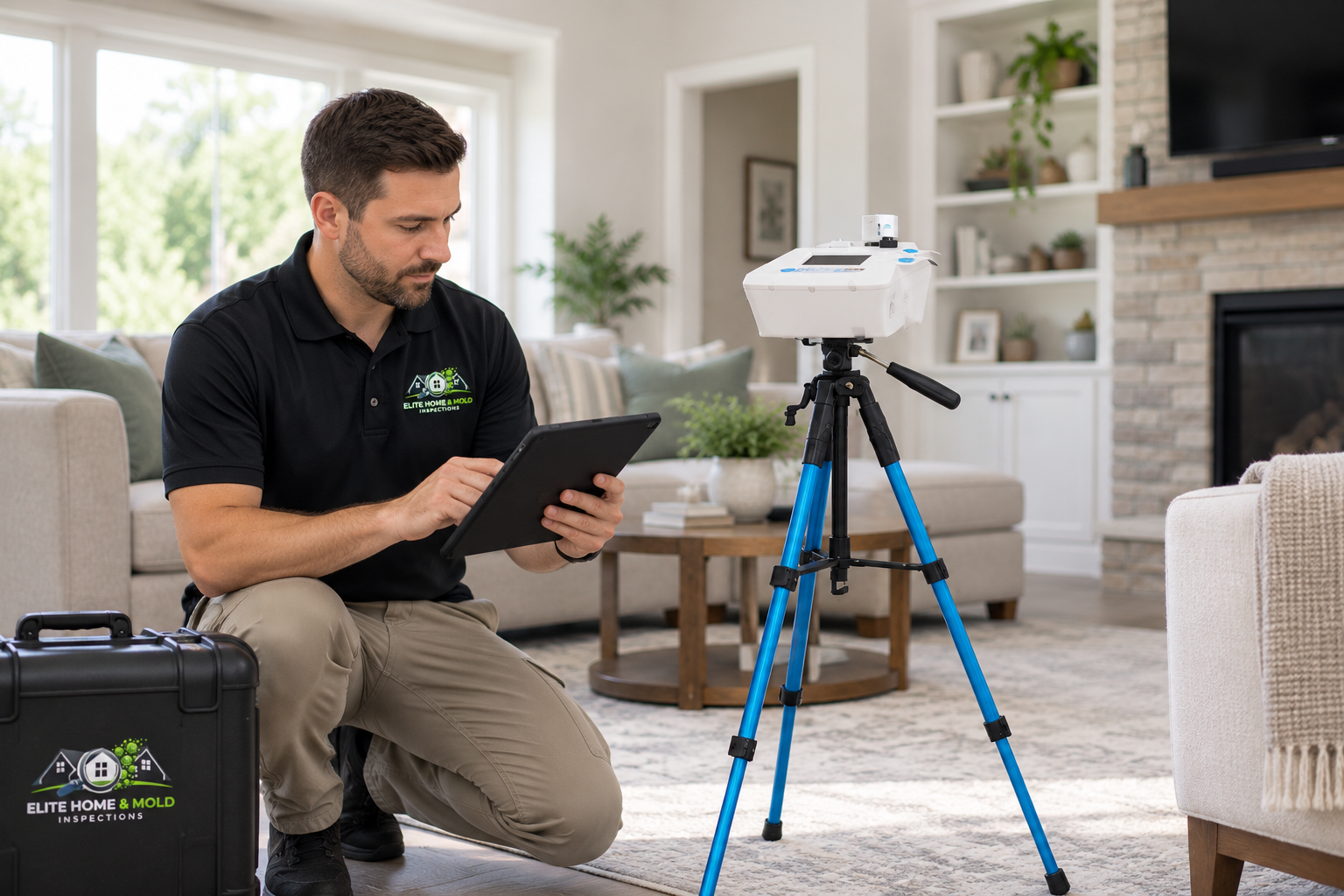
Indoor air quality testing may be appropriate when a home has persistent odors, moisture concerns, suspected mold, recent renovations, ventilation problems, or other unexplained indoor environmental conditions. The right testing approach depends on the building, the concern, and what is observed during the inspection.
The air inside a home is affected by many factors. Moisture, ventilation, building materials, furnishings, cleaning products, HVAC systems, renovations, and water intrusion can all influence indoor environmental conditions.
That does not mean every home needs laboratory testing. In many cases, the first step is understanding the building and identifying whether there is a specific condition worth investigating.
Here are five common situations in which homeowners may consider professional indoor air quality testing in Massachusetts and New Hampshire .
Persistent Musty or Unusual Odors
A persistent musty smell can indicate that moisture is affecting part of the building, even when there is no obvious visible mold. Odors may originate from basements, wall cavities, carpeting, HVAC systems, crawl spaces, attics, or previously wet materials.
Other chemical or unusual odors may be associated with paints, adhesives, flooring, cabinetry, furniture, cleaning products, or other materials that can release volatile organic compounds.
An inspection can help determine whether mold testing, VOC/formaldehyde testing, moisture evaluation, or another targeted approach is appropriate.
A History of Leaks, Flooding, or Moisture Intrusion
Water intrusion is one of the most important conditions to evaluate when indoor air quality concerns develop.
Roof leaks, plumbing failures, basement seepage, appliance leaks, condensation, high humidity, and previous flooding can affect materials even after the visible water is gone.
Depending on the circumstances, an inspector may use moisture measurements, thermal imaging as a screening tool, visual observations, and targeted sampling to better understand current conditions.
Our moisture mapping and water intrusion documentation service can also help document areas where moisture concerns are suspected.
Recent Renovations or New Building Materials
New flooring, paint, cabinetry, furniture, adhesives, composite wood products, and other building materials can release VOCs or formaldehyde into indoor air.
Concentrations can vary based on the materials present, ventilation, temperature, humidity, and how recently products were installed.
When chemical odors persist or there is a specific concern, targeted VOC and formaldehyde testing can provide laboratory data about selected airborne compounds.
Suspected Mold or Repeated Moisture Problems
Mold concerns are often connected to moisture conditions rather than the air alone. A proper evaluation should look at the building first, not simply collect samples without context.
Visible staining, repeated condensation, damp basements, attic moisture, plumbing leaks, and HVAC conditions can all be relevant.
Our mold inspection services evaluate accessible areas of the property, moisture conditions, and other observations before determining whether mold testing is appropriate.
Ventilation or HVAC Concerns
HVAC systems move air throughout a building, so conditions within accessible components can be relevant to an indoor air quality investigation.
Dust accumulation, staining, moisture at coils or drain pans, dirty filtration components, or inadequate ventilation may be worth reviewing depending on the concern.
HVAC observations should be considered alongside the rest of the building rather than treated as an isolated diagnosis.
Where appropriate, our HVAC and air duct cleaning services may be discussed after the system has been evaluated.
What Can Indoor Air Quality Testing Evaluate?
Indoor air quality testing is not one universal test. The appropriate method depends on the concern being investigated.
Testing may include mold air or surface sampling, VOC testing, formaldehyde testing, environmental measurements, moisture evaluation, or other targeted services when appropriate.
Laboratory testing is most useful when it is selected based on the property conditions and the question being investigated rather than performed without a clear purpose.
Inspection Before Testing
In many situations, the inspection is just as important as the laboratory sample.
A professional evaluation may include visual assessment of accessible areas, moisture measurements, relative humidity and environmental measurements, thermal imaging where useful, and review of accessible HVAC components.
These observations provide context for deciding what, if anything, should be sampled.
Indoor Air Quality Testing in Massachusetts & New Hampshire
Elite Home & Mold Inspections provides independent indoor air quality testing and environmental inspection services throughout Massachusetts and New Hampshire.
We work with homeowners, buyers, property managers, landlords, commercial property owners, and others who need clear information about indoor environmental conditions.
Frequently Asked Questions
Does every indoor air quality concern require testing?
No. Testing should be selected based on the property conditions and the specific concern. In some cases, an inspection may identify a moisture or building condition that is more important to address than broad laboratory testing.
Can indoor air quality testing identify mold?
Mold air and surface sampling can provide information about mold present in collected samples, but results should be interpreted together with inspection findings, moisture conditions, and the building environment.
Can you test for VOCs and formaldehyde?
Yes. VOC and formaldehyde testing can be performed when those contaminants are relevant to the concern being investigated.
Do you perform mold remediation?
No. Elite Home & Mold Inspections performs independent inspections and testing and does not perform mold remediation.
Concerned About the Air Inside Your Home?
Schedule an independent indoor air quality inspection and testing evaluation with Elite Home & Mold Inspections. We serve Massachusetts and New Hampshire and do not perform mold remediation.