
Air Quality Testing Explained: What Homeowners Should Know
Indoor air quality testing can help evaluate mold, VOCs, formaldehyde, particulates, allergens, radon, moisture-related conditions, and other concerns that may affect the indoor environment. Here’s how professional testing works and when it may be useful.
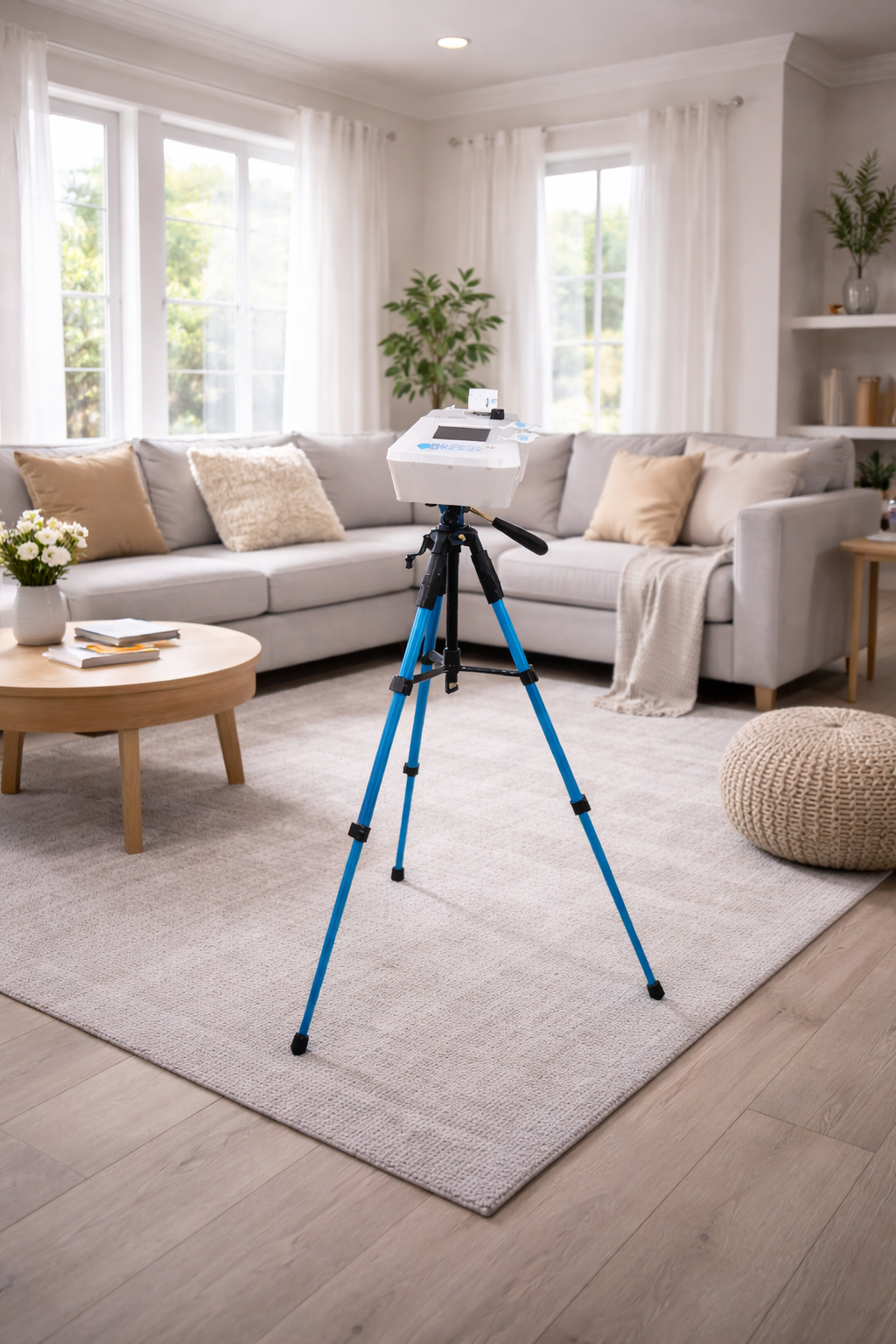
Most people spend a significant amount of time indoors at home, at work, and in other enclosed spaces. Yet many indoor environmental concerns are not readily visible.
Dust, mold spores, volatile organic compounds, formaldehyde, radon, allergens, moisture conditions, and other pollutants may all become part of an indoor air quality investigation depending on the property and the concern.
Professional indoor air quality testing is not one universal test. The inspection and testing methods should be selected based on the specific conditions and information being requested.
Key point: Indoor air quality testing is most useful when the testing is selected to answer a specific question about the property rather than treating every building the same.
What Is Air Quality Testing?
Air quality testing is an evaluation of indoor environmental conditions using inspection, measurements, sampling, and laboratory analysis where appropriate.
Depending on the concern, an indoor air quality assessment may involve:
- Visual inspection
- Moisture readings
- Thermal imaging where applicable
- Mold air sampling
- Surface sampling
- VOC testing
- Formaldehyde testing
- Particle identification
- Radon testing
- Evaluation of ventilation and building conditions
The exact testing scope depends on the property, reported concerns, accessible conditions, and the type of information being requested.
What Can Affect Indoor Air Quality?
Indoor air quality can be influenced by many different building and environmental factors.
How Does Air Quality Testing Work?
A professional evaluation generally begins by identifying the concern and understanding what information the client is trying to obtain.
1. Property Review
The inspector reviews the reported concerns, relevant building history, recent renovations, water events, odors, visible conditions, and other information that may help determine the appropriate inspection or testing scope.
2. Visual Inspection
Accessible areas may be evaluated for moisture, water staining, visible mold-like growth, ventilation conditions, suspected building-material concerns, or other environmental indicators.
3. Measurements and Sampling
Depending on the concern, testing may involve air sampling, surface sampling, moisture readings, thermal imaging, radon measurement, VOC sampling, formaldehyde sampling, or other appropriate methods.
4. Laboratory Analysis
When laboratory testing is part of the service, collected samples are submitted for the appropriate analytical method based on the sample type.
5. Results and Documentation
Findings are documented based on the inspection, measurements, samples, laboratory results, and conditions evaluated.
What Pollutants Can Indoor Air Quality Testing Evaluate?
The pollutants or conditions evaluated depend on the testing being performed.
- Mold spores: Air or surface sampling may be used when mold-related concerns are being evaluated.
- VOCs: Laboratory-based air sampling may identify volatile organic compounds included in the selected analytical method.
- Formaldehyde: Dedicated testing can measure airborne formaldehyde concentrations.
- Radon: Radon measurement can evaluate radon concentrations inside a property.
- Particles and debris: Laboratory analysis may help identify particulates, fibers, dust, and other collected material.
- Moisture conditions: Moisture meters and thermal imaging may help document water intrusion or damp building materials.
Mold and Indoor Air Quality
Mold spores naturally exist indoors and outdoors, but indoor mold growth is generally associated with moisture.
Potential contributing conditions can include plumbing leaks, roof leaks, foundation seepage, elevated humidity, condensation, flooding, HVAC condensation, and previous water damage.
When mold is the primary concern, a professional mold inspection can evaluate accessible building conditions before determining whether sampling may be appropriate.
When laboratory sampling is warranted, mold testing may include air samples, tape lifts, swabs, or other targeted methods.
VOC and Formaldehyde Testing
Indoor chemical concerns may arise after renovations, installation of new flooring or cabinetry, painting, refinishing, spray foam work, new furnishings, or other material changes.
Persistent chemical odors may also lead a property owner to consider professional testing.
Elite provides independent VOC and formaldehyde testing for residential and commercial properties throughout Massachusetts and New Hampshire.
Radon Testing
Radon is a naturally occurring radioactive gas that can enter buildings from the soil.
Because radon cannot be seen or smelled, measurement is required to determine the concentration inside a property.
Radon testing may be performed during real estate transactions or as a separate property evaluation.
When Should You Consider Indoor Air Quality Testing?
Testing may be useful when there is a defined concern about the indoor environment.
Examples may include:
- Persistent musty odors
- Persistent chemical odors
- Previous water damage
- Visible mold-like growth
- Recent renovation
- New flooring or cabinetry
- New construction
- Concerns about VOCs or formaldehyde
- Moisture or condensation concerns
- Suspected hidden mold
- Radon concerns
- A need for independent environmental documentation
Indoor Air Quality Testing After Water Damage
Water intrusion can affect building materials and may create conditions that support mold growth if materials remain wet.
An inspection following a water event may include visual observations, moisture readings, thermal imaging where applicable, and mold sampling when appropriate.
Where documentation of moisture conditions is the primary concern, moisture mapping and water-intrusion documentation may be useful.
Indoor Air Quality Testing After Renovation
Renovation projects can introduce new materials, coatings, adhesives, flooring, cabinetry, insulation, paints, furnishings, and other products into the indoor environment.
When there is a concern about chemical emissions following a renovation, VOC or formaldehyde testing may provide laboratory-based information about the indoor air.
Can Indoor Air Quality Testing Diagnose Health Problems?
No.
Indoor environmental testing evaluates building conditions and collected samples. It does not diagnose medical conditions or determine whether an environmental result caused a person's symptoms.
Health concerns: Anyone experiencing medical symptoms should discuss those concerns with an appropriate healthcare professional. Environmental inspection and testing can provide information about the property but should not be used as a medical diagnosis.
What Happens After Testing?
The next step depends on what was inspected or tested and what the results show.
When laboratory sampling is performed, results can be reviewed alongside the inspection findings, building conditions, moisture observations, ventilation, materials, and other relevant information.
If mold sampling is performed, Elite can provide a written report of findings and recommendations. When sampling results support remediation, a remediation protocol may also be prepared.
We do not perform mold remediation or asbestos abatement.
Why Local Building Conditions Matter
Massachusetts and New Hampshire properties experience seasonal conditions that can influence indoor environmental concerns.
Cold winters, seasonal humidity, basement moisture, condensation, ice dams, roof leaks, aging plumbing, and previous water intrusion can all affect building conditions.
Older housing stock may also contain materials or systems that require consideration during an environmental evaluation.
Indoor Air Quality Testing in Massachusetts & New Hampshire
Elite Home & Mold Inspections provides independent indoor air quality testing for residential, multifamily, and commercial properties throughout Massachusetts and New Hampshire.
Services may include mold inspection and testing, VOC and formaldehyde testing, particle identification, radon testing, moisture evaluation, and other targeted environmental testing based on the concern.
We are family-owned and operated with over 30 years of combined experience in the construction and environmental industries.
Learn more about our indoor air quality testing services in Massachusetts and New Hampshire.
Frequently Asked Questions About Air Quality Testing
What is indoor air quality testing?
Indoor air quality testing evaluates specific environmental conditions or pollutants within a property using inspection, measurements, sampling, and laboratory analysis where appropriate.
What can indoor air quality testing include?
Depending on the concern, testing may include mold air or surface sampling, VOC testing, formaldehyde testing, particle identification, radon testing, moisture evaluation, and review of building or ventilation conditions.
Does every indoor air quality inspection require laboratory testing?
No. The appropriate scope depends on the concern. Some evaluations may rely on inspection and measurements, while others require laboratory sampling.
Can indoor air quality testing identify hidden mold?
Testing alone does not necessarily identify the physical location of hidden mold. Inspection, moisture evaluation, building history, and sampling may all provide useful information when concealed growth is suspected.
Do you provide indoor air quality testing in Massachusetts and New Hampshire?
Yes. Elite Home & Mold Inspections provides independent indoor air quality testing throughout Massachusetts and New Hampshire, including Boston and Greater Boston.
Concerned About the Air Inside Your Property?
Elite Home & Mold Inspections provides independent indoor air quality testing, mold testing, VOC and formaldehyde testing, radon testing, and moisture evaluation throughout Massachusetts and New Hampshire.
Serving Massachusetts & New Hampshire