Elite Home & Mold Inspections

Formaldehyde & VOC Testing in Massachusetts & New Hampshire

Independent indoor air quality testing for formaldehyde, volatile organic compounds (VOCs), and other chemical off-gassing concerns in homes and commercial buildings throughout Massachusetts and New Hampshire.

Independent VOC & Formaldehyde Testing

Accurate indoor air testing for VOCs, formaldehyde, and other chemical off-gassing concerns with laboratory-backed results and clear, unbiased reporting.

Chemical Air Quality Testing You Can Trust

From renovation odors to suspected indoor pollutants, we provide objective testing to help identify potential chemical contaminants in your indoor air.

Professional Indoor Environmental Testing

Structured VOC and formaldehyde testing with accredited laboratory analysis and clear documentation throughout Massachusetts and New Hampshire.

Know What’s in Your Indoor Air

Testing can help identify and measure chemical compounds in your indoor environment, giving you reliable information to make informed decisions.

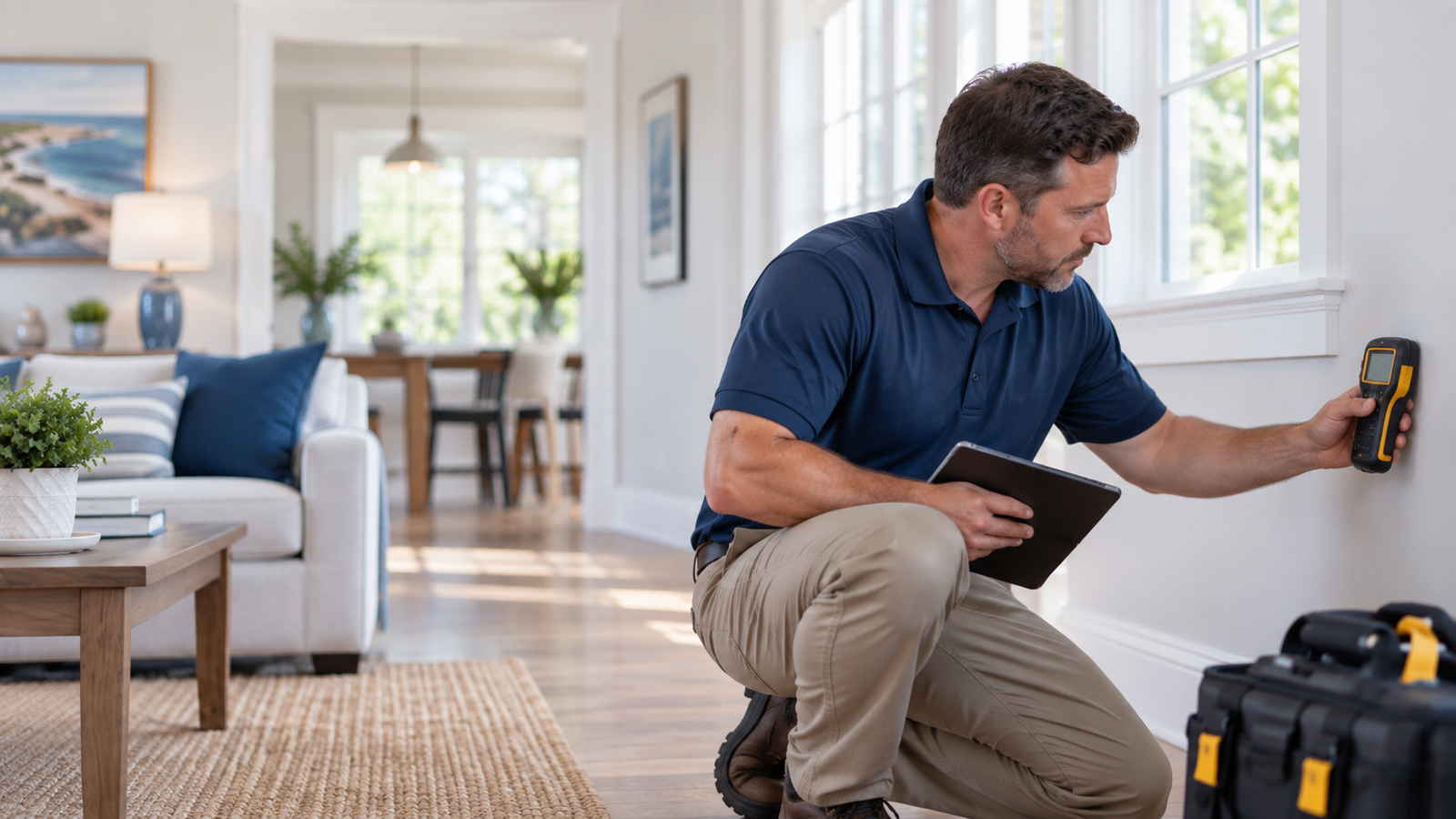
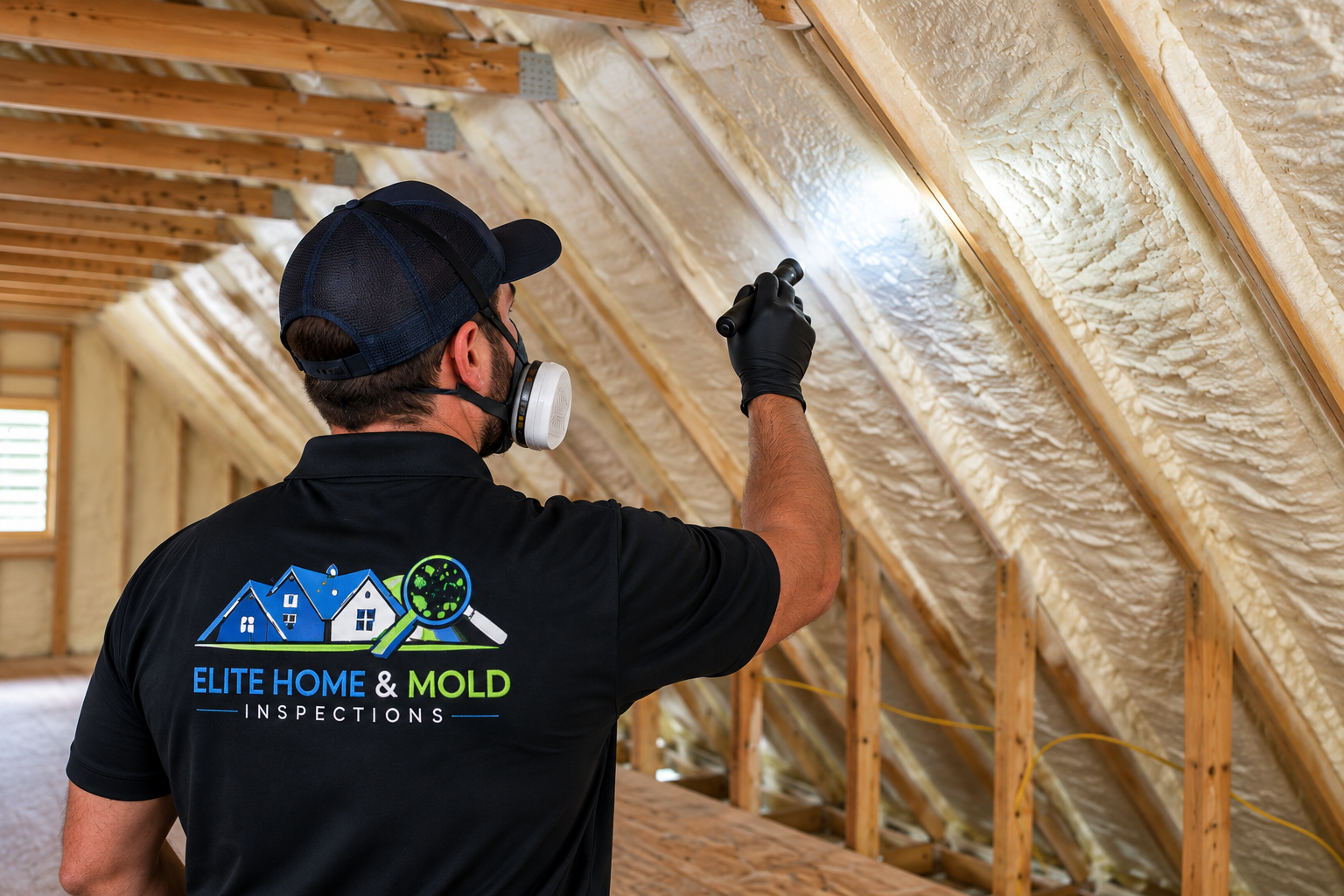
Inspector evaluating moisture conditions inside a home in Massachusetts

Request an Inspection

Complete the form below and we will contact you shortly to confirm pricing, availability, and scheduling.


What Is Formaldehyde & VOC Testing?

Volatile organic compounds, commonly referred to as VOCs, are airborne chemicals that can be released from building materials, furniture, flooring, paints, adhesives, insulation products, cabinetry, and renovation materials.

Formaldehyde is a common indoor air contaminant and may be associated with:

  • New construction homes
  • Spray foam insulation
  • Composite wood cabinetry and furniture
  • Recently renovated properties
  • Strong chemical or “new house” odors
  • Poorly ventilated spaces

Indoor air quality concerns involving VOCs can occur in homes, offices, commercial buildings, and other indoor environments. We are often contacted to investigate persistent chemical odors, concerns following renovations or new construction, spray foam insulation off-gassing, and potential emissions from engineered wood products, flooring, cabinetry, and synthetic finishes.

VOC and formaldehyde testing provides measurable laboratory data that can help identify chemical compounds in the indoor air and determine whether further investigation or corrective action should be considered.

500+ Five-Star Reviews from Massachusetts & New Hampshire Clients

Posted on Google Google
Mike M profile picture
Mike M
Google star 1Google star 2Google star 3Google star 4Google star 5Trustindex verifies that the original source of the review is Google.
Paul the owner was very detailed in his inspection process. I would 100% recommend them
Posted on Google Google
Susan Lydon profile picture
Susan Lydon
Google star 1Google star 2Google star 3Google star 4Google star 5Trustindex verifies that the original source of the review is Google.
Evan was very easy to work with and clearly possesses a wealth of knowledge about home maintenance as well as potential issues that can arise!
Posted on Google Google
janet bejtlich profile picture
janet bejtlich
Google star 1Google star 2Google star 3Google star 4Google star 5Trustindex verifies that the original source of the review is Google.
Excellent experience with Elite Home and Mold inspection service. Abe was professional, extremely knowledgeable, and very informative throughout the entire process. He took the time to explain everything clearly and answered all of our questions with patience and honesty. We left feeling much more informed and at ease. Thank you! Highly recommend!
Posted on Google Google
Andrew Huynh profile picture
Andrew Huynh
Google star 1Google star 2Google star 3Google star 4Google star 5Trustindex verifies that the original source of the review is Google.
Evan is a great guy. Was patient with my questions. Was very thorough with the inspection, explanations, and testing. He made sure I understand what was going on and know the potential consequences that could result. Very quick and efficient with time.
Posted on Google Google
Chris Unis profile picture
Chris Unis
Google star 1Google star 2Google star 3Google star 4Google star 5Trustindex verifies that the original source of the review is Google.
Evan came by my house today. He was personable and took his time answering all my questions. He was knowledgeable, and we look forward to working with them to improve the air quality in my house.
Posted on Google Google
Julie Clark profile picture
Julie Clark
Google star 1Google star 2Google star 3Google star 4Google star 5Trustindex verifies that the original source of the review is Google.
Great experience and super helpful!

Why Indoor Chemical Testing Matters in Modern Homes

Modern homes are built and renovated with energy efficiency in mind. Tighter building envelopes, improved air sealing, new flooring, cabinetry, insulation, paints, adhesives, and other materials can all introduce chemicals into the indoor environment.

While these improvements can increase comfort and efficiency, reduced natural ventilation may allow VOCs and other chemical emissions to remain indoors for longer periods of time. This can be especially noticeable after new construction, renovations, spray foam insulation, new flooring, cabinetry, or furniture installation.

Odor alone cannot determine what chemicals are present or at what concentration. Professional VOC and formaldehyde testing provides measurable laboratory data to help identify potential indoor air quality concerns.

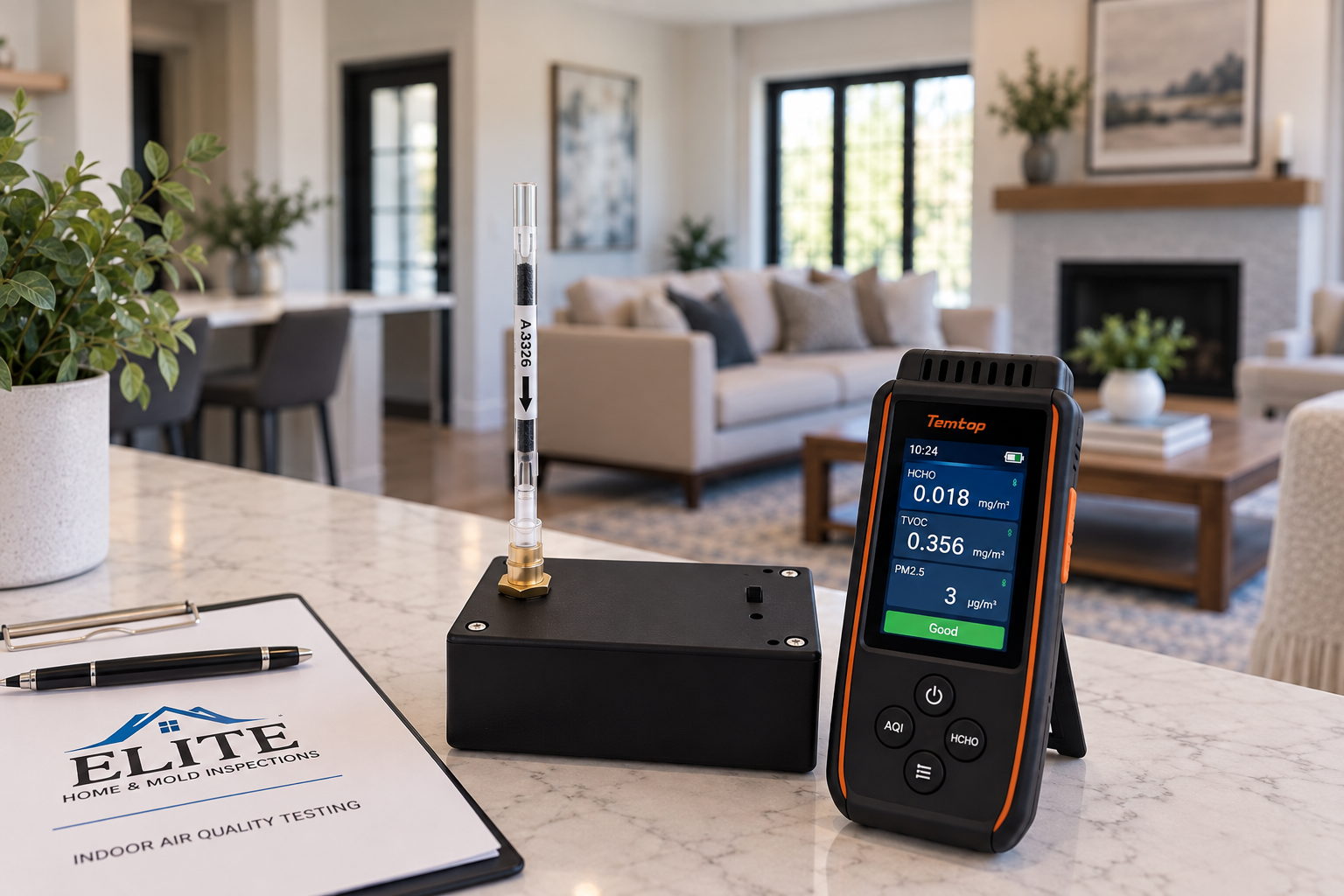
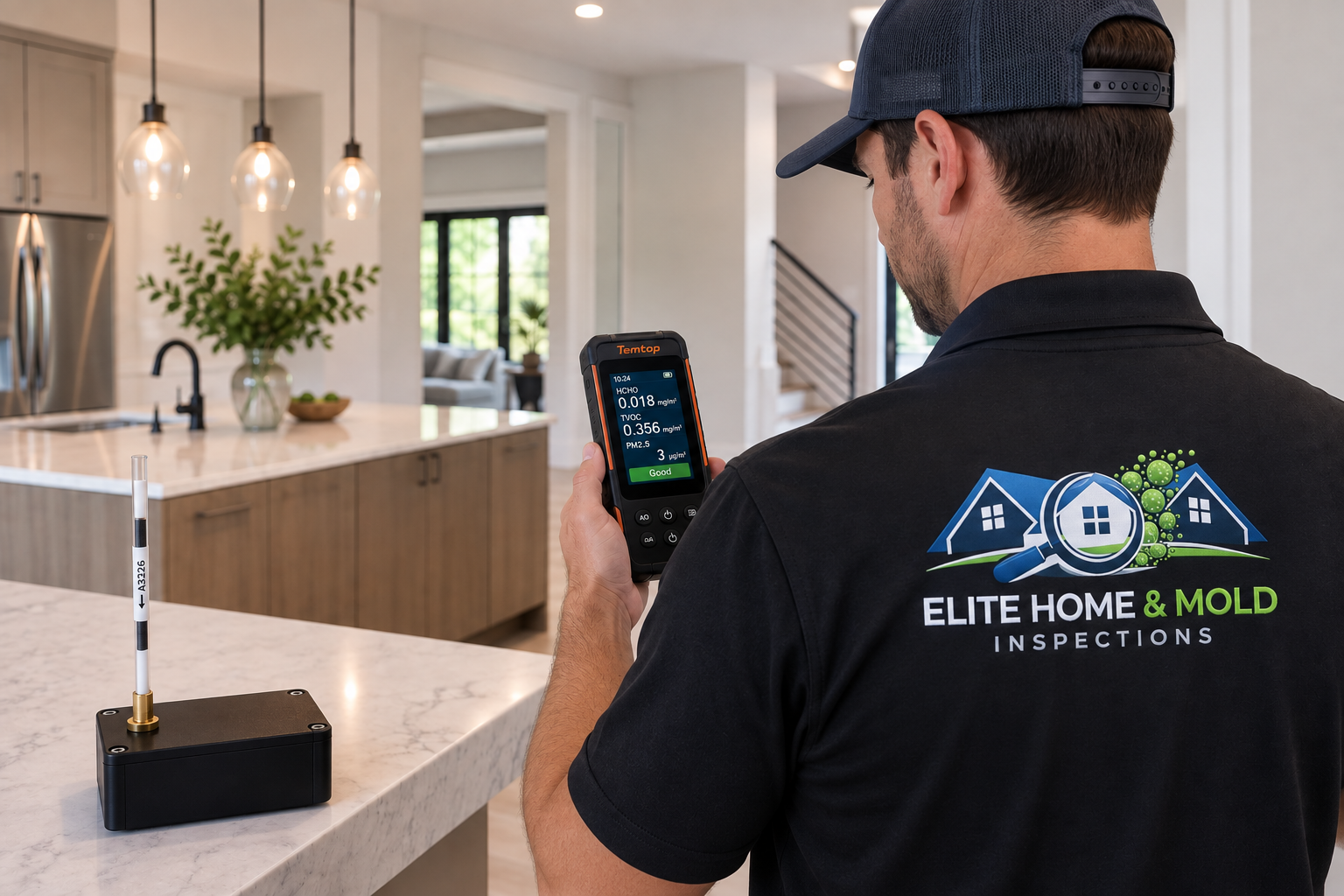
VOC and formaldehyde air testing equipment with sampling pump and indoor air quality meter

Boston & Greater Boston VOC Testing

We provide VOC and formaldehyde testing throughout Boston and Greater Boston for homes, condominiums, commercial properties, and newly renovated buildings.

New construction, renovations, spray foam insulation, engineered wood products, flooring, cabinetry, paints, and other building materials can release VOCs and formaldehyde into indoor air. In tightly sealed buildings, limited ventilation may allow these chemicals to accumulate.

Professional air sampling provides measurable laboratory data to help identify potential indoor air quality concerns following construction, renovation, or when unexplained chemical odors are present.

When Should You Consider VOC or Formaldehyde Testing?

Professional indoor air quality testing may be appropriate when:


    • You notice persistent chemical or unusual odors
    • You have concerns following a renovation or new construction
    • You are purchasing a newly constructed or recently renovated home
    • New flooring, cabinetry, furniture, or spray foam insulation was installed
    • Tenants or occupants report indoor air quality concerns
    • You want to establish baseline indoor air quality
    • You manage commercial, medical, or multi-tenant properties

VOC and formaldehyde testing can also be valuable before real estate closings, post-construction walkthroughs, or occupancy when documented indoor air quality data is desired.

Common Sources of VOCs & Formaldehyde in Homes

VOCs and formaldehyde can be released from many common building materials, furnishings, finishes, and household products. Testing can help identify whether elevated chemical compounds are present in the indoor air and provide laboratory-based information about potential sources.

Common sources may include:

  • New flooring, cabinets, and composite wood products
  • Paints, coatings, adhesives, and sealants
  • New furniture and mattresses
  • Cleaning products and air fresheners
  • Renovation and construction materials
  • Stored chemicals, fuels, and solvents
  • Off-gassing from recently installed finishes or furnishings

Schedule an Inspection or Environmental Test

Our VOC & Formaldehyde Testing Process

Property Review & Consultation

We review the property, recent renovations, building materials, ventilation, and the specific indoor air quality concerns being investigated.

Professional Air Sampling

Air samples are collected using calibrated sampling equipment and appropriate sampling media for VOC and/or formaldehyde analysis.

Laboratory Analysis

Samples are submitted to an accredited environmental laboratory for analysis and identification of detected compounds and concentrations.

Clear Results & Interpretation

You receive detailed laboratory results along with a clear explanation of the findings and practical recommendations based on the results.

What Happens After Testing?

After laboratory results are received, we review the findings with you, explain what the measured concentrations mean, discuss potential contributing factors, and outline appropriate next steps.

Depending on the findings, improved ventilation, additional curing time, source removal, or further investigation may be recommended. Because we do not perform remediation, our recommendations remain independent and focused on the results of your testing.

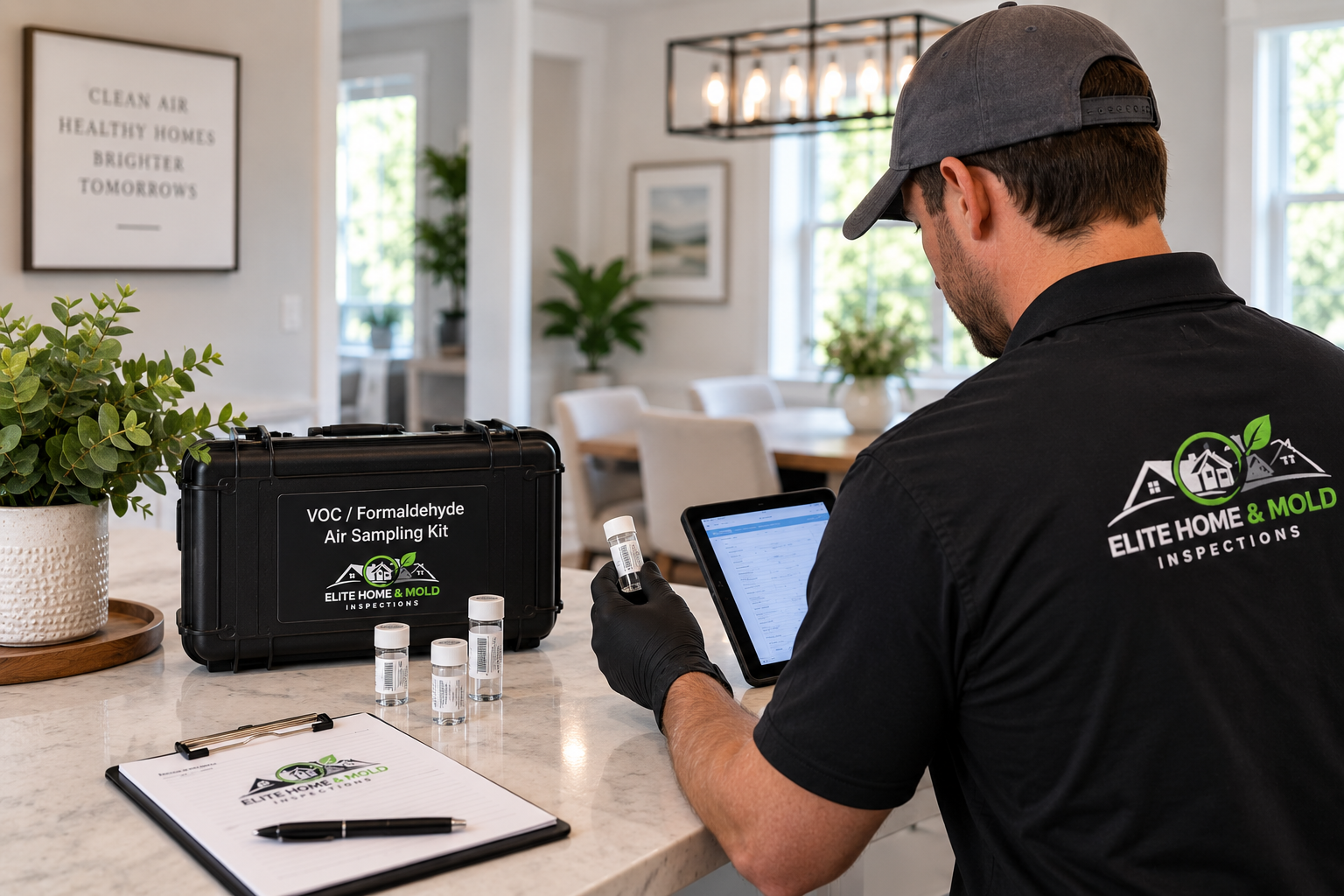
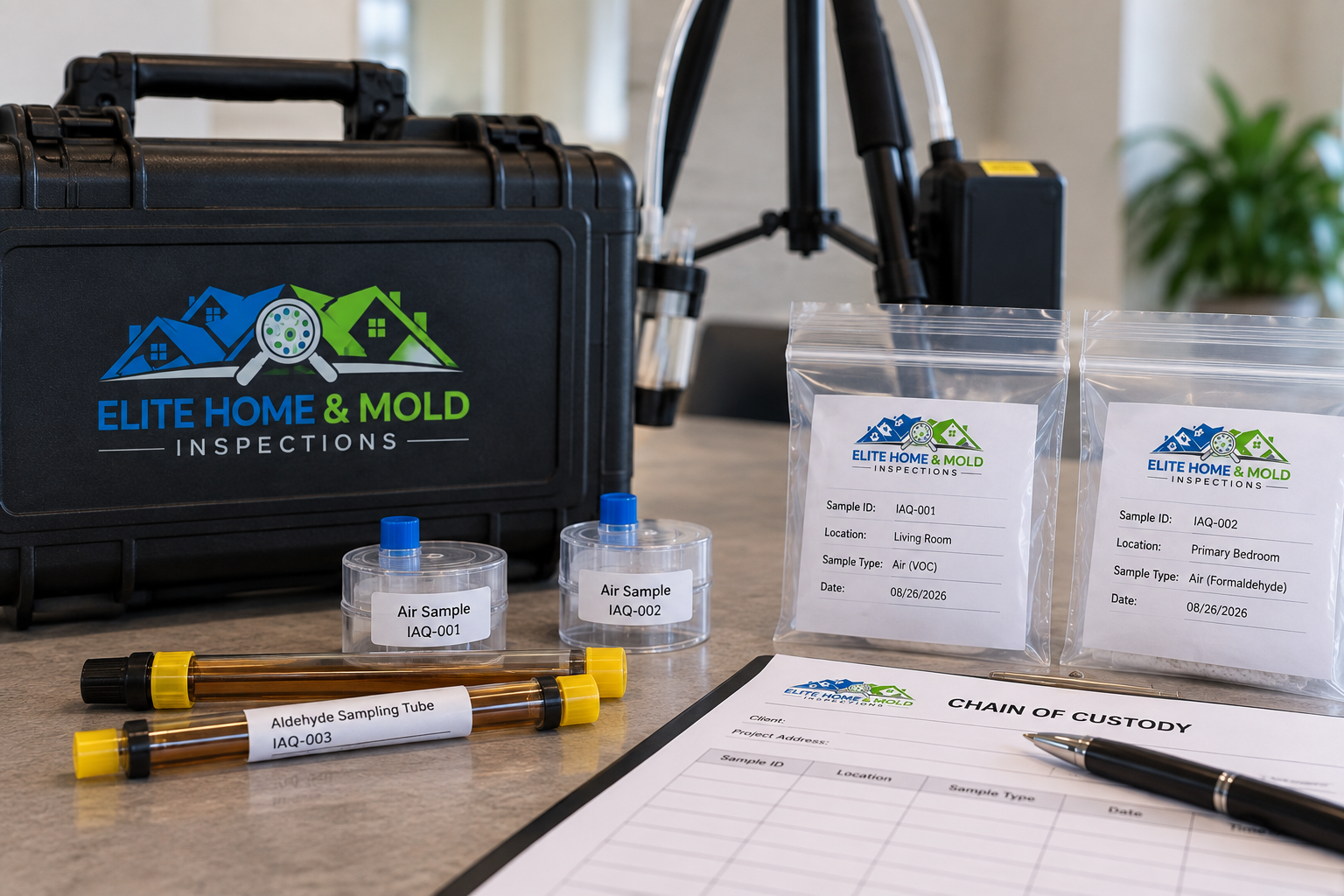
VOC and formaldehyde air sampling equipment prepared for laboratory analysis
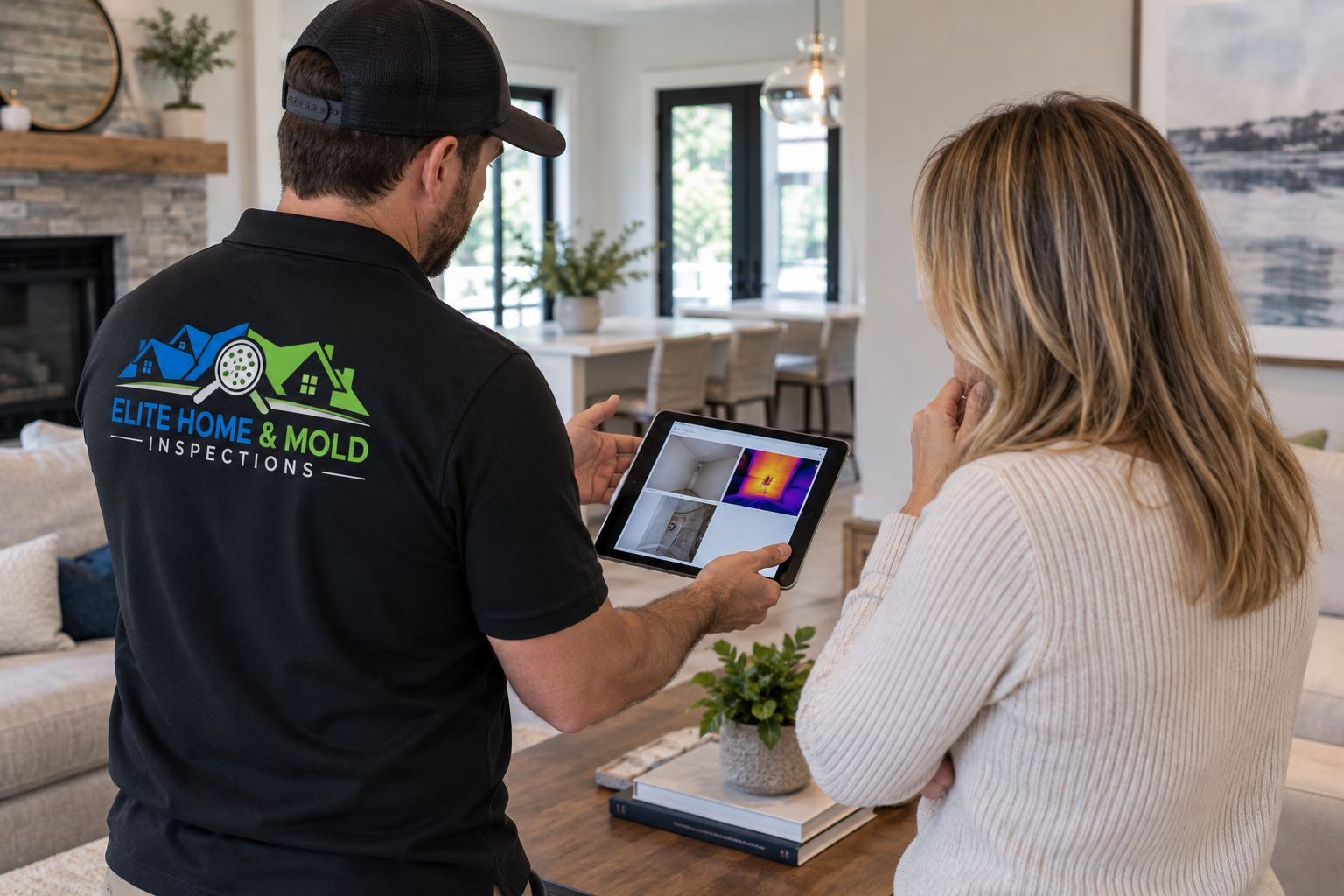
Elite Home & Mold Inspections inspector reviewing indoor air quality findings with a homeowner

Why Choose Elite Home & Mold Inspections?

We specialize in independent mold inspections and indoor environmental testing. Because we do not perform remediation, our job is to provide objective testing, clear results, and recommendations based on what we actually find.

Our inspections consider potential emission sources, recent renovations, building materials, ventilation, moisture conditions, and other factors that may affect indoor air quality.

You’ll receive clear laboratory results and an explanation of the findings so you understand what was detected and what steps, if any, should be considered.

Since 2017, we have provided residential and commercial inspection and environmental testing services throughout Massachusetts and New Hampshire.

Service Areas

We provide VOC and formaldehyde testing throughout Massachusetts and New Hampshire for residential and commercial properties.

Greater Boston

  • Boston
  • Cambridge
  • Somerville
  • Brookline
  • Newton
  • Medford
  • Malden
  • Arlington
  • Belmont
  • Watertown
  • Quincy
  • Milton
  • Westwood

North Shore

  • Melrose
  • Wakefield
  • Stoneham
  • Reading
  • North Reading
  • Lynnfield
  • Peabody
  • Salem
  • Marblehead
  • Swampscott
  • Beverly
  • Danvers
  • Hamilton
  • Wenham
  • Topsfield
  • Manchester-by-the-Sea
  • Gloucester
  • Ipswich
  • Newburyport

MetroWest

  • Wellesley
  • Weston
  • Needham
  • Dover
  • Sherborn
  • Wayland
  • Sudbury
  • Concord
  • Lincoln
  • Natick
  • Framingham
  • Acton
  • Westborough
  • Southborough
  • Hopkinton
  • Ashland

North of Boston

  • Lexington
  • Winchester
  • Woburn
  • Burlington
  • Wilmington
  • Tewksbury
  • Andover
  • North Andover
  • Billerica
  • Chelmsford
  • Westford

Southern New Hampshire

  • Manchester
  • Nashua
  • Salem
  • Windham
  • Londonderry
  • Derry
  • Bedford
  • Merrimack
  • Hudson
  • Atkinson
  • Pelham
  • Hollis
  • Amherst
  • Exeter
  • Portsmouth

Don’t see your city listed? We provide testing throughout Massachusetts and New Hampshire.

Frequently Asked Questions

What are typical indoor formaldehyde levels?

Formaldehyde concentrations can vary significantly depending on building materials, ventilation, temperature, humidity, and the age of the products in the home. Laboratory testing provides a measured concentration that can be evaluated in context with established indoor air quality guidelines.

Yes. Higher temperatures and humidity can increase off-gassing from certain building materials, including composite wood products. Indoor conditions at the time of testing are considered when interpreting results.

VOC and formaldehyde testing can be valuable when purchasing new construction or a recently renovated home, particularly when there are chemical odors, new cabinetry, flooring, spray foam insulation, or other potential sources of off-gassing.

Typical laboratory turnaround time for VOC and formaldehyde testing is approximately 7–10 business days. Expedited analysis may be available depending on the testing method and laboratory availability.

No. Mold testing evaluates biological contaminants such as mold spores, while VOC and formaldehyde testing evaluates chemical contaminants in indoor air. These are separate types of indoor environmental testing.

Laboratory analysis can identify and quantify specific compounds depending on the testing method used. However, detecting a compound does not always identify the exact material or product releasing it. Inspection findings, building materials, renovation history, and other information are used to help evaluate potential sources.

Schedule VOC & Formaldehyde Testing

If you are concerned about chemical odors, new construction materials, spray foam insulation, or indoor air quality issues, professional testing provides measurable answers.