
Top 10 Home Inspection Issues Buyers Should Watch For
A home inspection can reveal much more than obvious cosmetic defects. For buyers concerned about mold, moisture, water intrusion, ventilation, and indoor environmental conditions, certain findings deserve especially close attention.
Every property has imperfections, but some home inspection issues can provide important clues about how the building has handled moisture, drainage, ventilation, maintenance, and previous water events. These conditions can be particularly important in Massachusetts and New Hampshire homes, where older construction, finished basements, seasonal humidity, snow, ice, and temperature changes can all affect the building.
A standard home inspection evaluates visible and accessible building systems and components. When specific mold, moisture, or indoor environmental concerns exist, a separate professional mold inspection or environmental service may also be appropriate.
10 Common Home Inspection Issues Buyers Should Understand
Basement Moisture & Water Intrusion
Basements and lower levels are among the most important areas to evaluate for moisture. Water staining, efflorescence, damp materials, foundation seepage, elevated humidity, or signs of previous water entry may indicate recurring moisture conditions.
Finished basements deserve added attention because wall and floor finishes can sometimes conceal evidence of previous leakage or elevated moisture.
Roof Leaks, Flashing & Drainage Problems
Roofing materials, flashing, penetrations, valleys, gutters, and drainage systems help keep water out of the building. Deterioration or improper drainage can contribute to water entry into attics, ceilings, walls, and exterior assemblies.
Older staining does not always mean an active leak is present, but it should be considered together with current roof conditions and moisture observations.
Attic Condensation & Poor Ventilation
Attics can develop moisture problems when warm indoor air reaches cold roof surfaces. Inadequate ventilation, insulation gaps, air leakage, bathroom exhaust termination, or roof issues can contribute to staining, condensation, or visible suspect growth.
This is one of the more common areas where building science and moisture conditions overlap.
Plumbing Leaks & Hidden Water Damage
Leaks around sinks, toilets, tubs, showers, supply lines, drain piping, water heaters, and other plumbing components can create localized moisture problems.
Buyers should pay attention to staining, damaged finishes, deterioration, previous repairs, or moisture around plumbing fixtures and piping.
Foundation & Exterior Drainage Concerns
Grading, downspout discharge, roof runoff, foundation conditions, and exterior drainage all influence how water moves around the building.
Water directed toward the foundation can contribute to basement seepage, elevated humidity, deterioration, and recurring moisture conditions.
Visible Mold or Suspect Microbial Growth
Visible discoloration or suspect growth should be evaluated in the context of the surrounding moisture conditions. A standard home inspection may document visible conditions, but it does not confirm mold species or airborne mold levels.
When a buyer has a specific mold concern, a dedicated mold inspection can provide a more focused evaluation, with sampling when appropriate.
HVAC, Ductwork & Condensate Conditions
Heating and cooling systems can influence indoor humidity, condensation, and air movement throughout the home. Buyers should pay attention to visible condensate issues, drainage problems, deteriorated insulation, accessible duct conditions, and ventilation concerns.
HVAC conditions can also be important when evaluating broader indoor air quality concerns.
High Humidity & Poor Ventilation
Persistent indoor humidity can increase the likelihood of condensation and moisture accumulation on cooler surfaces. Bathrooms, kitchens, basements, laundry areas, and tightly constructed homes may all require appropriate ventilation.
Humidity should be considered together with building materials, season, ventilation, and other observed conditions rather than as a stand-alone indicator.
Older Building Materials & Environmental Concerns
Older homes may contain materials that warrant separate environmental testing, particularly when renovation or demolition is planned. These can include asbestos-containing flooring, insulation, textured materials, plaster systems, pipe insulation, and other suspect materials.
Asbestos sampling is not part of a standard home inspection. Elite provides separate asbestos testing and survey services when needed.
Signs of Previous Water Damage
Freshly painted ceilings, patched drywall, replaced flooring, staining, damaged trim, warped materials, or previous repair areas may indicate a past water event.
These observations do not necessarily mean an active problem remains, but they can help determine where additional moisture evaluation may be useful.
Individual defects should not always be viewed in isolation. Moisture, ventilation, drainage, roofing, plumbing, insulation, and HVAC conditions can interact with one another. Looking at the building as a system can provide more useful context for buyers concerned about mold, moisture, or indoor environmental conditions.
When Should a Buyer Consider a Separate Mold Inspection?
A standard home inspection can identify visible moisture conditions, water staining, ventilation concerns, accessible leaks, and visible suspect growth. However, it is not the same as a dedicated mold assessment.
A separate mold inspection may be worth considering when there is a known history of water damage, musty odors, visible suspect growth, recurring basement moisture, attic staining, previous remediation, or a specific concern about indoor mold conditions.
- Known or suspected water intrusion
- Visible suspect mold growth
- Musty or unusual odors
- Finished basement moisture concerns
- Attic condensation or staining
- Previous mold remediation
- Recurring plumbing or roof leaks
- Buyer concern about indoor air conditions
Learn more about our mold inspection services and professional mold testing throughout Massachusetts and New Hampshire.
Moisture Mapping Can Help Document Areas of Concern
When the primary concern involves water intrusion or elevated moisture, a dedicated moisture mapping and water intrusion assessment can provide more focused documentation.
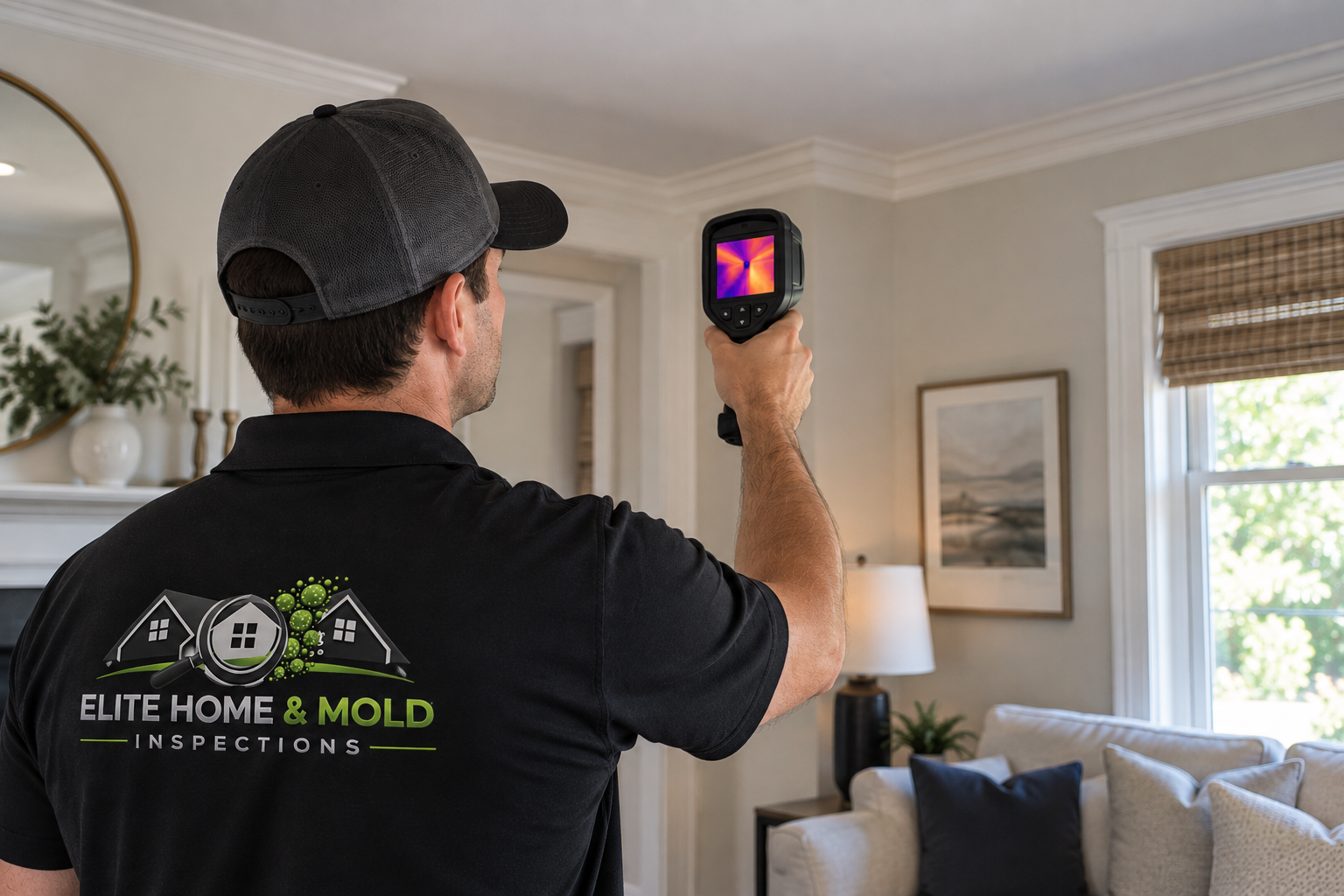
Depending on the conditions present, this may include moisture meter readings, thermal imaging where applicable, photographs, and documentation of accessible moisture-related conditions throughout the affected areas.
What Buyers Should Take Away From the Inspection
The goal of a home inspection is not to find a completely defect-free house. Instead, it is to help the buyer better understand the visible condition of the property, its major systems, and areas that may require attention.
For buyers who are especially concerned about mold, moisture, indoor air quality, or previous water damage, the most useful inspection is one that considers how the building systems interact rather than simply looking at each defect individually.
Frequently Asked Questions
What are the most common home inspection issues?
Common findings include roof deterioration, plumbing leaks, basement moisture, drainage problems, electrical concerns, HVAC issues, attic ventilation problems, foundation conditions, and signs of previous water damage.
Does a home inspection include mold testing?
No. Mold testing is a separate environmental service. A home inspection may document visible moisture conditions or suspect growth, but laboratory mold sampling must be separately requested and authorized.
Can a home inspection find hidden mold?
A standard home inspection is limited to visible and accessible areas and cannot confirm concealed mold inside walls, ceilings, or other inaccessible assemblies.
Should I get a mold inspection before buying a house?
A separate mold inspection may be useful when there is visible suspect growth, musty odor, known water damage, previous remediation, recurring moisture, or another specific mold-related concern.
What is moisture mapping?
Moisture mapping documents accessible moisture-related conditions using observations, moisture measurements, photographs, and thermal imaging when applicable.
Buying a Home With Mold or Moisture Concerns?
Elite Home & Mold Inspections provides licensed home inspections, professional mold inspections, moisture evaluations, indoor air quality testing, and environmental testing throughout Massachusetts and New Hampshire.