


“Evan is a great guy. Was patient with my questions. Was very thorough with the inspection, explanations, and testing.”
Moisture Mapping & Water Intrusion Documentation in Massachusetts & New Hampshire
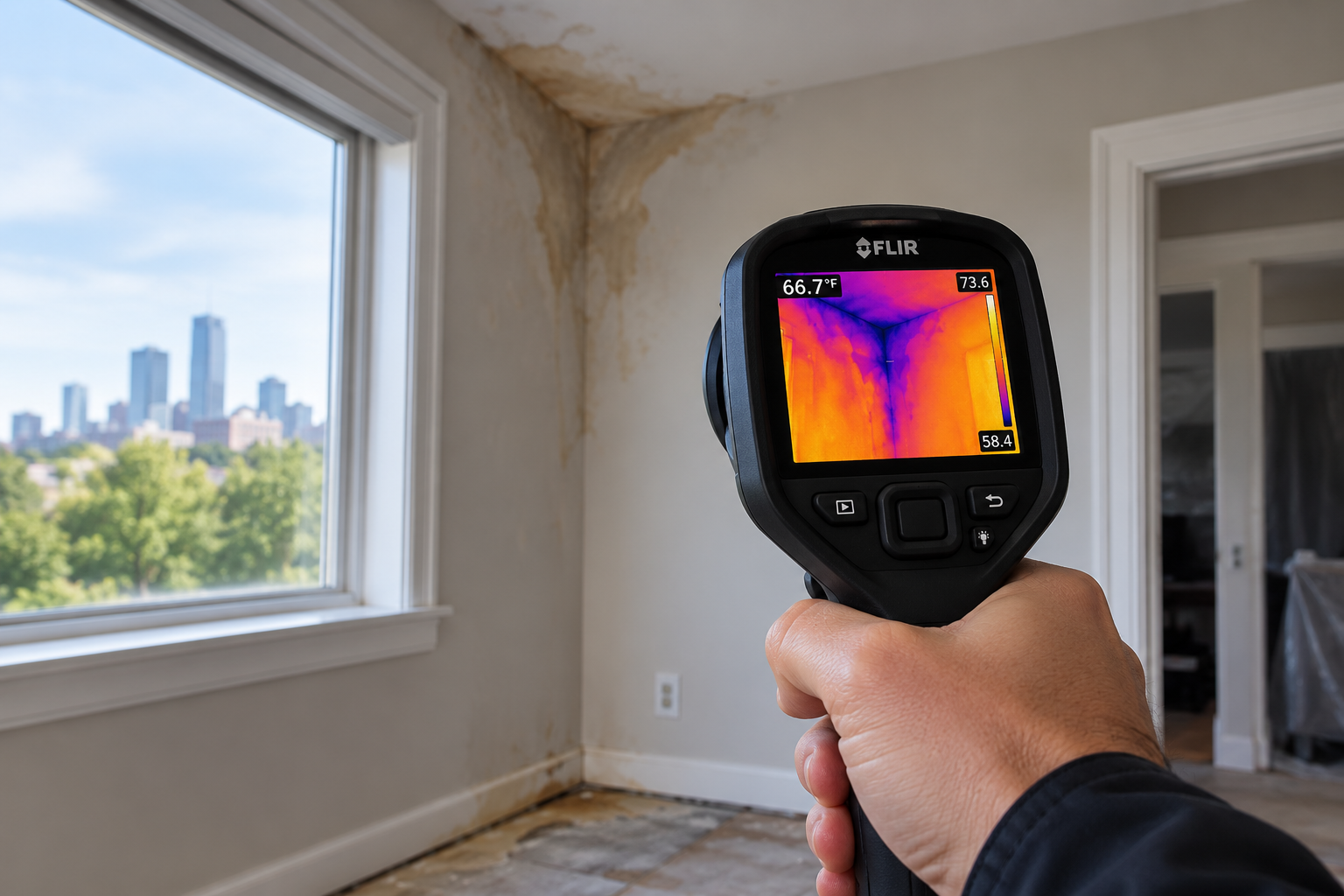
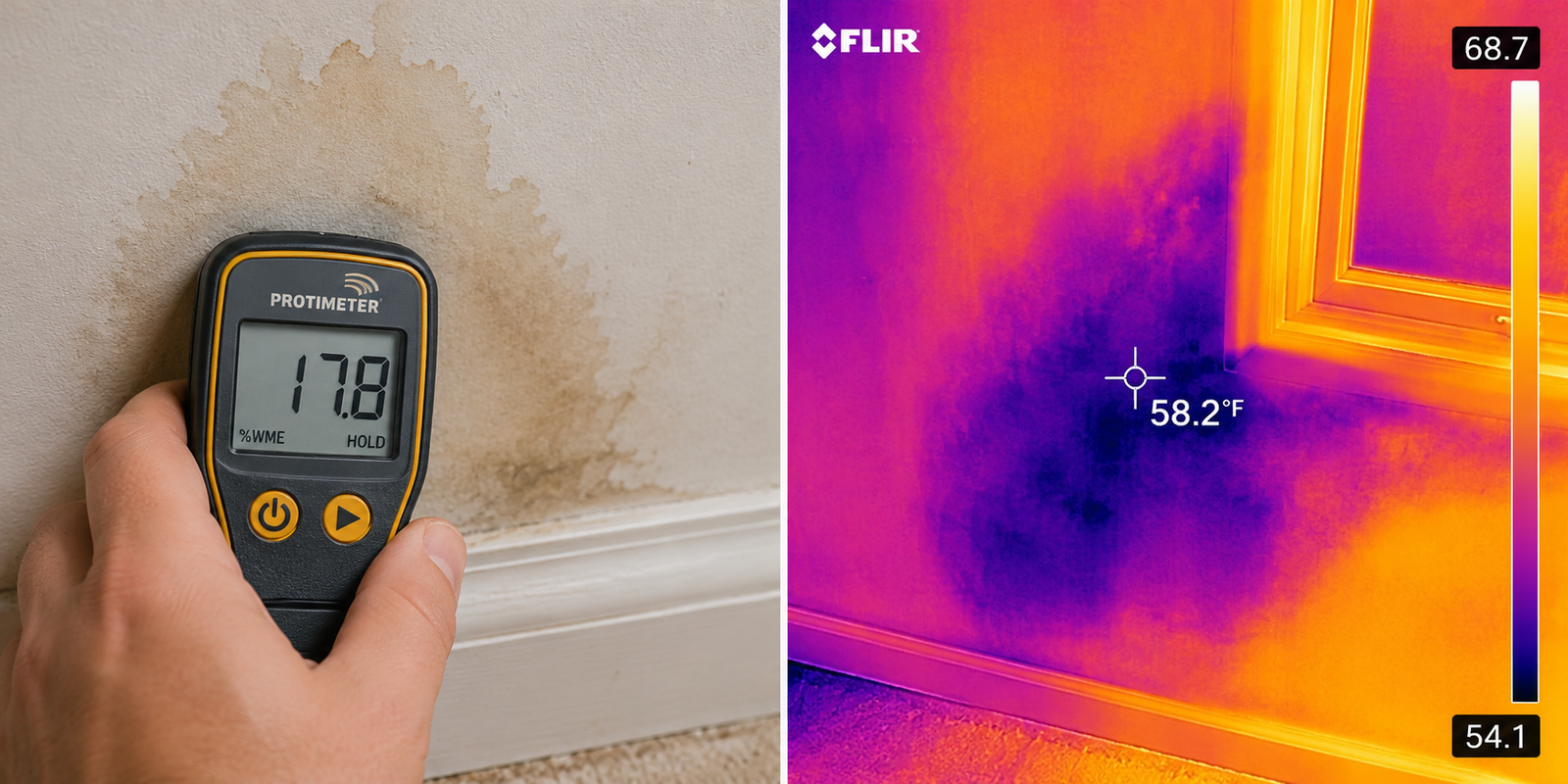
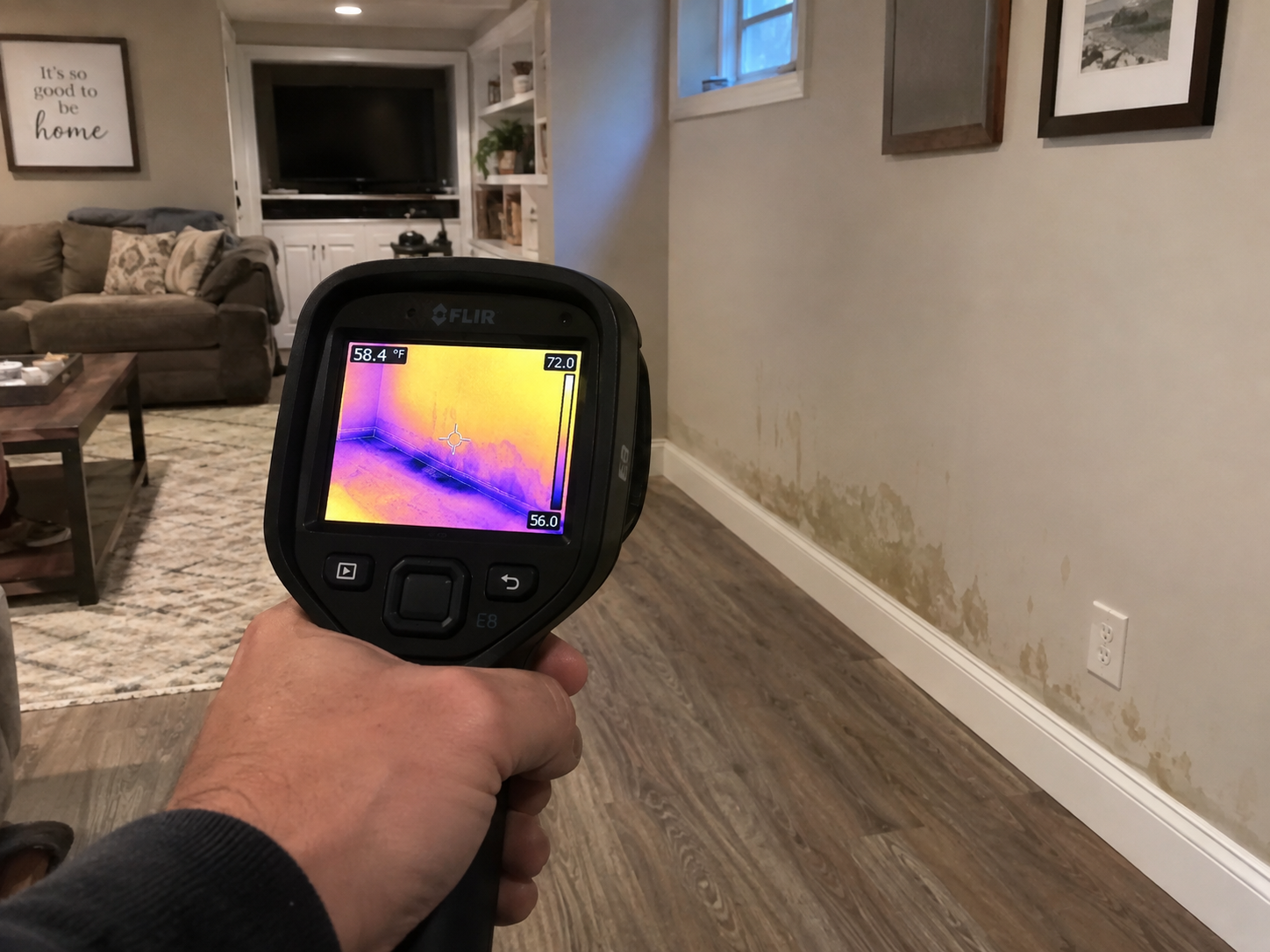
Moisture mapping Massachusetts services from Elite Home & Mold Inspections provide independent documentation of moisture conditions and water intrusion concerns throughout Massachusetts and New Hampshire. We use professional moisture meters, thermal imaging, visual inspection, and building-science observations to evaluate accessible areas. Thermal imaging identifies temperature differences that may help locate areas for closer evaluation; it does not directly detect mold or confirm moisture by itself.
Moisture Mapping Massachusetts & Water Intrusion Documentation
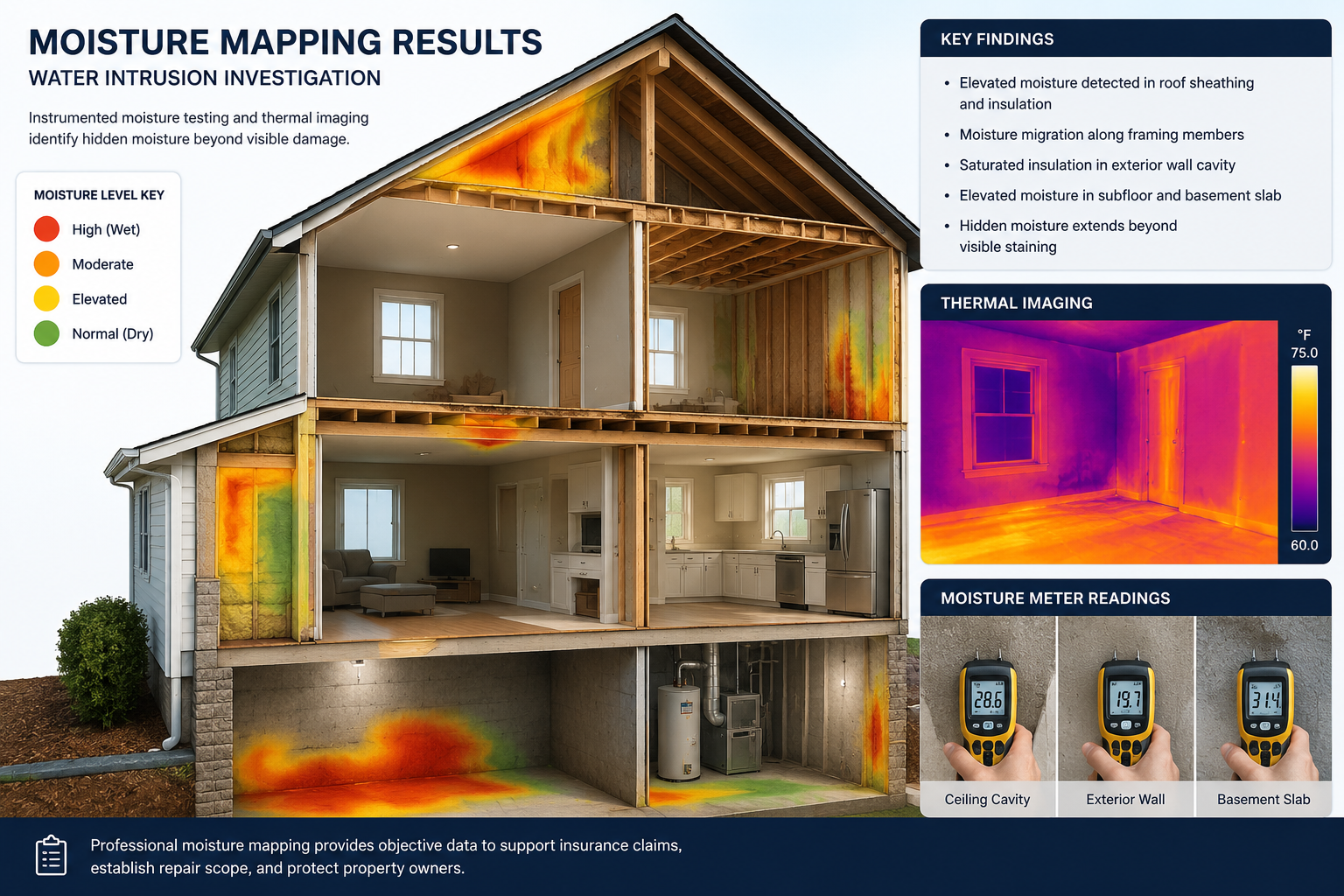
Moisture mapping is the process of documenting moisture conditions across accessible building materials to help define the location and extent of a water-related concern. We provide moisture mapping and water intrusion documentation throughout Massachusetts and New Hampshire using moisture meters, thermal imaging, photographs, visual observations, and building-science-based evaluation.
Moisture Mapping & Meter Readings
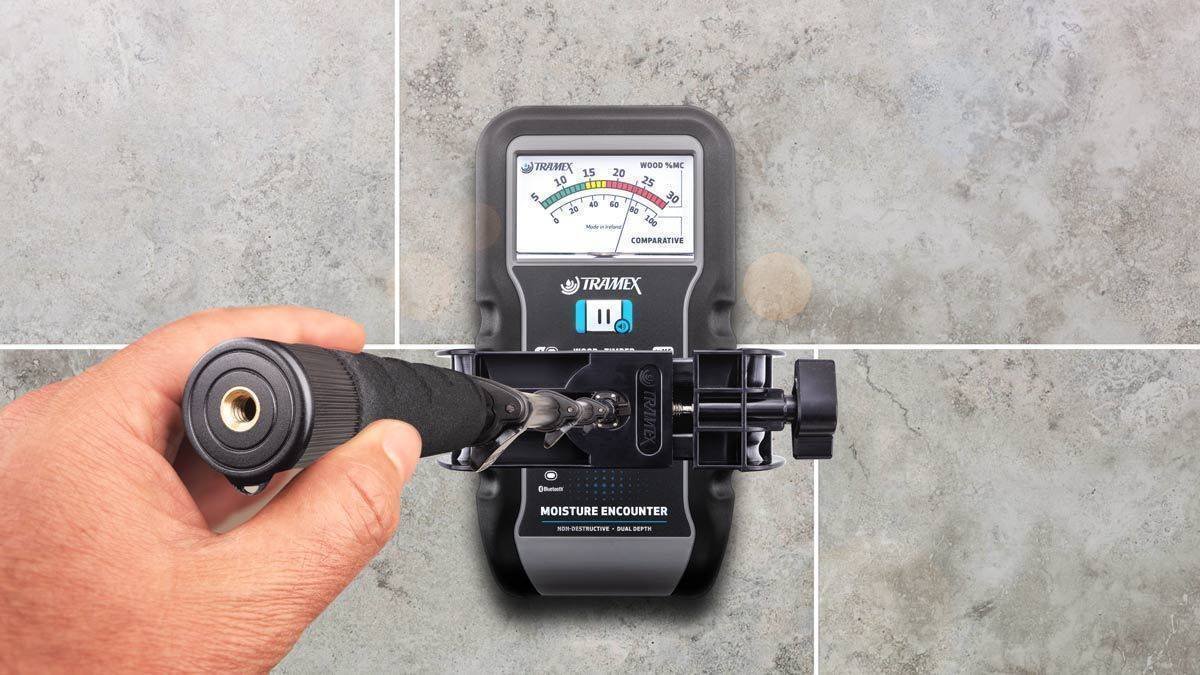
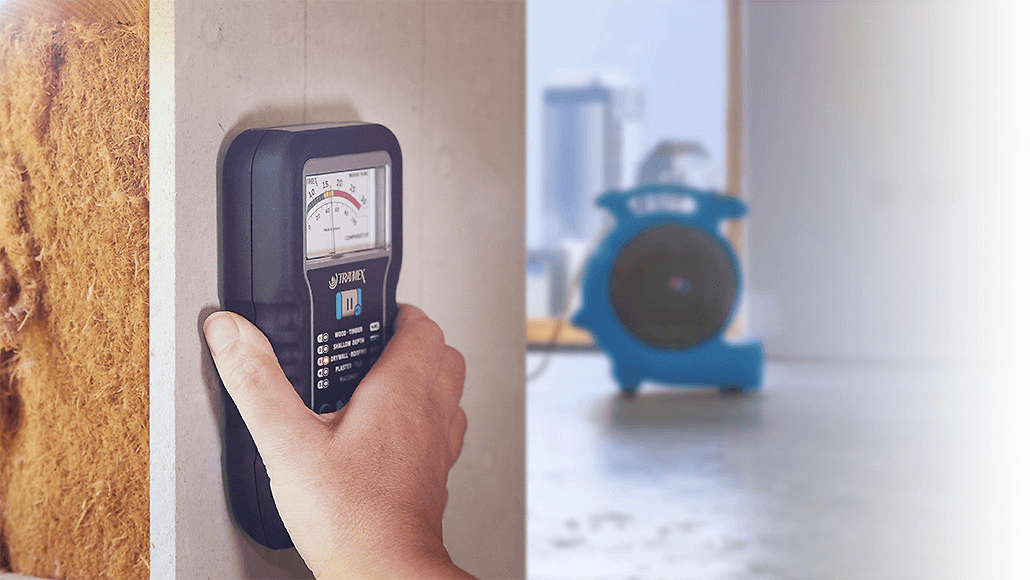
Professional moisture meters are used to compare accessible building materials, identify elevated readings, and document moisture patterns present at the time of the inspection. Readings are interpreted in context with material type, visible conditions, and the surrounding area.
Thermal Imaging & Its Limitations
Thermal imaging shows surface temperature differences that may help identify areas for closer evaluation. It does not directly detect mold, measure moisture content, or confirm a leak by itself. Suspected areas should be compared with moisture meter readings, visual observations, and other inspection findings.
Water Intrusion Documentation
Moisture documentation can be useful after roof leaks, plumbing failures, foundation seepage, flooding, ice dams, appliance leaks, or other water events. Photographs, observations, meter readings, and affected areas can be documented for the conditions present during the inspection.
What Moisture Mapping Can Confirm
Moisture mapping can document elevated readings, thermal patterns, visible staining, damp materials, and the apparent extent of accessible affected areas at the time of inspection. It does not by itself determine the exact source of every leak, identify hidden conditions behind inaccessible finishes, or confirm whether mold is present.
Request Moisture Mapping
Tell us about the leak, water intrusion, damp area, staining, or moisture concern you would like evaluated. We’ll review the information and contact you regarding the appropriate moisture mapping scope, pricing, availability, and scheduling.
Moisture Mapping & Water Intrusion Documentation for Insurance Claims
Following an ice dam, roof leak, plumbing failure, basement flooding, foundation seepage, appliance leak, or other water event, independent moisture documentation can help record the accessible areas affected and the measurable conditions present at the time of the inspection. Documentation does not determine insurance coverage or responsibility.
Document Moisture Beyond Visible Staining
Moisture meter readings can help document elevated moisture in accessible walls, ceilings, floors, and other building materials even when visible staining does not show the full extent of the affected area.
Moisture Meters & Thermal Imaging
Moisture meters, thermal imaging, photographs, and visual observations are used together to document conditions. Thermal imaging shows surface temperature differences and does not directly detect mold or confirm moisture by itself.
Independent Third-Party Documentation
Findings may provide useful documentation for homeowners, property managers, insurers, attorneys, and other parties reviewing the conditions observed following a water event.
We do not perform remediation or repairs. Our role is to independently document accessible conditions, moisture readings, thermal patterns, photographs, and observations present at the time of inspection. Moisture mapping does not by itself determine the exact source of every leak, confirm hidden conditions behind inaccessible finishes, establish insurance coverage, or confirm whether mold is present.
500+ Five-Star Google Reviews
See what property owners throughout Massachusetts and New Hampshire are saying about Elite Home & Mold Inspections.
“Excellent experience with Elite Home and Mold inspection service. Abe was professional, extremely knowledgeable, and very informative throughout the entire process.”
When Moisture Documentation Can Be Useful
Moisture mapping can create a dated record of accessible conditions, moisture readings, affected areas, photographs, and observations before drying, demolition, repairs, or reconstruction changes the property.
Insurance & Water-Loss Review
Moisture readings, photographs, and inspection findings can provide documented information for parties reviewing conditions following a water-loss event.
Pre-Repair Documentation
Accessible conditions can be documented before drying, demolition, reconstruction, or other work changes the areas being evaluated.
Independent Property Record
Third-party findings can create a dated record of observable and measurable conditions present at the time of the inspection.
Moisture Beyond Visible Staining
Moisture meter readings may identify elevated conditions in accessible materials that are not obvious from visible staining alone.
Thermal Imaging as a Supporting Tool
Thermal imaging can show surface temperature differences that may identify areas for closer evaluation. It does not directly detect mold or confirm moisture without supporting observations and moisture measurements.
Moisture mapping can document accessible walls, ceilings, flooring, and other building materials before conditions change. It does not by itself determine insurance coverage, establish responsibility, confirm hidden conditions behind inaccessible finishes, or confirm whether mold is present.
What Is Professional Moisture Mapping?
Professional moisture mapping is the process of documenting moisture conditions across accessible building materials to help identify patterns, elevated readings, and the apparent extent of a water-related concern. The evaluation may combine moisture meters, thermal imaging, photographs, visual observations, and building-science assessment.
Moisture Meter Readings
Moisture meters are used to compare accessible materials, document elevated readings, and help define moisture patterns present at the time of inspection.
Moisture Patterns
Readings across walls, ceilings, flooring, and other accessible materials can help show where moisture-related conditions appear concentrated or extend beyond visible staining.
Thermal Imaging as a Supporting Tool
Thermal imaging shows surface temperature differences that may identify areas for closer evaluation. It does not directly detect mold, measure moisture content, or confirm a leak by itself.
Documented Extent of Accessible Conditions
Moisture readings, photographs, and observations can help document the apparent extent of accessible affected areas at the time of the inspection.
Moisture mapping can document elevated readings, thermal patterns, visible staining, and damp accessible materials. It does not by itself determine the exact source of every leak, reveal all concealed conditions, or confirm whether mold is present.
Ice Dam Water Intrusion: What Moisture Mapping Documented
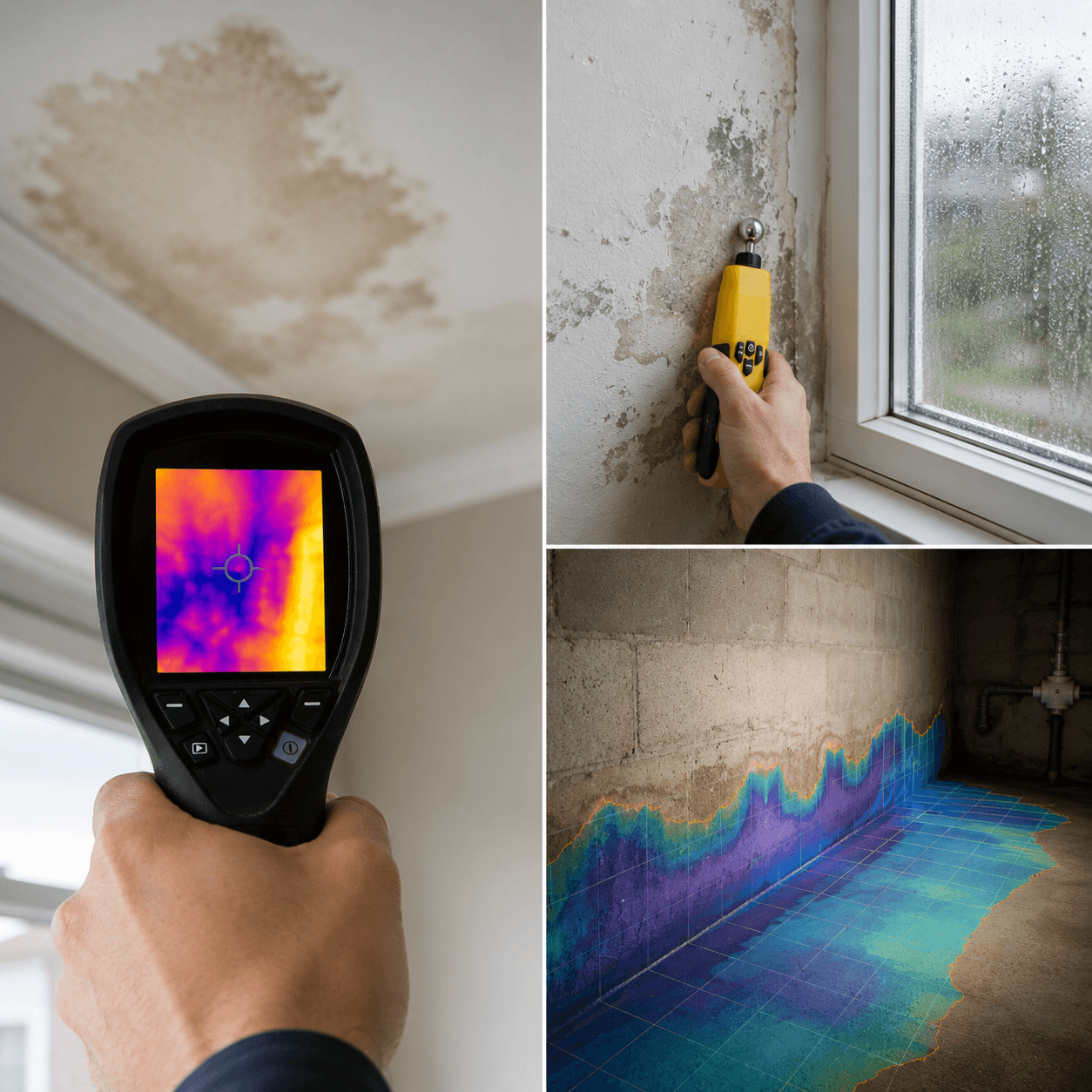
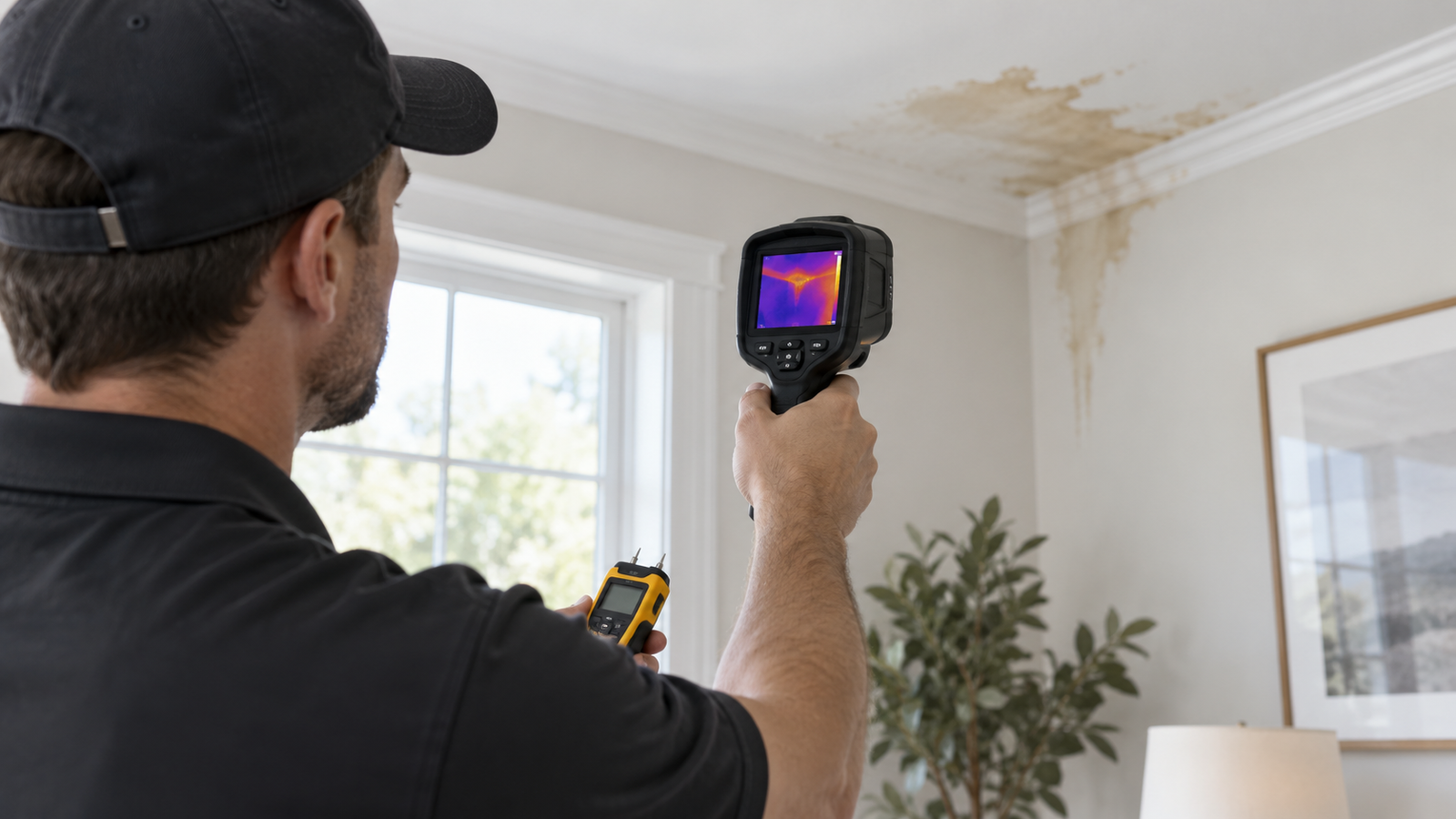
Visible ceiling staining appeared limited to one second-floor bedroom. Moisture meter readings documented elevated moisture beyond the visibly stained finishes, while thermal imaging showed temperature patterns that helped identify areas for closer evaluation.
What Appeared to Be a Localized Ceiling Leak
Visible staining was concentrated in a limited area. Moisture meter readings documented additional elevated readings beyond the visibly stained finishes. Thermal patterns were used as supporting information to identify areas for comparison with moisture measurements.
The inspection created a dated record of moisture readings, thermal observations, photographs, and accessible affected areas before repairs altered the conditions being evaluated. Thermal imaging did not independently confirm moisture or mold; it was used together with moisture meter readings and visual observations.
When Moisture Mapping May Be Useful
Professional moisture mapping can be useful after a known water event, when visible damage may not show the full extent of affected accessible materials, or when a dated record of moisture conditions is needed before drying, demolition, repairs, or reconstruction changes the property.
New England Winter Conditions Can Create Concealed Moisture Concerns
Ice dams, snowmelt, freeze-thaw cycles, and winter roof leaks can contribute to moisture conditions in ceilings, walls, insulation, and other building materials before obvious staining or visible damage develops.
Ice dam formation and roof-edge water intrusion
Snowmelt and roof leaks associated with ice buildup
Attic heat-loss and insulation-related conditions
Moisture-related ceiling and wall conditions during winter events
Moisture meter readings, photographs, and visual observations can help document the apparent extent of accessible moisture-related conditions. Thermal imaging may help identify surface temperature differences for closer evaluation, but it does not directly detect mold or confirm moisture by itself.
Our Moisture Mapping Process
Initial Property Review
We review the reported water event, property history, visible staining, known leak locations, recent repairs, and areas of concern before beginning the evaluation.
Instrumented Moisture Evaluation
Moisture meters are used to document readings in accessible materials. Thermal imaging may help identify surface temperature patterns for comparison with those readings and visible conditions, but it does not directly confirm moisture or mold by itself.
Moisture Mapping & Documentation
Moisture readings, thermal observations, photographs, and visible conditions are used to document the apparent extent of accessible moisture-related conditions in the areas evaluated.
Written Documentation
You receive documented findings that may include moisture readings, photographs, thermal images when applicable, and observations from the completed inspection.
Independent Moisture Documentation After a Water-Loss Event
We provide independent documentation of accessible moisture conditions, affected areas, meter readings, photographs, and building observations following water intrusion or other water-loss events. The documentation reflects conditions present at the time of inspection and does not determine insurance coverage, responsibility, or claim outcome.
Documentation May Be Useful For
Our Documentation Can Include
We do not perform remediation or repairs. Our role is to document accessible conditions and measurable moisture findings without advocating for a particular repair scope. Thermal imaging is used only as a supporting tool and does not directly detect mold or confirm moisture by itself.
Residential & Commercial Moisture Mapping
We provide professional moisture mapping and water intrusion documentation for residential, multifamily, commercial, managed, and other properties throughout Massachusetts and New Hampshire.
Moisture mapping can document elevated moisture readings, photographs, visible conditions, and the apparent extent of affected accessible building materials before drying, demolition, or repairs alter the conditions being evaluated. Thermal imaging may provide supporting temperature-pattern information but does not directly confirm moisture or mold by itself.
Independent Moisture Documentation. Building-Science Driven.
Independent moisture mapping and water intrusion documentation backed by professional credentials, building-science knowledge, and over 30 years of combined experience in the construction and environmental industries.
View Professional Credentials
We do not perform remediation or repairs. Our role is to document accessible moisture conditions, measurements, photographs, thermal observations when applicable, and other findings from the completed inspection.
Moisture Mapping Massachusetts & New Hampshire Service Areas
Water Intrusion Documentation for Residential & Commercial Properties
Elite Home & Mold Inspections provides professional moisture mapping and water intrusion documentation for residential, multifamily, commercial, and managed properties throughout Massachusetts and New Hampshire. Our service area includes Boston, Greater Boston, the North Shore, MetroWest, communities north of Boston, and Southern New Hampshire.
- Melrose
- Wakefield
- Stoneham
- Reading
- North Reading
- Lynnfield
- Peabody
- Salem
- Marblehead
- Swampscott
- Beverly
- Danvers
- Hamilton
- Wenham
- Topsfield
- Manchester-by-the-Sea
- Gloucester
- Ipswich
- Newburyport
- Lexington
- Winchester
- Woburn
- Burlington
- Wilmington
- Tewksbury
- Andover
- North Andover
- Billerica
- Chelmsford
- Westford
- Manchester
- Nashua
- Salem
- Windham
- Londonderry
- Derry
- Bedford
- Merrimack
- Hudson
- Atkinson
- Pelham
- Hollis
- Amherst
- Exeter
- Portsmouth
- Concord
- Hooksett
- Wolfeboro
- Meredith
- Moultonborough
- Center Harbor
- Tuftonboro
- Alton
- Gilford
- Laconia
- Holderness
- New Hampton
- Ossipee
- North Conway
Moisture Mapping & Water Intrusion FAQs
Learn more about professional moisture mapping, water intrusion documentation, moisture meter readings, thermal imaging, mold-related concerns, insurance documentation, and services throughout Massachusetts and New Hampshire.
What is professional moisture mapping?
Professional moisture mapping is the process of documenting moisture conditions across accessible building materials using moisture meter readings, photographs, visual observations, thermal imaging as a supporting tool, and building-science evaluation. It can help document moisture patterns and the apparent extent of affected accessible areas.
How are moisture meters used during an inspection?
Moisture meters are used to compare accessible building materials and document elevated readings present at the time of inspection. Readings are interpreted in context with the material type, surrounding conditions, visible observations, and other findings.
Can thermal imaging directly detect moisture or mold?
No. Thermal imaging shows surface temperature differences. It does not directly detect mold, measure moisture content, or confirm a leak by itself. Thermal patterns are used as supporting information and should be compared with moisture meter readings, visual observations, and other building conditions.
Can moisture be present without visible staining?
Yes. Accessible building materials may show elevated moisture readings even when obvious staining or visible water damage is not present. Moisture measurements can provide additional information about conditions that are not apparent from the surface alone.
Can moisture mapping confirm whether mold is present?
No. Moisture mapping can document conditions that may contribute to mold growth, such as elevated moisture, water intrusion, or damp materials, but it does not confirm whether mold is present. When mold is the concern, a separate mold inspection or mold testing may be appropriate.
How does moisture mapping relate to indoor air quality concerns?
Moisture conditions can be relevant when evaluating musty odors, damp building materials, or other indoor environmental concerns. Moisture mapping documents the building conditions; it does not measure overall indoor air quality. When broader air-quality concerns are present, indoor air quality testing may be appropriate.
What can moisture mapping confirm?
Moisture mapping can document elevated moisture readings, visible staining, damp accessible materials, thermal patterns, photographs, and the apparent extent of accessible affected areas at the time of inspection.
What can moisture mapping not confirm?
Moisture mapping does not by itself identify every concealed condition, determine the exact source of every leak, confirm insurance coverage or responsibility, or establish whether mold is present. Inaccessible areas may contain conditions that cannot be evaluated without access.
What types of water events can moisture mapping document?
Moisture mapping may be useful following roof leaks, ice dams, plumbing failures, burst pipes, appliance leaks, basement or foundation water intrusion, flooding, window or siding leaks, and other water-related events.
How soon after a leak should moisture mapping be performed?
Moisture conditions can change as materials dry or repairs begin, so documentation is often most useful before conditions are significantly altered. Timing depends on the type of water event, accessibility, and the purpose of the inspection.
Is moisture mapping required for an insurance claim?
Requirements vary by insurance carrier and individual claim. Moisture mapping can provide independent documentation of moisture readings, photographs, thermal observations when applicable, and conditions present at the time of inspection. The service does not determine coverage or claim outcome.
What is included in moisture mapping documentation?
Documentation may include moisture readings, photographs, thermal images when applicable, observations of accessible building conditions, affected-area documentation, and written findings based on the completed inspection.
Can moisture mapping be performed before repairs or demolition?
Yes. Performing moisture documentation before drying, demolition, reconstruction, or repairs can create a dated record of accessible conditions before those areas are altered.
Do you provide moisture mapping for basements and lower-level water intrusion?
Yes. Moisture mapping can be used to document accessible basement and lower-level conditions associated with foundation seepage, plumbing leaks, drainage issues, flooding, and other water intrusion concerns.
Do you provide moisture mapping for commercial properties?
Yes. Moisture mapping and water intrusion documentation are available for residential, multifamily, commercial, managed, and other property types depending on the inspection scope.
Do you perform water damage repair or remediation?
No. Elite Home & Mold Inspections does not perform remediation or repairs. Our role is independent inspection, moisture measurement, thermal observation when applicable, photography, and documentation of the conditions evaluated.
Where do you provide moisture mapping?
We provide moisture mapping and water intrusion documentation throughout Massachusetts and New Hampshire, including Boston, Greater Boston, the North Shore, MetroWest, communities north of Boston, and Southern New Hampshire.
Tell us what happened, which areas were affected, and what type of documentation you need. We can explain the available moisture mapping and water intrusion documentation options for your property.
Related Moisture, Mold & Indoor Environmental Services
Moisture conditions can overlap with mold concerns, indoor air quality issues, and post-remediation verification needs. Explore related independent inspection and testing services from Elite.
Mold Inspection
Independent mold inspections for properties with visible growth, musty odors, water intrusion, damp materials, or other mold-related concerns.
Learn About Mold Inspections →Mold Testing
Air and surface sampling may be appropriate when laboratory analysis is needed to help evaluate mold-related conditions.
Learn About Mold Testing →Indoor Air Quality Testing
Indoor air quality evaluations for musty odors, airborne concerns, environmental conditions, and other indoor air complaints.
Explore Indoor Air Quality Testing →Post-Remediation Verification
Independent post-remediation verification and mold clearance testing after remediation work has been completed.
Learn About Mold Clearance →Need Moisture Mapping or Water Intrusion Documentation?
Dealing with a roof leak, plumbing failure, flooding, ice dam, basement water intrusion, or another water-related concern? We provide independent moisture mapping using professional moisture meters, photographs, visual observations, and thermal imaging as a supporting tool to document accessible conditions at the time of inspection.