
ERMI Mold Testing in Massachusetts & New Hampshire
We provide professional ERMI mold testing using settled-dust sampling and DNA-based laboratory analysis. ERMI identifies and measures 36 specific mold species in collected household dust, providing additional environmental information for homes with mold or moisture concerns. Our services are available throughout Massachusetts and New Hampshire.
- 500+ Five-Star Reviews
- 30+ Years of Combined Industry Experience
- Family-Owned & Operated
- Licensed, Certified & Fully Insured
Professional ERMI Dust Sampling
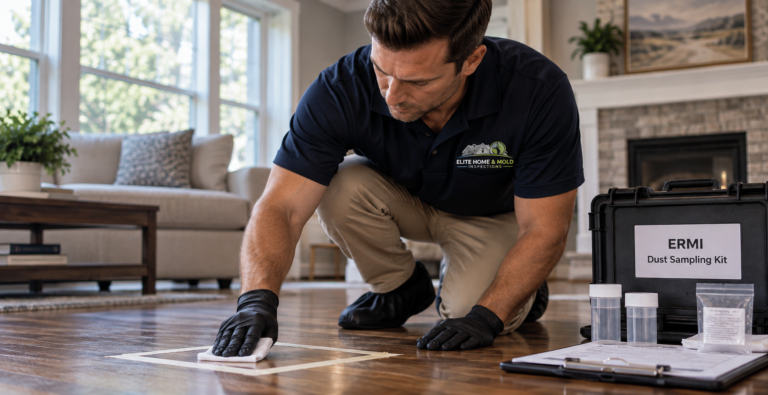
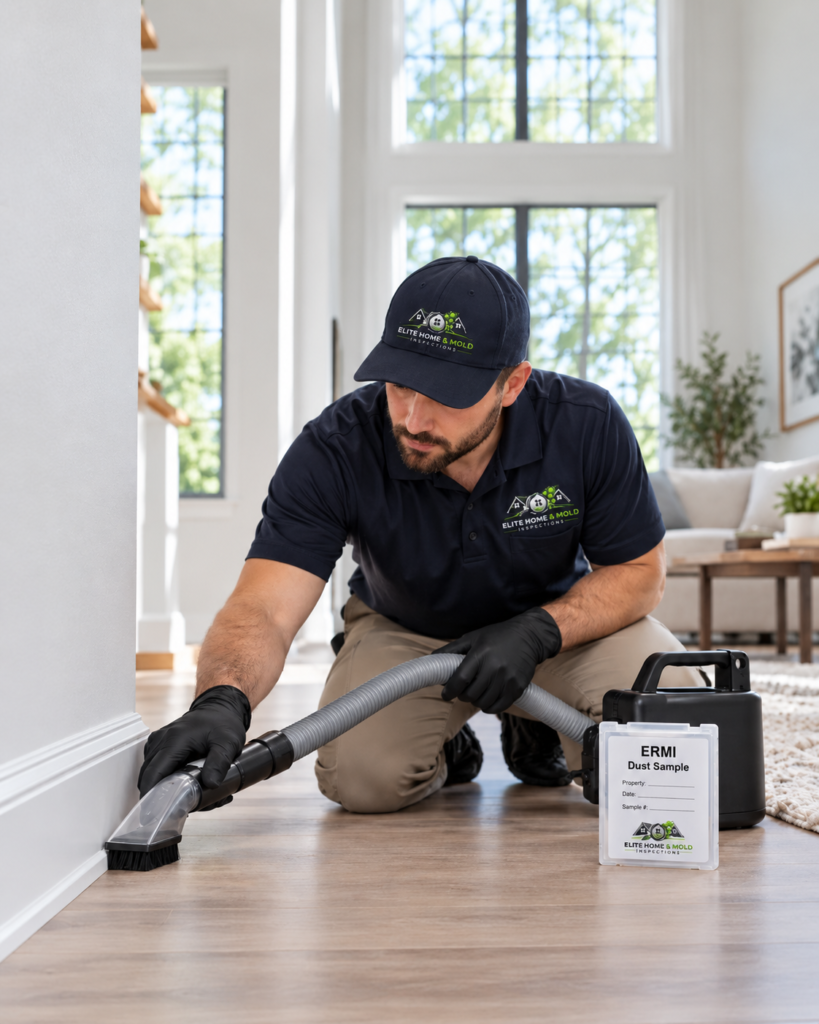
Settled-dust samples are collected from designated indoor surfaces using the appropriate sampling method and submitted for specialized laboratory analysis.
DNA-Based Laboratory Analysis
ERMI testing uses qPCR technology to identify and quantify 36 specific mold species in collected household dust.
Detailed ERMI Results & Interpretation
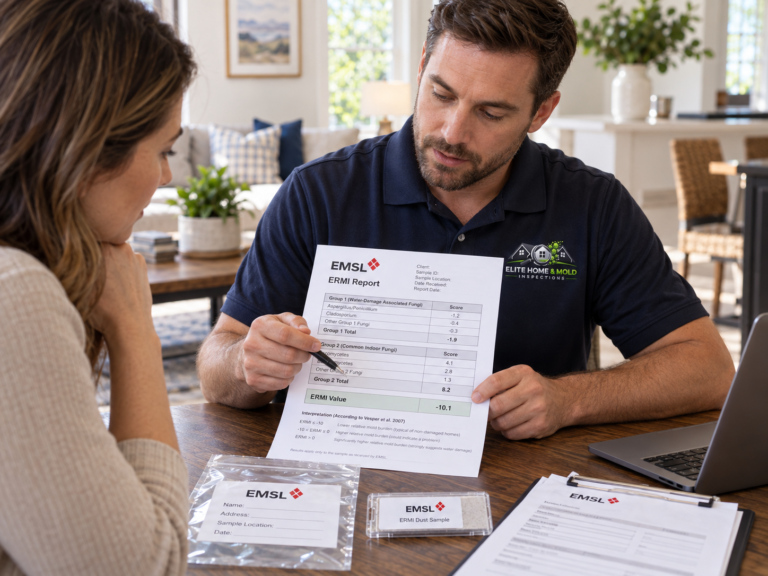
Receive a laboratory report showing the measured mold species, Group 1 and Group 2 results, and the calculated ERMI value, along with an explanation of what the findings mean.
Independent Testing. No Remediation Sales.
We provide independent environmental testing throughout Massachusetts and New Hampshire. Because we do not perform mold remediation, our findings remain separate from any cleanup services.
Request an Inspection
Complete the form below and we will contact you shortly to confirm pricing, availability, and scheduling.
What Is ERMI Mold Testing?
ERMI stands for Environmental Relative Moldiness Index. Developed by the U.S. Environmental Protection Agency as a research tool, ERMI uses DNA-based laboratory analysis to identify and quantify 36 specific mold species in settled household dust. Our professional ERMI mold testing services are available throughout Massachusetts and New Hampshire.
Professional ERMI Dust Sampling
Settled dust is collected from designated indoor surfaces using the receiving laboratory’s sampling protocol and submitted for specialized mold analysis.
DNA-Based Mold Analysis
Quantitative polymerase chain reaction (qPCR) technology is used to identify and measure the 36 mold species included in the ERMI method.
Group 1 & Group 2 Mold Species
The laboratory evaluates 26 species associated with water-damaged environments and 10 species commonly found in homes without water damage.
Detailed ERMI Laboratory Results
Receive a mold species profile and calculated ERMI value, along with an explanation of the laboratory findings and the limitations of the testing method.
ERMI is a research-based environmental measurement, not a diagnostic test or a determination that a property is safe or unsafe. Results should be considered alongside the home’s moisture history, visible conditions, and other inspection findings. ERMI testing alone cannot identify the location or extent of concealed mold growth.
500+ Five-Star Reviews from Massachusetts & New Hampshire Clients
Posted on Google![]()
Mike MTrustindex verifies that the original source of the review is Google.
Paul the owner was very detailed in his inspection process. I would 100% recommend themPosted on Google![]()
Susan LydonTrustindex verifies that the original source of the review is Google.
Evan was very easy to work with and clearly possesses a wealth of knowledge about home maintenance as well as potential issues that can arise!Posted on Google![]()
janet bejtlichTrustindex verifies that the original source of the review is Google.
Excellent experience with Elite Home and Mold inspection service. Abe was professional, extremely knowledgeable, and very informative throughout the entire process. He took the time to explain everything clearly and answered all of our questions with patience and honesty. We left feeling much more informed and at ease. Thank you! Highly recommend!Posted on Google![]()
Andrew HuynhTrustindex verifies that the original source of the review is Google.
Evan is a great guy. Was patient with my questions. Was very thorough with the inspection, explanations, and testing. He made sure I understand what was going on and know the potential consequences that could result. Very quick and efficient with time.Posted on Google![]()
Chris UnisTrustindex verifies that the original source of the review is Google.
Evan came by my house today. He was personable and took his time answering all my questions. He was knowledgeable, and we look forward to working with them to improve the air quality in my house.Posted on Google![]()
Julie ClarkTrustindex verifies that the original source of the review is Google.
Great experience and super helpful!
How Does ERMI Mold Testing Work?
ERMI mold testing analyzes settled household dust to identify and quantify specific mold species using DNA-based laboratory methods. Our professional ERMI dust sampling process provides homeowners throughout Massachusetts and New Hampshire with detailed laboratory information about the mold species detected in their property.
Consultation & Sampling Preparation
We review the property and reason for testing, then identify appropriate indoor sampling locations. Dust collection is performed according to the receiving laboratory’s sampling instructions.
Professional Settled-Dust Collection
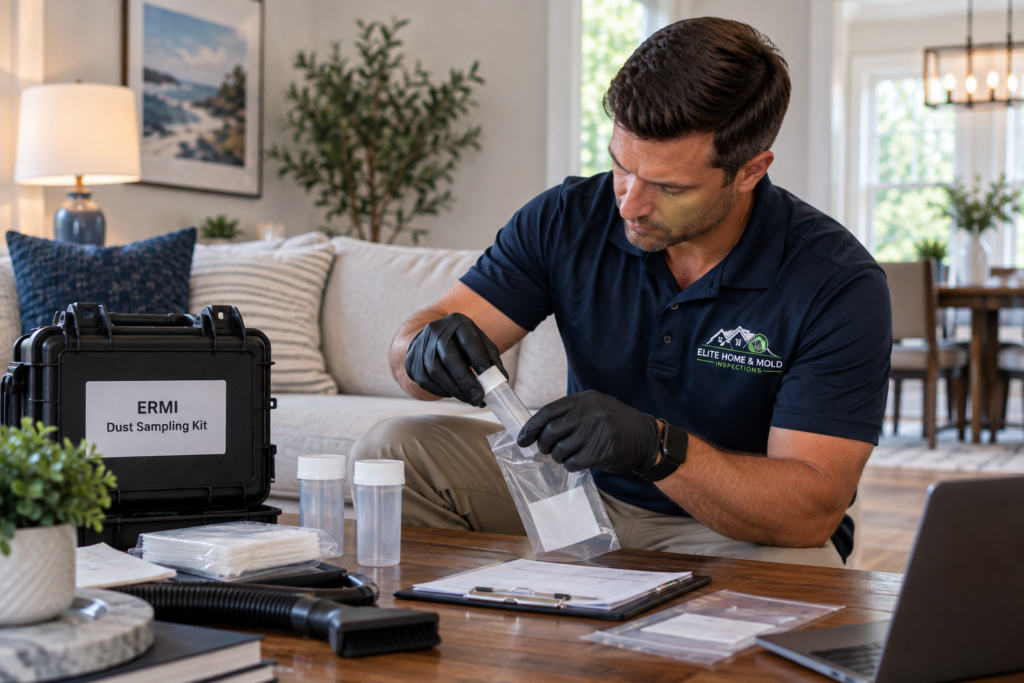
Using the appropriate ERMI sampling equipment, we collect settled household dust from designated interior surfaces. The sample is carefully handled and prepared for laboratory submission.
DNA-Based Laboratory Analysis
The collected dust is submitted for quantitative polymerase chain reaction (qPCR) analysis. The laboratory identifies and measures the 36 mold species included in the ERMI method.
ERMI Results & Report Interpretation
You receive a laboratory report with the individual mold species results, Group 1 and Group 2 findings, and calculated ERMI value. We explain the findings and what the testing can and cannot establish.
ERMI provides information about specific mold species detected in settled dust. It does not identify the location of mold growth or determine the source of water intrusion. When investigating an active moisture problem or suspected concealed mold, a professional mold inspection and moisture evaluation may provide important additional information.
ERMI Mold Testing vs. Traditional Mold Air Sampling
ERMI mold testing and traditional mold air sampling use different collection methods and provide different types of laboratory information. Understanding these differences can help homeowners throughout Massachusetts and New Hampshire determine which testing approach aligns with their environmental concerns.
ERMI Uses Settled Household Dust
ERMI analyzes dust collected from designated interior surfaces. The laboratory uses DNA-based methods to identify and quantify the 36 mold species included in the ERMI method.
Air Sampling Measures Airborne Spores
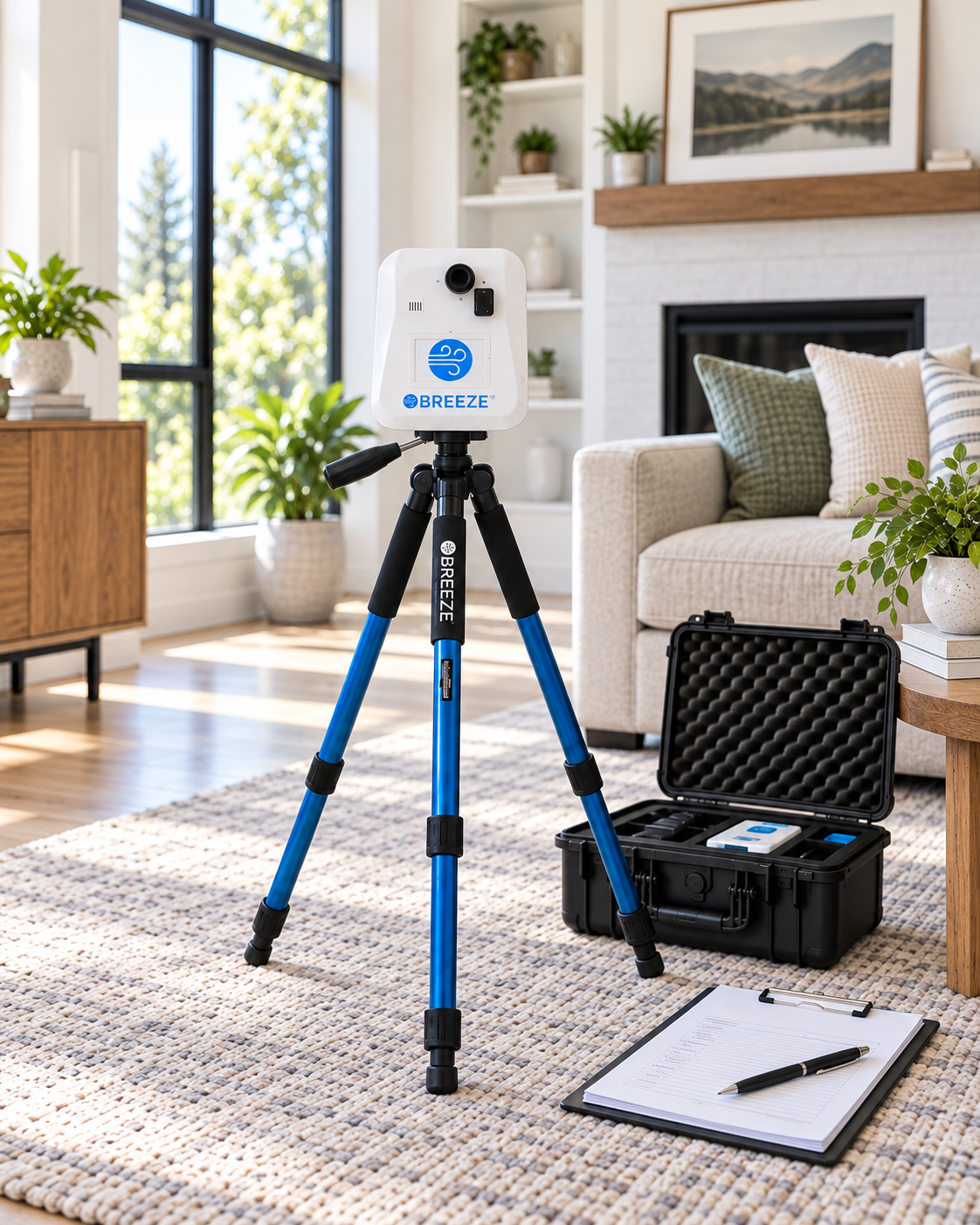
Traditional mold air testing collects a measured volume of air using a calibrated sampling pump. Laboratory analysis identifies and counts airborne mold spores captured during the sampling period.
Different Laboratory Methods
ERMI uses quantitative polymerase chain reaction (qPCR) to detect specific mold DNA. Conventional spore-trap air samples are typically examined microscopically to identify and count recognizable spores.
Different Environmental Information
Settled dust can reflect material accumulated over time, while air sampling provides information about spores captured during a particular sampling period. Neither method independently identifies the location of concealed mold growth.
Sample Type
Settled household dust
Indoor or outdoor air
Analysis Method
DNA-based qPCR
Microscopic spore analysis
Primary Results
36 species and ERMI calculation
Spore types and concentrations
Sampling Perspective
Accumulated settled dust
Airborne spores during collection
The appropriate approach depends on the reason for testing and the information being sought. ERMI is a research-based method and is not recommended by the EPA for routine assessment of individual homes. When evaluating suspected mold growth, moisture intrusion, or indoor airborne spore conditions, a professional mold inspection or conventional mold testing may provide more directly relevant information.
When Should You Consider ERMI Mold Testing?
ERMI mold testing may be considered when homeowners want additional information about the mold species present in settled household dust. This specialized testing provides a different type of environmental data than conventional air or surface sampling and may complement a professional mold inspection.
Previous Water Damage or Mold Problems
Homes with a history of flooding, plumbing leaks, roof leaks, or mold remediation may benefit from additional information about the mold species detected in accumulated household dust.
Persistent Musty Odors or Moisture Concerns
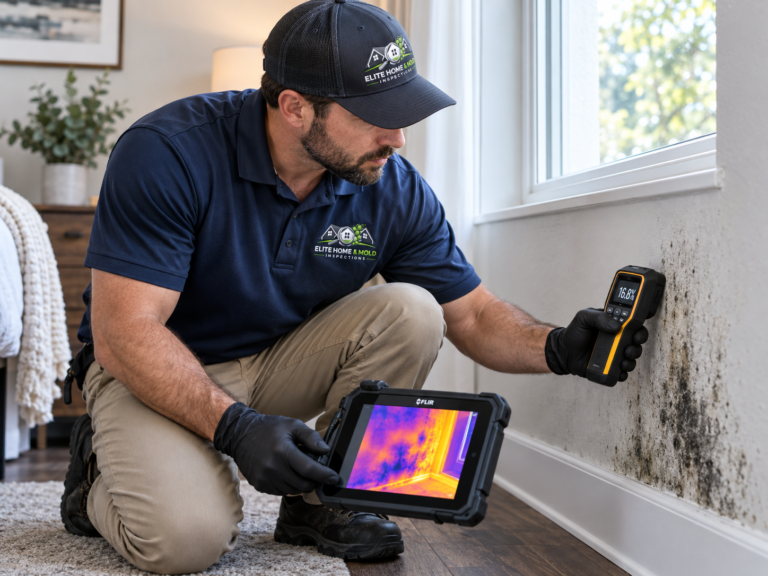
When musty odors or recurring moisture concerns are present, ERMI dust analysis may provide supplementary environmental data. A mold inspection is needed to investigate potential moisture sources and building conditions.
Detailed Mold Species Identification
ERMI evaluates 36 specific mold species using DNA-based laboratory analysis, providing a species-level profile of the collected dust that differs from conventional airborne spore testing.
Additional Environmental Investigation
Homeowners seeking specialized environmental information may consider ERMI alongside visual inspection, moisture detection, and other appropriate mold testing methods .
Buying or Evaluating a Property
Buyers and property owners may request ERMI dust testing when seeking additional information about a home's indoor environment, particularly where there is a documented history of moisture intrusion or previous mold concerns.
ERMI was developed by the EPA as a research tool and is not recommended by the agency for routine assessment of individual homes. It does not establish health risk, determine whether a building is safe, or locate concealed mold growth. When the primary concern is an active leak, visible mold, or suspected water intrusion, a professional mold inspection may be the more appropriate starting point.
What Do Your ERMI Mold Testing Results Mean?
An ERMI laboratory report provides detailed information about 36 specific mold species detected in collected household dust. Results are organized into two groups and used to calculate an Environmental Relative Moldiness Index (ERMI) value. Understanding these components helps homeowners throughout Massachusetts and New Hampshire interpret their laboratory findings.
More Than Just a Single Number
An ERMI report includes individual mold species measurements in addition to the calculated index. We explain the laboratory findings, what the measurements represent, and the limitations of using an ERMI value to evaluate an individual property.
Group 1 — Water-Damage-Associated Molds
Group 1 contains 26 mold species associated with water-damaged environments. The laboratory reports the measured concentrations of these species in the collected dust sample.
Group 2 — Common Background Molds
Group 2 includes 10 mold species commonly found in homes without water damage. These measurements form the comparison component of the ERMI calculation.
Your Calculated ERMI Value
The ERMI value is calculated from the difference between the summed logarithmic concentrations of Group 1 and Group 2 species. It is a research-based index, not a percentage or a direct measurement of airborne mold exposure.
Professional Results Explanation
We explain the reported mold species, laboratory measurements, and calculated ERMI value so you can understand the information provided by your test and its limitations.
ERMI was developed by the EPA as a research tool and is not recommended for routine assessment of individual homes. There is no universally established ERMI score that determines whether a home is safe, whether occupants will experience health effects, or whether remediation is required. ERMI also cannot identify the location of concealed mold growth.
When the concern involves active water intrusion or suspected hidden mold, a professional mold inspection and moisture mapping can provide additional building-specific information.
Why Choose Elite for ERMI Mold Testing?
We provide professional ERMI dust sampling and laboratory testing throughout Massachusetts and New Hampshire. With over 30 years in the home inspection field, we understand the importance of proper sample collection, building-specific environmental information, and clear communication throughout the testing process.
Independent Environmental Testing
We do not perform mold remediation. Our role is to provide independent testing and explain the laboratory findings without selling cleanup services.
Professional ERMI Sample Collection
We collect settled household dust using the appropriate sampling equipment and follow the receiving laboratory’s collection and handling instructions.
Certified Mold Inspectors
Our background in mold inspection, building science, and moisture evaluation helps us explain the difference between laboratory measurements and actual building conditions.
Specialized Laboratory Analysis
Collected dust is submitted for DNA-based analysis of the 36 mold species included in the ERMI method, with individual species measurements and a calculated ERMI value.
Clear Results & Interpretation
We provide the laboratory report and explain the reported findings, including the limitations of using ERMI to evaluate an individual property.
Massachusetts & New Hampshire Service
We provide ERMI testing for homeowners and property professionals throughout both states, with additional mold inspection and moisture evaluation services available when appropriate.
Our experience combines professional home inspection, mold assessment, moisture detection, and environmental testing to help clients understand their property’s indoor conditions.
Service Areas
ERMI Mold Testing Throughout Massachusetts & New Hampshire
We provide professional ERMI mold testing and settled-dust sampling for residential and commercial properties throughout Massachusetts and New Hampshire. Our services include specialized DNA-based laboratory analysis and clear interpretation of ERMI results across the following service areas.
Greater Boston
North Shore
- Melrose
- Wakefield
- Stoneham
- Reading
- North Reading
- Lynnfield
- Peabody
- Salem
- Marblehead
- Swampscott
- Beverly
- Danvers
- Hamilton
- Wenham
- Topsfield
- Manchester-by-the-Sea
- Gloucester
- Ipswich
- Newburyport
MetroWest
North of Boston
- Lexington
- Winchester
- Woburn
- Burlington
- Wilmington
- Tewksbury
- Andover
- North Andover
- Billerica
- Chelmsford
- Westford
New Hampshire
- Manchester
- Nashua
- Salem
- Windham
- Londonderry
- Derry
- Bedford
- Merrimack
- Hudson
- Atkinson
- Pelham
- Hollis
- Amherst
- Exeter
- Portsmouth
Lakes Region & Central New Hampshire
- Concord
- Hooksett
- Wolfeboro
- Meredith
- Moultonborough
- Center Harbor
- Tuftonboro
- Alton
- Gilford
- Laconia
- Holderness
- New Hampton
- Ossipee
- North Conway
ERMI Mold Testing FAQs in Massachusetts & New Hampshire
Answers to Your Questions About Professional ERMI Dust Testing
Have questions about ERMI mold testing for your home or commercial property? We answer common questions about Environmental Relative Moldiness Index testing, settled-dust sampling, DNA-based laboratory analysis, ERMI scores, pricing, and when this specialized testing may be appropriate. Whether you're investigating past water damage, suspected hidden mold, or ongoing indoor environmental concerns, our team provides professional ERMI testing throughout Massachusetts and New Hampshire.
What is ERMI mold testing?
ERMI stands for Environmental Relative Moldiness Index. Developed by the U.S. Environmental Protection Agency as a research tool, ERMI uses DNA-based laboratory analysis of settled household dust to measure 36 specific mold species. Results include individual species measurements and a calculated ERMI value.
How is an ERMI dust sample collected?
Settled dust is collected from designated indoor surfaces using the sampling equipment and procedures specified by the receiving laboratory. The sample is then submitted for specialized DNA-based laboratory analysis.
What is the difference between ERMI and traditional mold air testing?
ERMI measures specific mold DNA in settled household dust, while traditional mold air testing measures airborne mold spores captured during a particular sampling period. The two methods provide different types of environmental information.
How many mold species does ERMI testing measure?
ERMI evaluates 36 mold species: 26 Group 1 species associated with water-damaged environments and 10 Group 2 species commonly found in homes without water damage.
What does an ERMI score mean?
An ERMI score is a research-based index calculated from the measured concentrations of Group 1 and Group 2 mold species. It is not a pass-or-fail result, and there is no universally established score that determines whether a home is safe or requires remediation.
Can ERMI testing identify hidden mold?
ERMI can detect mold DNA in collected dust, but it cannot determine the location or extent of concealed mold growth. A professional mold inspection and moisture evaluation may be appropriate when hidden mold or water intrusion is suspected.
Can ERMI testing determine whether mold is affecting my health?
No. ERMI is an environmental testing method and cannot diagnose medical conditions, establish an individual's exposure, or predict health effects. Health-related concerns should be discussed with a qualified healthcare professional.
Can ERMI testing be used after mold remediation?
ERMI may provide additional information about mold DNA in settled dust, but it is not a standalone remediation clearance test. Post-remediation verification should be based on the remediation scope and may include visual assessment, moisture evaluation, and appropriate sampling.
How long does it take to receive ERMI laboratory results?
Turnaround times depend on the receiving laboratory and testing option selected. We will confirm the estimated laboratory turnaround time when scheduling your appointment.
Do you offer ERMI mold testing throughout Massachusetts and New Hampshire?
Yes. We provide professional ERMI dust sampling throughout Massachusetts and New Hampshire, including Boston, Cambridge, Newton, Melrose, Wellesley, Lexington, Manchester, Nashua, and surrounding communities. Call (339) 227-0388 to request an appointment.
Ready to Schedule Your ERMI Mold Testing?
Looking for a more detailed understanding of mold in your home? Our professional ERMI testing uses settled-dust sampling and specialized DNA-based laboratory analysis to identify and quantify 36 mold species. Get independent testing, clear interpretation of your ERMI results, and practical recommendations to help you better understand your indoor environment.