
Can Bleach Kill Mold? What Homeowners Should Know
Bleach may remove surface staining on some non-porous materials, but it does not address the moisture conditions that allow mold to grow. Learn where bleach may have limitations, why porous materials are different, and when professional mold inspection or testing may be appropriate.
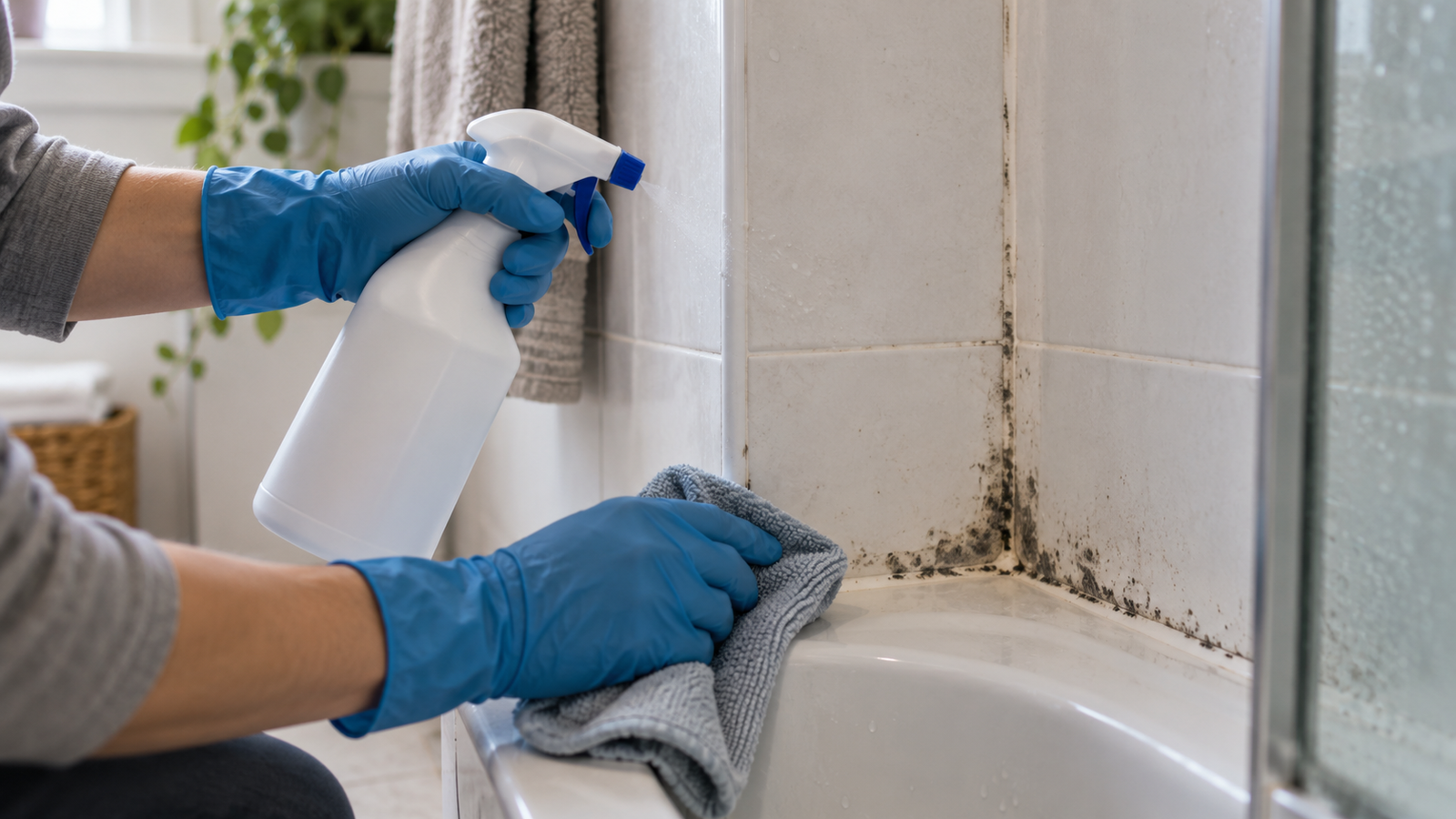
Mold is a common household concern, particularly in areas affected by moisture, humidity, condensation, leaks, or previous water damage.
Many homeowners reach for bleach when they notice dark staining or suspected mold because it is readily available and commonly associated with disinfecting.
But the question “Can bleach kill mold?” is more complicated than a simple yes or no.
Key point: Bleach may affect mold or staining on certain hard, non-porous surfaces, but cleaning the visible surface does not address the moisture condition that allowed mold to develop.
Does Bleach Kill Mold?
Bleach can disinfect some hard, non-porous surfaces and may reduce visible staining in certain situations.
However, many building materials found inside homes are porous or semi-porous. These may include drywall, wood, ceiling materials, carpeting, insulation, and other materials that can absorb moisture.
When mold growth involves porous materials, simply treating the visible surface may not address material that extends beneath the surface.
That is one reason a professional mold inspection focuses on the building conditions and moisture history rather than only the color or appearance of a surface.
Why Bleach May Have Limitations on Porous Materials
Porous materials behave differently from tile, glass, or other hard surfaces.
Moisture can move into drywall, wood, plaster, carpeting, and other absorbent materials. Mold growth may also occur within or behind those materials when suitable moisture conditions are present.
Bleach Does Not Correct the Moisture Problem
Mold requires moisture to grow.
If the underlying moisture condition remains unresolved, mold growth may return even after the visible surface has been cleaned.
Common moisture sources may include:
- Plumbing leaks
- Roof leaks
- Foundation seepage
- Basement moisture
- Elevated indoor humidity
- Condensation
- Bathroom moisture
- HVAC condensation
- Previous flooding
- Water intrusion around windows or exterior walls
Understanding why an area became damp is often more important than deciding which cleaning product to apply to the visible surface.
Can Bleach Fumes Affect Indoor Air Quality?
Bleach has a strong odor and can release irritating fumes during use.
Anyone using household cleaning products should follow the manufacturer's instructions and maintain appropriate ventilation.
Bleach should also never be mixed with other household cleaning chemicals.
If there are broader concerns about mold, chemical odors, particulates, ventilation, or other indoor environmental conditions, professional indoor air quality testing may provide additional information depending on the concern.
Can Bleach Damage Building Materials?
The effect of any cleaning product depends on the material being cleaned.
Wood, fabrics, carpeting, finishes, painted surfaces, drywall, and other materials may react differently to bleach or other chemicals.
Before applying a cleaning product, manufacturer instructions and material compatibility should be considered.
What About Mold on Bathroom Tile and Grout?
Bathrooms commonly experience elevated moisture from showers, baths, condensation, and limited ventilation.
Dark staining can develop around grout, caulking, windows, ceilings, exterior walls, and shower enclosures.
Hard tile itself is non-porous, but grout, caulking, drywall, and materials behind the finished surface may behave differently.
If staining repeatedly returns after cleaning, the recurring moisture condition is worth evaluating.
What About Mold on Drywall?
Drywall is a porous building material and can absorb moisture following leaks, flooding, condensation, or other water events.
Visible staining on the painted surface may not necessarily show the full extent of moisture or suspected fungal growth within the material.
Where drywall has remained wet or shows deterioration, inspection of the surrounding moisture conditions may be useful before deciding how the affected material should be handled.
What About Mold on Wood?
Wood framing, roof sheathing, subflooring, and other wood materials can support mold growth when sufficient moisture is present.
The significance of growth depends on the condition of the material, moisture source, extent of the affected area, and whether the moisture remains active.
Cleaning the visible surface without addressing the cause of elevated moisture may not prevent recurrence.
What About Mold Inside Walls?
Mold can sometimes develop inside wall cavities after plumbing leaks, exterior water intrusion, roof leaks, flooding, or long-term condensation.
Possible clues may include:
- Water staining
- Damaged drywall
- Peeling or bubbling paint
- Musty odors
- Elevated moisture readings
- A known history of leakage
Because concealed areas cannot always be visually evaluated without opening building materials, an inspection may help determine whether there is evidence that warrants additional investigation.
When Is Mold Testing Useful?
Mold testing is not automatically necessary in every situation.
Testing may be useful when:
- Visible mold is not present but concealed growth is suspected
- There is a persistent musty odor
- Previous water damage has occurred
- Airborne mold conditions are being evaluated
- Visible material needs laboratory identification
- Additional documentation is desired
- Post-remediation verification is being performed
Professional mold testing may include air sampling, tape lifts, swabs, or other surface sampling depending on the conditions and reason for testing.
Why Inspection Should Come Before Random Testing
A sample provides information about the material or air collected at a specific location and time.
An inspection provides context by evaluating the building itself.
That may include:
- Visible mold-like growth
- Moisture readings
- Water staining
- Previous leaks
- Humidity
- Condensation
- Foundation moisture
- Roof or attic conditions
- HVAC-related moisture
- Areas affected by previous water damage
Testing and inspection answer different questions. Laboratory testing can provide information about a collected sample, while inspection focuses on the conditions within the building that may be contributing to the concern.
How to Help Prevent Mold From Returning
Moisture control is one of the most important parts of preventing recurring mold growth.
Control Indoor Humidity
Elevated humidity can create condensation and damp conditions on cooler surfaces.
Dehumidification, ventilation, and appropriate HVAC operation may help control indoor moisture depending on the property.
Address Water Intrusion
Roof leaks, plumbing leaks, basement seepage, window leaks, flooding, and other water events should be addressed so building materials can dry appropriately.
Use Bathroom and Kitchen Ventilation
Exhaust ventilation can help remove moisture generated by showers, baths, cooking, and other household activities.
Pay Attention to Recurring Staining
If mold-like staining repeatedly returns in the same location, the underlying moisture or building condition may still be present.
Should You Test After Mold Remediation?
After remediation has been completed by another company, independent post-remediation verification may be performed to evaluate the remediated area.
Depending on the project, PRV may include visual inspection, moisture evaluation, and targeted air or surface sampling.
Because Elite Home & Mold Inspections does not perform mold remediation, our post-remediation inspections remain independent from the remediation work itself.
Can Bleach Kill Mold? The Bottom Line
Bleach may affect mold or staining on certain hard, non-porous surfaces, but it should not be viewed as a universal solution for every mold condition.
Porous materials, concealed moisture, recurring humidity, leaks, and water intrusion all require consideration when evaluating why mold is present.
If visible growth keeps returning, mold is suspected inside finished areas, or there is a history of water damage, a professional inspection can help document the conditions before deciding whether testing or other action is appropriate.
Mold Inspection & Testing in Massachusetts & New Hampshire
Elite Home & Mold Inspections provides independent mold inspections and mold testing for residential and commercial properties throughout Massachusetts and New Hampshire.
Our inspections may include visual evaluation of accessible areas, moisture readings, thermal imaging where applicable, and assessment of conditions associated with water intrusion or mold growth.
When sampling is performed, air or surface samples can be submitted to an independent laboratory for analysis.
We are family-owned and operated with over 30 years of combined experience in the construction and environmental industries.
We do not perform mold remediation.
Learn more about our professional mold inspection services or mold testing services.
Frequently Asked Questions
Can bleach kill mold on tile?
Bleach may affect mold or staining on some hard, non-porous surfaces such as tile. The surrounding grout, caulk, drywall, or other materials may behave differently.
Can bleach kill mold on drywall?
Drywall is porous and can absorb moisture. Surface cleaning does not necessarily address material beneath the visible surface or the moisture condition that caused the growth.
Can bleach kill mold on wood?
Wood is porous and may support mold growth when sufficient moisture is present. Evaluating the moisture source and condition of the material is important.
Why does mold come back after cleaning?
Recurring mold often indicates that moisture, humidity, condensation, leakage, or another building condition is still present.
When should I consider a professional mold inspection?
A professional inspection may be useful when mold repeatedly returns, there is a persistent musty odor, previous water damage has occurred, concealed mold is suspected, or the extent of the concern is unclear.
Do you provide mold testing in Massachusetts and New Hampshire?
Yes. Elite Home & Mold Inspections provides independent mold inspection and testing services throughout Massachusetts and New Hampshire.
References for Further Reading
Concerned About Mold That Keeps Coming Back?
Elite Home & Mold Inspections provides independent mold inspections, mold testing, moisture evaluation, and post-remediation verification throughout Massachusetts and New Hampshire.
Serving Massachusetts & New Hampshire