
How Humidity Affects Homes in Boston and How to Prevent Mold
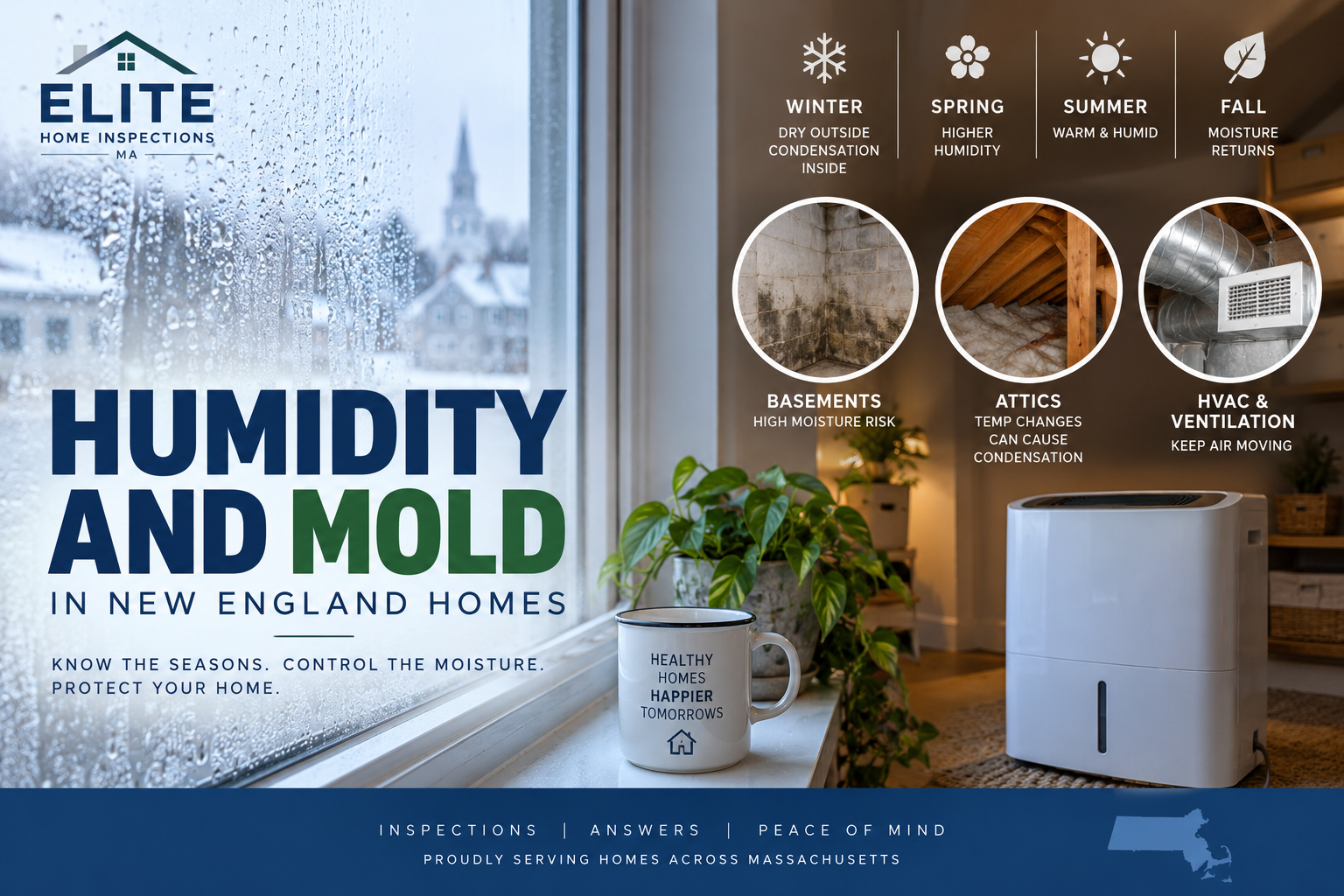
Humidity and mold are closely connected, but the relationship is more complicated than a single humidity number. New England homes experience major seasonal changes in temperature and moisture, which can contribute to basement dampness, window condensation, attic moisture, HVAC concerns, and conditions that may support mold growth.
Humidity is an important part of the indoor environment because mold requires moisture to grow.
In Massachusetts and New Hampshire, changing seasons can create very different moisture conditions throughout the year. Summer humidity can affect basements, crawlspaces, and air-conditioned spaces, while winter conditions can create condensation on cold windows, walls, attics, and other building surfaces.
The goal is not to focus on one humidity reading. It is to understand how humidity, temperature, ventilation, condensation, water intrusion, and the building itself interact.
Quick answer: Indoor relative humidity is generally best kept below 60%, with approximately 30% to 50% often considered a practical target range. However, humidity readings should always be considered together with condensation, moisture in building materials, ventilation, seasonal conditions, and any history of leaks or water intrusion.
How Does Humidity Contribute to Mold Growth?
Mold needs moisture, a suitable temperature, and an organic food source to grow.
Many common building materials can provide a suitable surface for mold when enough moisture is present. These may include drywall paper, wood, dust, cardboard, ceiling materials, insulation facings, and other materials found throughout a home.
Humidity becomes important because high moisture levels in the air can contribute to damp surfaces and condensation.
When those conditions persist, mold growth may become possible even without a dramatic plumbing leak or flood.
What Indoor Humidity Level Should Homeowners Aim For?
There is no single humidity number that guarantees a home will remain mold-free.
As a general guideline, indoor relative humidity should remain below 60%, with approximately 30% to 50% often considered a useful target range.
However, the appropriate level can change with outdoor temperatures and building conditions.
For example, a home may need lower indoor humidity during very cold winter weather to reduce condensation on windows or exterior surfaces.
Humidity is only part of the picture. A room measuring 45% relative humidity can still have moisture problems if water is entering through a roof, plumbing system, foundation, window, or another source. Likewise, a brief increase in humidity does not automatically mean mold is growing.
Why New England Homes Have Unique Humidity Challenges
New England homes experience large seasonal shifts in temperature and moisture.
That creates different building conditions throughout the year.
Summer Humidity and Basement Mold
Basements are one of the most common areas where homeowners notice high humidity during New England summers.
Warm outdoor air contains significant moisture. When that air enters a cooler basement, the relative humidity can rise considerably.
This can contribute to damp conditions on:
- Foundation walls
- Concrete floors
- Stored belongings
- Wood framing
- Finished basement walls
- Carpet and padding
- Furniture
- Cardboard boxes
Basement humidity can also combine with foundation seepage, groundwater intrusion, plumbing leaks, or exterior drainage conditions.
If a basement smells persistently musty or materials repeatedly feel damp, the issue may involve more than humidity alone.
Why Basements Can Feel Damp Even Without a Leak
Homeowners sometimes assume that moisture in a basement must come from an active leak.
That is not always the case.
Moisture can enter or accumulate through several mechanisms, including:
- High indoor relative humidity
- Condensation on cool surfaces
- Moisture movement through masonry
- Foundation seepage
- Groundwater
- Poor exterior drainage
- Plumbing leaks
- HVAC or condensate issues
A building-focused investigation helps distinguish between these possibilities.
Winter Humidity and Condensation
Winter creates a different moisture problem.
During cold weather, interior surfaces near the exterior of a home can become significantly colder than the indoor air.
When warm, moisture-containing indoor air contacts those cold surfaces, condensation can develop.
Common locations include:
- Windows
- Window frames and sills
- Exterior walls
- Closets against exterior walls
- Attic roof sheathing
- Metal ductwork
- Cold-water piping
Occasional condensation does not necessarily indicate a serious building problem.
Persistent condensation, however, can create moisture conditions that damage materials or support mold growth.
Why Windows Can Develop Mold or Mildew
Windows are common condensation points because glass and frames can become significantly colder than the surrounding indoor air.
Moisture can collect on the glass and move onto:
- Wood trim
- Painted surfaces
- Window sills
- Drywall
- Adjacent framing
Repeated wetting can eventually damage these materials.
The solution may involve humidity control, ventilation, insulation, window performance, air leakage, or another building condition depending on the property.
Humidity and Mold in Attics
Attic mold concerns are not always caused by roof leaks.
During colder months, warm humid air from the living space can sometimes enter an attic through air leakage pathways.
Potential pathways can include:
- Attic access openings
- Recessed lighting
- Plumbing penetrations
- Electrical penetrations
- Interior wall cavities
- Exhaust fan ducting
If warm humid air reaches cold roof sheathing, condensation or frost can develop.
This is why attic investigations often need to consider moisture, ventilation, insulation, air leakage, exhaust systems, and roof conditions together.
Bathroom and Kitchen Humidity
Bathrooms and kitchens can generate significant amounts of moisture during normal use.
Showers, baths, cooking, dishwashing, and other activities add water vapor to the indoor air.
Proper exhaust ventilation can help remove that moisture before it accumulates on walls, ceilings, windows, or other surfaces.
Recurring condensation or fungal growth in these areas may indicate that ventilation is inadequate, improperly used, improperly terminated, or that another moisture source is present.
Humidity, HVAC Systems and Ventilation
HVAC systems influence both temperature and moisture conditions inside a building.
During cooling season, properly operating air-conditioning equipment can remove moisture from indoor air as part of the cooling process.
However, moisture concerns can develop when:
- Equipment is not operating properly
- Condensate drainage is restricted
- Ductwork develops condensation
- Mechanical areas remain damp
- Ventilation is inadequate
- Airflow conditions are poor
Accessible HVAC components may be reviewed during a mold inspection when they are relevant to the concern.
Can a Dehumidifier Help Prevent Mold?
A dehumidifier can be useful when elevated indoor humidity is contributing to damp conditions.
They are particularly common in basements and other spaces that experience high summer humidity.
However, a dehumidifier does not correct every moisture problem.
If moisture is entering through a foundation, roof, plumbing system, window, or other building component, simply lowering the room humidity may not address the actual source.
Dehumidification is best viewed as one tool within a larger moisture-control strategy.
Why Condensation Matters
Condensation is often one of the clearest signs that indoor moisture and surface temperatures are interacting in a way that deserves attention.
If condensation repeatedly forms in the same area, moisture can affect surrounding building materials.
Examples include:
- Window condensation damaging wood or drywall
- Cold-water piping dripping onto nearby materials
- Duct condensation affecting ceilings or framing
- Attic condensation wetting roof sheathing
- Moisture collecting behind furniture on cold exterior walls
Persistent condensation should be evaluated in context rather than treated only as a surface-cleaning issue.
Humidity Is Different From a Water Leak
High humidity and direct water intrusion are different moisture sources.
A hygrometer measures moisture in the air.
A moisture meter can help evaluate moisture conditions in certain building materials.
Neither should be used alone to determine why a material is damp.
When a larger leak or water event needs to be evaluated, more detailed moisture mapping and water intrusion documentation may help document the affected areas.
Signs Humidity May Be Contributing to a Mold Problem
Elevated humidity by itself does not prove that mold is present.
However, certain conditions can indicate that a closer inspection is warranted.
When Should You Consider a Mold Inspection?
A professional inspection may be appropriate when humidity or condensation is occurring together with other signs of a moisture problem.
Consider an inspection when you notice:
- A persistent musty odor
- Visible suspected microbial growth
- Recurring condensation
- Basement or crawlspace dampness
- Attic staining or suspected growth
- Water staining on walls or ceilings
- Recurring high humidity despite dehumidification
- Previous flooding or water intrusion
- HVAC moisture or condensate concerns
- An unexplained moisture condition
A comprehensive mold inspection in Massachusetts and New Hampshire evaluates the property first and determines whether additional mold testing would provide useful information.
Independent inspection matters. Elite Home & Mold Inspections does not perform mold remediation. Our role is to investigate building and moisture conditions, perform testing when appropriate, document findings, and provide independent recommendations.
How Indoor Air Quality Testing Fits In
Humidity is one part of the indoor environment.
When a concern involves broader indoor conditions rather than only visible mold or moisture, an indoor air quality evaluation may also be appropriate.
Depending on the situation, an indoor air quality investigation may consider factors such as:
- Relative humidity
- Temperature
- Ventilation
- HVAC conditions
- Moisture
- Mold concerns
- Other indoor environmental conditions
The appropriate evaluation depends on the building and the specific concern.
Humidity and Mold Inspections in Massachusetts & New Hampshire
Elite Home & Mold Inspections is a family-owned and operated inspection and environmental testing company serving residential and commercial clients throughout Massachusetts and New Hampshire.
Our team has over 30 years of combined experience in the construction and environmental industries.
Professional credentials include MICRO Certified Mold Inspector (CMI), NORMI Certified Mold Inspector (CMI), and ACAC Council-certified Indoor Environmentalist (CIE), along with applicable home inspection and environmental credentials.
Our inspection-first approach evaluates the building, moisture conditions, and indoor environment before determining whether mold testing or additional environmental testing is appropriate.
Frequently Asked Questions About Humidity and Mold
What humidity level causes mold?
There is no single indoor humidity percentage at which mold automatically begins growing. As a general guideline, indoor relative humidity should remain below 60%, with approximately 30% to 50% often considered a useful target range. Actual mold growth depends on the moisture available at the surface or within the material, temperature, time, and other conditions.
Is 60% indoor humidity too high?
Persistent indoor relative humidity at or above 60% can increase the likelihood of condensation and damp conditions in some areas. A single short-term reading does not necessarily indicate a mold problem, but consistently elevated humidity deserves attention.
Why does my basement get humid in the summer?
Warm humid outdoor air can enter a cooler basement. As that air cools, its relative humidity increases. Basements can also be affected by foundation moisture, groundwater, drainage conditions, or other water sources.
Can high humidity cause mold without a leak?
Yes. A major water leak is not always necessary for mold growth. Persistent high humidity and condensation can provide sufficient moisture for mold to develop on susceptible materials.
Why do my windows get wet in the winter?
Window condensation occurs when warm indoor air containing moisture contacts a colder window surface. The indoor humidity level, outdoor temperature, window performance, airflow, and other building conditions can all affect condensation.
Will a dehumidifier prevent mold?
A dehumidifier can help control elevated indoor humidity, particularly in basements. However, it will not correct a roof leak, plumbing leak, foundation seepage, or other direct source of water intrusion.
Can attic mold be caused by indoor humidity?
Yes. Moist indoor air entering a cold attic can contribute to condensation on roof sheathing under certain conditions. Attic moisture concerns may also involve ventilation, insulation, air leakage, exhaust systems, or roof leaks.
Does Elite perform mold remediation?
No. Elite Home & Mold Inspections provides independent mold inspection and testing services and does not perform mold remediation.
Related Mold, Moisture & Indoor Air Quality Resources
For more information about investigating mold, moisture, and indoor environmental concerns, visit:
Concerned About Humidity, Condensation or Mold?
Elite Home & Mold Inspections provides independent mold, moisture, and indoor air quality evaluations throughout Massachusetts and New Hampshire. We evaluate the building and indoor environment to help determine what conditions are present and whether additional testing is appropriate.
Serving Massachusetts & New Hampshire