

How Mold Inspections Can Save You Money on Home Repairs
Professional mold inspections can help identify hidden moisture, water intrusion, and mold concerns early — before they contribute to more extensive damage and more expensive repairs.
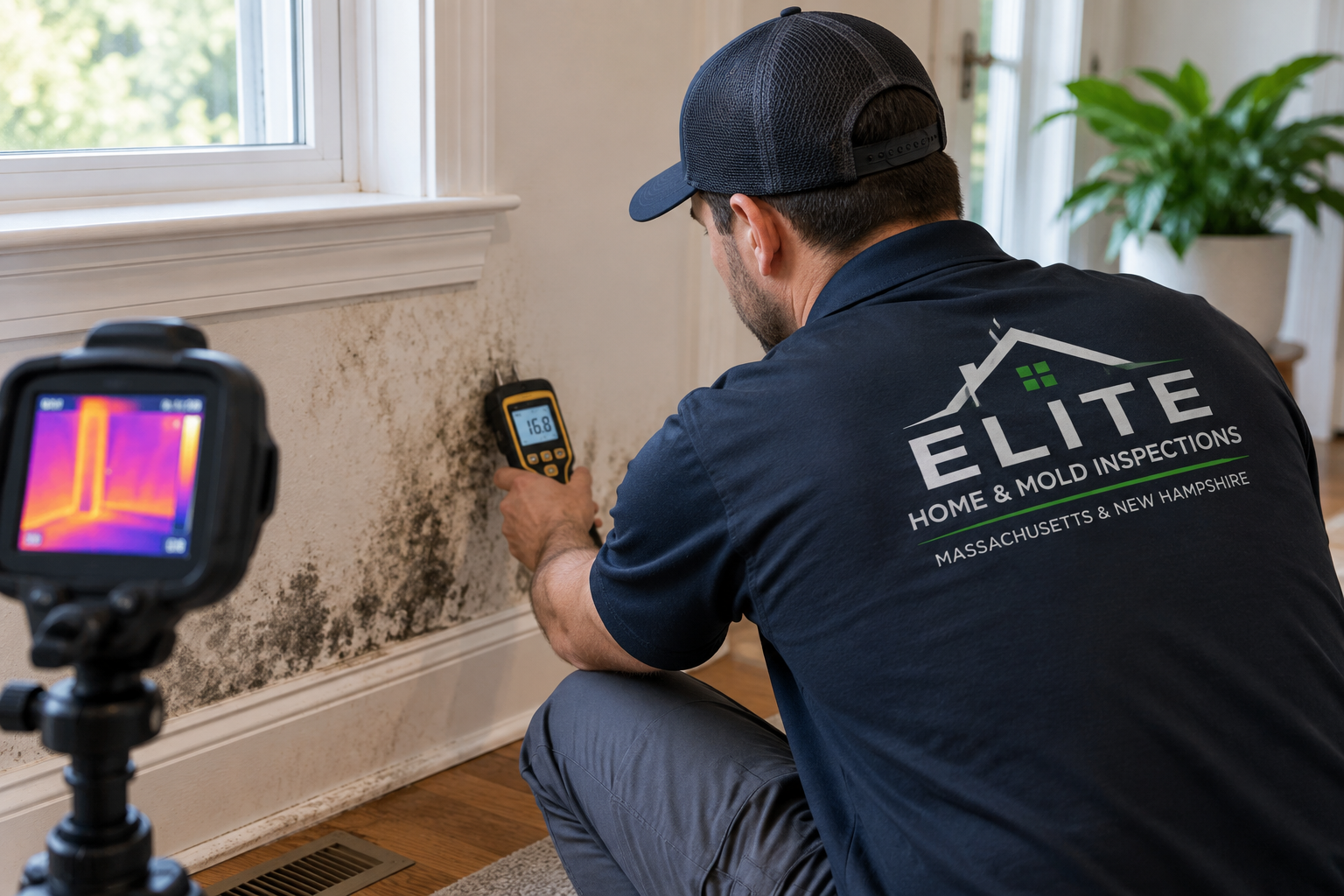
Mold problems are often connected to moisture problems, and the earlier those conditions are identified, the easier they may be to address. A professional mold inspection can help identify visible mold, hidden moisture, water intrusion, and building conditions that may contribute to mold growth.
For homeowners in Massachusetts and New Hampshire, finding these concerns early can help reduce the chance that a relatively small moisture issue develops into damage involving drywall, insulation, flooring, cabinetry, framing, or other building materials.
Why Mold Problems Can Become Expensive
Mold itself is often only part of the issue. The larger concern may be the moisture source that allowed mold growth to occur in the first place.
Water intrusion from plumbing leaks, roof leaks, foundation seepage, condensation, appliance leaks, or elevated indoor humidity can affect materials long before the damage becomes obvious.
If the moisture source continues, affected materials may deteriorate and the area requiring removal or replacement may become larger over time.
How a Mold Inspection Can Help Identify Problems Early
A professional mold inspection looks beyond simply checking whether visible mold is present. The goal is to evaluate the property for conditions that may indicate moisture intrusion or mold growth.
Depending on the property and conditions observed, an inspection may include:
- Visual inspection of accessible interior areas
- Moisture readings on building materials
- Thermal imaging where appropriate
- Evaluation of staining, water damage, or unusual discoloration
- Inspection of basements, attics, bathrooms, kitchens, and other moisture-prone areas
- Evaluation of conditions that may contribute to mold growth
- Mold sampling when warranted based on inspection findings
Identifying a moisture problem before extensive damage occurs can give a homeowner the opportunity to address the underlying condition sooner.
Hidden Moisture Can Cause Damage Before You See Mold
One of the reasons mold and moisture problems can become costly is that they are not always immediately visible.
Moisture can sometimes be present behind walls, beneath flooring, around windows, below plumbing fixtures, or in areas with limited access. By the time visible staining or deterioration appears, the affected area may already be larger than expected.
Important: Thermal imaging and moisture meters do not detect mold directly. They are tools that can help identify temperature patterns and elevated moisture that may warrant closer inspection or testing.
Common Moisture Problems That Can Lead to Mold
Plumbing Leaks
Slow plumbing leaks beneath sinks, behind fixtures, around toilets, or inside walls may remain unnoticed for extended periods. Even a relatively small leak can affect drywall, cabinetry, flooring, or insulation if it continues.
Roof and Attic Leaks
Roof leaks may affect attic sheathing, insulation, ceilings, and wall cavities. Some leaks only occur during certain weather conditions, which can make them difficult for homeowners to identify.
Basement and Foundation Moisture
Basements and lower-level areas can be affected by foundation seepage, groundwater, condensation, plumbing issues, or elevated humidity. These conditions may contribute to mold growth on stored contents and building materials.
Window and Exterior Water Intrusion
Water entering around windows, doors, flashing, siding, or other exterior penetrations can sometimes remain concealed behind finished materials.
High Indoor Humidity
Elevated indoor humidity can contribute to condensation and moisture accumulation, particularly in basements, bathrooms, attics, and poorly ventilated spaces.
How Early Detection May Reduce Repair Costs
Consider the difference between identifying moisture beneath a window shortly after a leak begins versus discovering the problem months later after drywall, insulation, trim, flooring, and framing have all been affected.
The sooner the moisture source is identified, the greater the opportunity to limit how much of the building becomes involved.
Early identification may help reduce the likelihood of:
- Larger sections of drywall requiring removal
- Damage to finished flooring
- Wet or deteriorated insulation
- Damage to cabinets and trim
- More extensive mold growth
- Longer repair timelines
- More complicated remediation projects
Mold Testing Can Help Clarify What Is Present
Mold testing is not automatically necessary during every inspection. Sampling is generally most useful when there is a specific question that laboratory analysis can help answer.
Depending on the conditions, testing may involve air samples, surface samples, or other sampling methods. These samples can help provide additional information regarding the types and concentrations of mold identified.
Learn more about our mold testing services in Massachusetts and New Hampshire.
When Should You Consider a Mold Inspection?
A mold inspection may be worth considering when you notice or experience:
- Visible mold or suspected mold growth
- Musty or unusual odors
- Water stains or discoloration
- Recent leaks or flooding
- Persistent basement moisture
- Condensation on walls, windows, or ceilings
- Concerns about a property before purchasing it
- Questions about whether previous water damage was fully addressed
Mold Inspections Before Buying a Home
Mold and moisture conditions are also important considerations during a real estate transaction. A general home inspection may identify visible water damage or suspected microbial growth, but a dedicated mold inspection can provide a more focused evaluation of moisture and mold-related conditions.
This can be particularly useful in properties with finished basements, older plumbing, previous roof leaks, past water damage, or limited visibility into concealed areas.
Post-Remediation Verification Matters Too
After mold remediation has been completed, a post-remediation verification inspection can help evaluate whether the work area appears ready for reconstruction.
PRV inspections may include visual evaluation, moisture measurements, and air or surface sampling when appropriate. This provides an independent assessment before walls, ceilings, or other finishes are restored.
Independent Mold Inspections in Massachusetts & New Hampshire
Elite Home & Mold Inspections provides professional mold inspections, mold testing, moisture evaluation, and indoor air quality testing throughout Massachusetts and New Hampshire.
We use visual inspection, moisture meters, thermal imaging where applicable, and laboratory testing when warranted to help evaluate mold and moisture concerns.
We do not perform remediation. Our role is to provide an independent inspection and objective findings so homeowners can better understand the conditions present in their property.
Frequently Asked Questions
Can a mold inspection find hidden mold?
A mold inspection may identify conditions that suggest hidden moisture or mold, but no inspection can see through every wall or finished surface. Moisture meters, thermal imaging, visual observations, and sampling may provide additional information when concealed conditions are suspected.
Does thermal imaging detect mold?
No. Thermal imaging does not detect mold directly. It shows surface temperature differences that may indicate conditions such as moisture or missing insulation, which can then be evaluated more closely.
Is mold testing always necessary?
No. Testing is generally determined after the property has been inspected. Sampling may be useful when laboratory analysis can help answer a specific question about the conditions present.
Can mold damage get worse over time?
If the underlying moisture condition continues, mold growth and damage to building materials may become more extensive. Addressing moisture conditions early can help limit continued deterioration.
How much does a mold inspection cost?
Pricing depends on the scope of the inspection and whether laboratory samples are collected. Contact Elite Home & Mold Inspections for current pricing and scheduling information.
Concerned About Mold or Hidden Moisture?
Elite Home & Mold Inspections provides independent mold inspections, moisture evaluation, and mold testing throughout Massachusetts and New Hampshire.
Schedule a Mold Inspection