
Mold Inspection Checklist: What Homeowners Should Look For
A mold inspection checklist can help homeowners recognize moisture problems, water intrusion, ventilation concerns, indoor air quality issues, and other conditions that may warrant professional environmental testing before they become more extensive.
When homeowners think about inspecting a property, they often focus on roofs, electrical systems, plumbing, and structural concerns.
But moisture, mold, ventilation, indoor air quality, and environmental conditions can be just as important when evaluating how a home is performing.
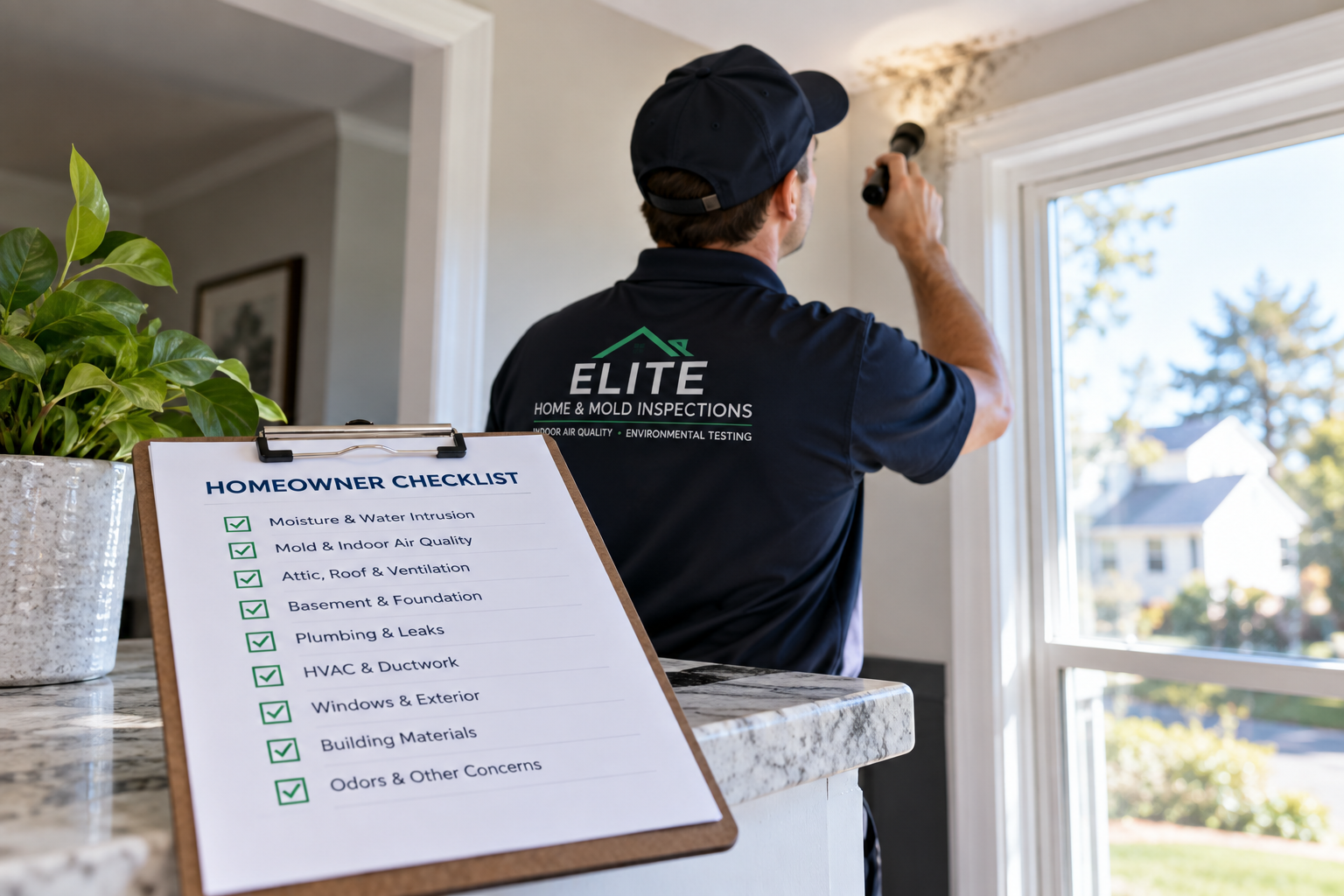
This mold inspection checklist focuses on the areas and conditions homeowners should pay attention to when there is concern about mold, water intrusion, indoor air quality, or other environmental issues.
Key point: A mold inspection is not just about looking for visible growth. Moisture conditions, water history, ventilation, humidity, building materials, and concealed areas all provide important context.
Mold Inspection Checklist for Homeowners
A useful mold inspection checklist should consider both visible conditions and the building factors that can contribute to mold growth.
1. Start With Moisture and Water Intrusion
Mold growth is closely associated with moisture, so the first step in any mold inspection checklist is looking for evidence of water.
Common signs include:
- Water stains on ceilings or walls
- Soft or damaged drywall
- Peeling or bubbling paint
- Warped flooring
- Swollen baseboards or trim
- Foundation seepage
- Basement dampness
- Roof leaks
- Plumbing leaks
- Window or exterior water intrusion
Where documentation of moisture conditions is needed, professional moisture mapping and water intrusion documentation can help identify affected areas and record moisture readings.
2. Check Basements and Foundation Areas
Basements are common locations for moisture-related concerns because they are partially or completely below grade.
Homeowners should look for:
- Musty odors
- Damp foundation walls
- Water staining
- Efflorescence
- Visible mold-like growth
- Condensation
- Elevated humidity
- Previous flooding
- Plumbing leaks
Finished basements deserve particular attention because moisture can sometimes remain concealed behind drywall, flooring, insulation, or finished wall systems.
3. Inspect Attics for Moisture and Condensation
Attic mold can develop under different conditions than mold found in basements or bathrooms.
Potential contributors include:
- Roof leakage
- Condensation
- Air leakage from the living space
- Ventilation conditions
- Bathroom exhaust terminating in the attic
- Ice dams
Look for dark staining, damp roof sheathing, damaged insulation, water marks, or visible fungal growth.
4. Check Bathrooms and Other High-Moisture Areas
Bathrooms routinely experience elevated moisture from showers, baths, plumbing fixtures, and condensation.
Pay attention to:
- Ceilings
- Exterior walls
- Grout and caulking
- Windows
- Vanities
- Areas around plumbing fixtures
- Exhaust ventilation
Recurring mold-like staining may indicate that the moisture condition is continuing rather than being fully addressed by surface cleaning.
5. Look Under Sinks and Around Plumbing
Slow leaks under sinks or behind fixtures can affect cabinetry, drywall, flooring, and wall cavities.
Check:
- Kitchen sinks
- Bathroom vanities
- Dishwashers
- Refrigerator water lines
- Washing machine connections
- Toilet supply lines
- Water heaters
Even small leaks can create concealed moisture if they continue over time.
6. Inspect Windows and Exterior Walls
Windows and exterior wall assemblies can develop moisture concerns from condensation or water intrusion.
Warning signs may include:
- Recurring condensation
- Water staining
- Damaged trim
- Soft drywall
- Bubbling paint
- Dark staining around window openings
Cold-weather condensation can be especially relevant in Massachusetts and New Hampshire homes.
7. Pay Attention to Musty or Unusual Odors
A persistent musty odor can be one reason to consider a professional mold inspection even when visible growth is not obvious.
Odors may be more noticeable in:
- Basements
- Closets
- Bathrooms
- Attics
- Wall cavities
- Areas affected by previous leaks
A musty odor does not by itself identify the source, which is why inspection and moisture evaluation can be useful.
8. Evaluate HVAC and Ventilation Conditions
HVAC systems can become part of a mold or indoor air quality investigation when moisture, condensation, dust, or suspected growth is observed.
Areas to consider include:
- Cooling coils
- Drain pans
- Condensate lines
- Registers and returns
- Accessible ductwork
- Mechanical rooms
Where ductwork itself is a concern, inspection-based HVAC and air duct cleaning may be appropriate depending on the conditions found.
9. Consider Indoor Air Quality Concerns
Mold is only one part of the indoor environment.
Homeowners may also have concerns about:
- VOCs
- Formaldehyde
- Radon
- Particles or fibers
- Persistent chemical odors
- Ventilation
- Recent renovations
- New flooring or cabinetry
Professional indoor air quality testing can help determine which type of sampling or environmental testing may be appropriate for the concern.
10. Watch for VOC and Formaldehyde Sources
Renovations and new materials can introduce chemical emissions into the indoor environment.
Potential sources include:
- New flooring
- Cabinetry
- Furniture
- Paint
- Adhesives
- Composite wood products
- Spray foam
- Coatings and finishes
When persistent chemical odors or off-gassing concerns remain, professional VOC and formaldehyde testing can provide laboratory-based information about the indoor air.
11. Consider Suspect Asbestos-Containing Materials Before Renovation
Older homes may contain building materials that warrant asbestos evaluation before renovation, demolition, or disturbance.
Examples may include:
- Older flooring
- Pipe insulation
- Plaster and joint compound
- Textured finishes
- Ceiling materials
- Other suspect building materials
Licensed asbestos testing and surveys can help identify suspect materials before planned work.
12. Know When Mold Testing May Be Useful
Mold testing is not automatically necessary in every situation.
Sampling may be useful when:
- Visible growth requires laboratory identification
- Hidden mold is suspected
- There is a persistent musty odor
- Previous water damage has occurred
- Airborne fungal spores are being evaluated
- Additional documentation is desired
- Post-remediation verification is being performed
Professional mold testing may include air samples, tape lifts, swabs, or other targeted sampling methods depending on the inspection findings.
What a Professional Mold Inspection Includes
A professional mold inspection should evaluate the building conditions surrounding the concern rather than simply collecting random samples.
Depending on the property and scope, the inspection may include:
- Visual inspection of accessible areas
- Moisture readings
- Thermal imaging where applicable
- Water intrusion documentation
- Attic and basement observations
- HVAC and ventilation observations
- Review of previous leaks or water damage
- Targeted sampling when appropriate
Inspection and testing answer different questions. Laboratory samples provide information about the material or air collected, while inspection provides context about moisture, water intrusion, building conditions, and potential sources.
Specialized Environmental Inspections for Homeowners
Some homes involve more than one environmental concern.
For example, a property may have:
- Basement moisture
- Suspected mold
- Recent renovation odors
- Asbestos concerns
- Radon concerns
- Indoor air quality questions
Our broader environmental testing services help homeowners select the appropriate inspection or testing based on the specific concern.
Post-Remediation Verification
When mold remediation has been completed by another company, independent post-remediation verification may be performed to evaluate the remediated area.
Depending on the project, PRV may include:
- Visual inspection
- Moisture evaluation
- Air sampling
- Surface sampling
Elite Home & Mold Inspections does not perform mold remediation, allowing our inspection and testing services to remain independent from the remediation work.
Mold Inspection Checklist for Massachusetts & New Hampshire Homes
Homes throughout Massachusetts and New Hampshire experience seasonal conditions that can contribute to mold and moisture concerns.
Common regional factors include:
- Seasonal humidity
- Cold-weather condensation
- Basement moisture
- Ice dams
- Roof leaks
- Older plumbing
- Foundation seepage
- Storm-related water intrusion
Older housing stock can also include building materials or systems that warrant specialized environmental evaluation.
Professional Mold & Environmental Testing in Massachusetts & New Hampshire
Elite Home & Mold Inspections provides independent mold inspections, mold testing, indoor air quality testing, VOC and formaldehyde testing, asbestos testing and surveys, moisture mapping, radon testing, and other environmental services throughout Massachusetts and New Hampshire.
We are family-owned and operated with over 30 years of combined experience in the construction and environmental industries.
We do not perform mold remediation or asbestos abatement.
Frequently Asked Questions
What should be on a mold inspection checklist?
A mold inspection checklist should include moisture, water intrusion, visible mold-like growth, musty odors, basement and attic conditions, plumbing leaks, ventilation, humidity, HVAC conditions, and areas affected by previous water damage.
Should I test for mold if I do not see any?
Testing may be useful when hidden mold is suspected, there is a persistent musty odor, previous water damage has occurred, or airborne mold conditions are being evaluated.
What areas of a home are most likely to have mold?
Common areas include basements, bathrooms, attics, kitchens, areas around windows, beneath sinks, near plumbing fixtures, and locations affected by leaks or flooding.
What is the difference between mold inspection and mold testing?
Mold inspection evaluates the building conditions, moisture, water intrusion, and visible concerns. Mold testing provides laboratory information about selected air or surface samples.
Can indoor air quality testing include more than mold?
Yes. Depending on the concern, indoor air quality testing may include VOCs, formaldehyde, radon, particulates, mold sampling, moisture evaluation, and other targeted environmental testing.
Do you provide environmental testing in Massachusetts and New Hampshire?
Yes. Elite Home & Mold Inspections provides independent mold and environmental testing throughout Massachusetts and New Hampshire.
Concerned About Mold, Moisture or Indoor Air Quality?
Elite Home & Mold Inspections provides independent mold inspections, mold testing, indoor air quality testing, VOC and formaldehyde testing, moisture mapping, asbestos testing, and other environmental services throughout Massachusetts and New Hampshire.
Serving Massachusetts & New Hampshire