
What to Expect During a Comprehensive Mold Inspection
A comprehensive mold inspection evaluates more than visible mold. It looks at the building, moisture conditions, accessible HVAC components, areas of past or current water intrusion, and other conditions that may help explain a mold or indoor air quality concern.
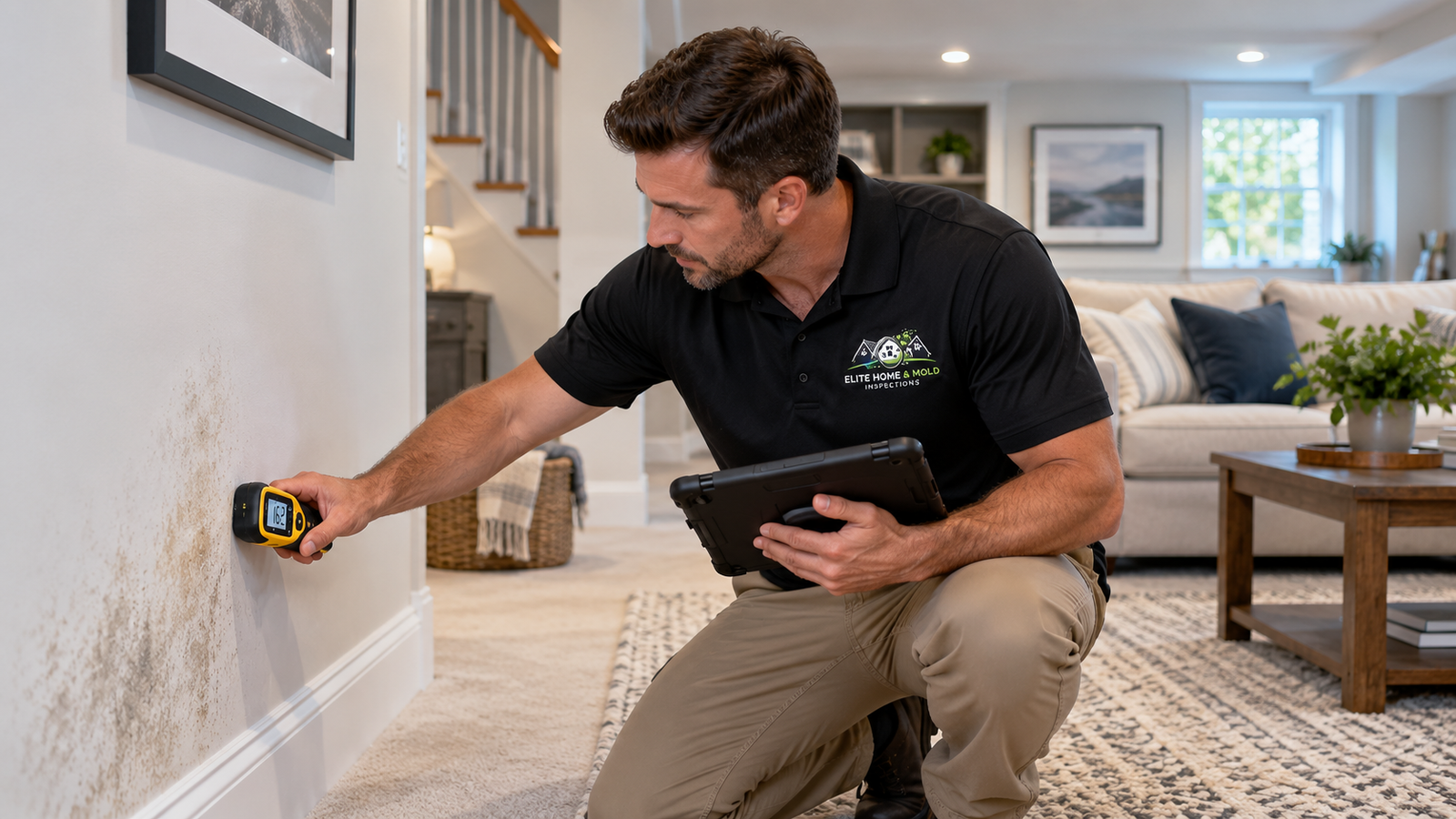
A comprehensive mold inspection begins with the building itself. The goal is to understand what conditions are present, whether moisture or water intrusion may be contributing to the concern, and whether mold testing would provide useful additional information.
At Elite Home & Mold Inspections, our approach combines building knowledge, moisture investigation, environmental measurements, and targeted testing when appropriate.
We provide independent mold inspections throughout Massachusetts and New Hampshire for homeowners, buyers, property owners, property managers, and commercial clients.
Quick answer: A comprehensive mold inspection typically includes a discussion of the property's history and concerns, a visual assessment of accessible areas, moisture measurements, thermal imaging when appropriate, environmental measurements, evaluation of relevant accessible HVAC components, and mold sampling when testing would help answer a specific question.
Why a Mold Inspection Is More Than Looking for Visible Mold
Visible mold can be important, but it does not always explain the entire condition.
A mold concern may also involve past water damage, elevated moisture, condensation, plumbing leaks, roof leaks, foundation moisture, basement or crawlspace conditions, or other building-related factors.
Some conditions may also be concealed within wall, ceiling, floor, or mechanical assemblies that are not visible during normal occupancy.
That is why a comprehensive mold inspection should focus on the building and moisture conditions rather than simply searching for discoloration or immediately collecting air samples.
What Happens During a Comprehensive Mold Inspection?
1. Discussion of the Property and Areas of Concern
The inspection usually begins with a conversation about what has been happening in the property.
This provides useful context and helps the inspector understand whether there have been past or current conditions that may relate to the concern.
Information that may be relevant includes:
- Past or current plumbing leaks
- Roof or flashing leaks
- Basement or crawlspace moisture
- Flooding or groundwater intrusion
- Musty or unusual odors
- Visible suspected microbial growth
- Previous mold remediation
- Areas of previous water damage
- Recurring condensation or elevated humidity
The inspection is not necessarily limited to the room where the original concern was noticed. Conditions elsewhere in the building may provide important context.
2. Visual Assessment of Accessible Areas
The inspector evaluates accessible portions of the property for conditions that may be associated with moisture intrusion or microbial growth.
Depending on the property, accessible areas may include:
- Basements
- Crawlspaces
- Attics
- Bathrooms
- Kitchens
- Bedrooms and living areas
- Areas around windows and exterior walls
- Mechanical rooms
- Accessible HVAC components
- Areas with previous or suspected water damage
Observations may include staining, deterioration, visible suspect microbial growth, condensation, damaged finishes, moisture-related conditions, and other findings relevant to the inspection.
3. Moisture Measurements
Moisture is one of the most important parts of a mold investigation because mold growth is closely connected to moisture conditions.
Moisture meters may be used in appropriate locations to compare materials and identify areas where elevated moisture may be present.
These measurements can help direct additional investigation and provide context for visible or suspected conditions.
Moisture readings should not be interpreted in isolation. They are most useful when considered together with visual observations, building materials, environmental conditions, and the history of the property.
For larger leaks, water events, or areas where more detailed documentation is needed, moisture mapping and water intrusion documentation may also be appropriate.
4. Thermal Imaging
Infrared thermal imaging can help identify temperature differences across building surfaces.
Those temperature differences may help an inspector locate areas that deserve closer investigation, particularly when evaluating possible moisture-related conditions.
A thermal camera does not detect mold. It also does not directly confirm moisture.
Thermal imaging is a screening tool that becomes more useful when combined with moisture measurements, visual observations, and an understanding of the building.
5. Environmental and Humidity Measurements
Relative humidity and other environmental conditions may also be evaluated when relevant to the inspection.
These measurements can provide additional context when investigating condensation, elevated humidity, basement conditions, HVAC-related concerns, or recurring moisture issues.
In Massachusetts and New Hampshire, seasonal humidity changes, cold-weather condensation, basements, crawlspaces, roof conditions, groundwater, plumbing failures, and previous water intrusion can all influence indoor moisture conditions.
6. Evaluation of Accessible HVAC Components
Accessible HVAC components may be reviewed when they are relevant to the mold or indoor environmental concern.
The inspector may look for conditions such as:
- Visible moisture or condensation
- Staining
- Suspect microbial growth
- Condensate drainage issues
- Debris or contamination concerns
- Conditions that may warrant additional evaluation or cleaning
An HVAC system should not automatically be assumed to be the source of a mold concern. Its condition is considered together with the rest of the building investigation.
7. Mold Testing When It Is Appropriate
Mold sampling is not automatically necessary during every mold inspection.
The decision to collect samples should be based on the conditions found during the inspection and the question the testing is intended to answer.
When appropriate, testing may include:
Samples are submitted for professional laboratory analysis, and the results are interpreted together with the observations and conditions documented during the inspection.
Learn more about our mold testing services in Massachusetts and New Hampshire.
Is Air Sampling Required During Every Mold Inspection?
No.
Air sampling can provide useful information in some situations, but it should not replace a building and moisture investigation.
There are also situations where visible conditions, moisture findings, or other evidence may already provide enough information to determine appropriate next steps.
An inspection-first approach helps determine whether testing is likely to add useful information before samples are collected.
What Can Mold Laboratory Results Tell You?
Laboratory analysis can identify mold detected in a submitted sample and provide information about the types and quantities found according to the sampling method used.
Those results still require context.
Mold sample results should be considered together with:
- Visual observations
- Moisture measurements
- Building history
- Environmental conditions
- HVAC observations
- The location where each sample was collected
A mold laboratory report by itself does not automatically identify the source of moisture or establish the full extent of a concealed condition.
What Happens After the Mold Inspection?
After the inspection and any laboratory testing are complete, the findings are evaluated together.
The objective is to document relevant conditions and provide recommendations based on what was actually observed, measured, and tested.
If remediation is warranted and sufficient information is available, a remediation protocol may also be developed based on the inspection findings.
Independent inspection matters. Elite Home & Mold Inspections does not perform mold remediation. Our role is to inspect, test when appropriate, document conditions, and provide independent findings and recommendations without having a financial interest in remediation work.
How Should You Prepare for a Mold Inspection?
Most homeowners do not need to make major changes before the inspection.
The most helpful step is making relevant areas reasonably accessible.
Before the inspector arrives, it may also help to:
- Identify areas where odors or visible concerns have been noticed
- Provide information about known leaks or water events
- Gather information about previous remediation if applicable
- Provide access to basements, attics, crawlspaces, and mechanical areas
- Avoid covering, cleaning, or disturbing a suspected area solely for the inspection
Furniture, stored belongings, finished building materials, and other personal property are not normally moved or dismantled during a standard visual mold inspection.
When Should You Consider a Mold Inspection?
A mold inspection is generally most useful when there is a specific condition or concern that needs to be investigated.
Common reasons to schedule an inspection include:
- Persistent musty or unusual odors
- Visible suspected microbial growth
- Previous or current water intrusion
- Plumbing or roof leaks
- Basement or crawlspace moisture
- Recurring condensation
- Elevated indoor humidity
- Questions about hidden mold
- Conditions discovered during a real-estate transaction
- Questions following mold remediation
Independent Mold Inspections in Massachusetts & New Hampshire
Elite Home & Mold Inspections is a family-owned and operated inspection and environmental testing company serving residential and commercial clients throughout Massachusetts and New Hampshire.
Our team has over 30 years of combined experience in the construction and environmental industries.
Professional credentials include MICRO Certified Mold Inspector (CMI), NORMI Certified Mold Inspector (CMI), and ACAC Council-certified Indoor Environmentalist (CIE), along with applicable home inspection and environmental credentials.
This combination of construction knowledge and environmental inspection experience allows us to evaluate mold concerns in the context of the building rather than simply collecting samples in isolation.
Frequently Asked Questions
What does a comprehensive mold inspection include?
A comprehensive mold inspection generally includes a discussion of the property history and current concerns, visual assessment of accessible areas, moisture measurements, thermal imaging when appropriate, environmental measurements, evaluation of relevant accessible HVAC components, and mold sampling when testing would provide useful information.
Does every mold inspection require mold testing?
No. Sampling may be recommended when it can help answer a specific question, document a condition, investigate a concern that is not visually clear, or provide additional information about the indoor environment.
Can a mold inspection find mold behind walls?
A standard mold inspection is primarily visual and non-invasive. Moisture meters, thermal imaging, odors, staining, building history, and other observations may identify areas that warrant closer investigation, but a non-invasive inspection cannot guarantee that every concealed condition will be identified.
Does thermal imaging detect mold?
No. Thermal imaging identifies temperature differences across surfaces. It does not directly detect mold or moisture. It is used together with moisture measurements and other inspection findings.
Should mold be tested if it is already visible?
Not always. Visible suspected mold does not automatically mean laboratory testing is necessary. The inspection can help determine whether sampling would provide useful additional information.
Does Elite Home & Mold Inspections perform mold remediation?
No. Elite provides independent mold inspection and testing services and does not perform mold remediation. Keeping inspection and remediation separate helps maintain an independent evaluation of the property.
Where does Elite perform mold inspections?
Elite Home & Mold Inspections provides mold inspection and environmental testing services for residential and commercial properties throughout Massachusetts and New Hampshire.
Related Mold & Moisture Resources
For more information about specific parts of the inspection and testing process, visit:
Concerned About Mold, Moisture or Indoor Air Quality?
Elite Home & Mold Inspections provides independent mold inspections and testing for residential and commercial properties throughout Massachusetts and New Hampshire. We evaluate the building first and recommend sampling when it is appropriate for the conditions found.
Serving Massachusetts & New Hampshire