

Common Asbestos-Containing Materials in Massachusetts Homes & Buildings
Common asbestos-containing materials can be found in many older Massachusetts homes and buildings. Flooring, insulation, plaster, textured ceilings, roofing products, siding, and mechanical-system materials are among the building products that may require evaluation before renovation, demolition, removal, or other disturbance.
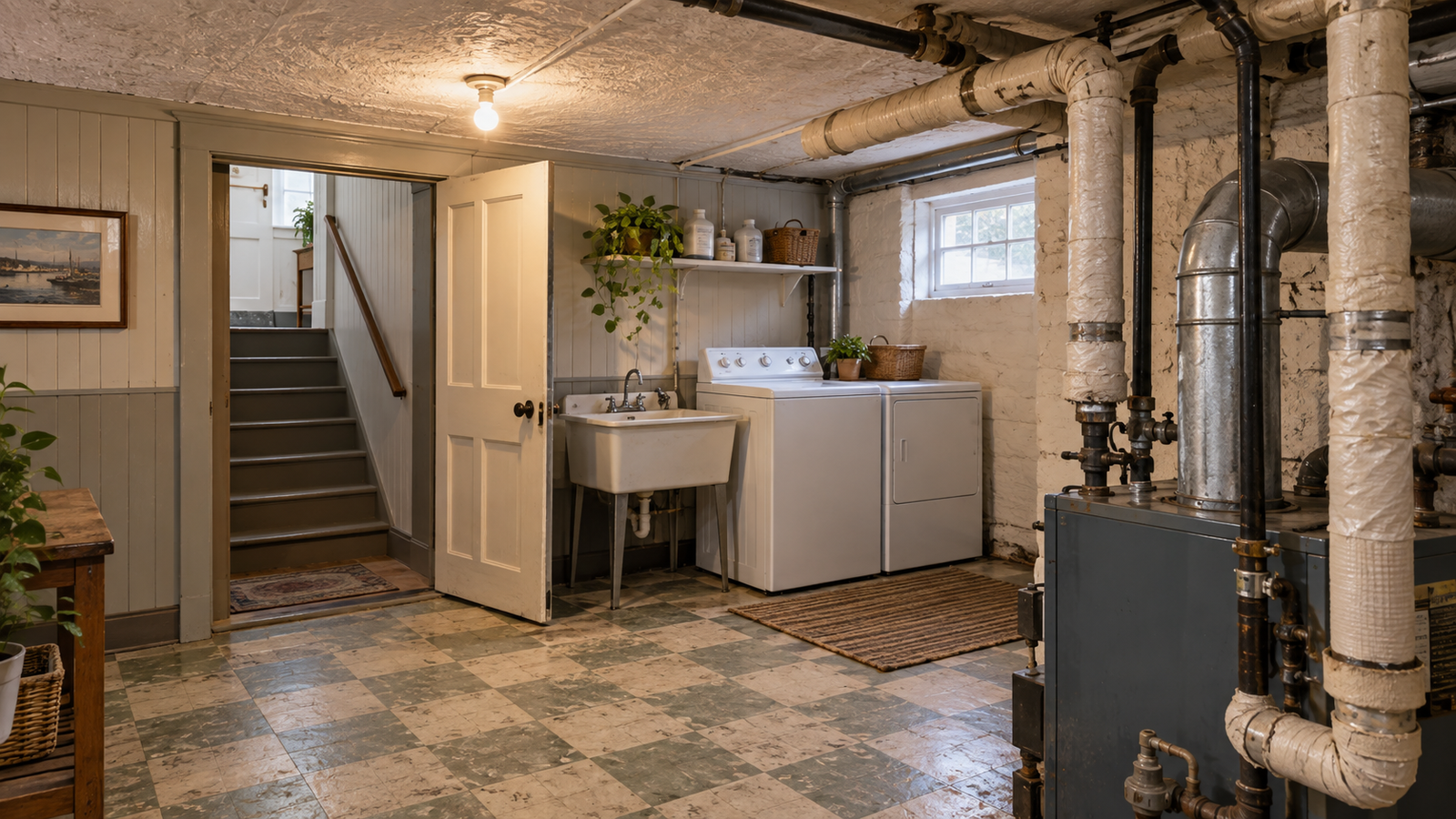
Asbestos was used in many building products because of properties such as heat resistance, durability, and insulation value. As a result, older residential, multifamily, and commercial properties may contain materials that warrant asbestos testing before they are disturbed.
The presence of an older material does not automatically mean it contains asbestos. Many asbestos-containing materials also cannot be reliably identified by appearance alone.
When confirmation is needed, suspect materials can be evaluated and sampled by a licensed asbestos inspector and submitted for laboratory analysis.
Important: The age, color, texture, or appearance of a material alone cannot confirm whether asbestos is present. Laboratory analysis of a properly collected material sample is used to determine whether asbestos was detected in the specific material tested.
What Are Common Asbestos-Containing Materials?
Common asbestos-containing materials include a wide range of older construction products used in floors, walls, ceilings, roofing systems, mechanical equipment, insulation, and exterior building components.
Some materials are more commonly associated with asbestos than others, but the specific product, manufacturer, installation date, and composition can vary considerably.
Examples of suspect building materials that may warrant evaluation include:
Older Floor Tile and Adhesive
Flooring is one of the more recognizable categories of suspect materials in older buildings.
Older resilient floor tiles, sheet flooring, backing materials, and adhesives may contain asbestos. Dark-colored adhesive, often referred to as black mastic, is another material that may warrant testing.
Flooring projects can disturb multiple layers at once. For example, removal may involve the visible flooring, adhesive beneath the flooring, and an older underlayment or backing material.
Because these materials can look similar to non-asbestos products, laboratory testing is needed when confirmation is required.
Vinyl Sheet Flooring and Backing
Older sheet flooring may contain more than one suspect component.
The visible flooring layer, felt-like backing, and adhesive beneath the flooring may be separate materials. Depending on the project, one or more of these layers may need to be evaluated before removal.
This is one reason an asbestos inspection considers individual material layers rather than treating an entire floor assembly as one product.
Pipe Insulation and Heating-System Materials
Older Massachusetts properties often contain heating systems, piping, and mechanical areas that have been modified over many decades.
Suspect materials may include:
- Wrapped pipe insulation
- Insulation around pipe elbows and fittings
- Boiler insulation
- Gaskets and seals
- Thermal insulation around mechanical equipment
- Older duct insulation or related materials
These materials may be encountered in basements, boiler rooms, utility spaces, mechanical rooms, crawlspaces, and other service areas.
Plaster, Joint Compound and Wall Materials
Older wall and ceiling systems can contain multiple layers and materials.
Plaster, joint compound, skim coats, patching compounds, wallboard systems, and some textured finishes may warrant asbestos sampling when they will be disturbed during renovation or demolition.
A wall that looks like one continuous surface may actually contain several distinct materials installed at different times.
Project scope matters. Targeted asbestos testing may be appropriate when only one specific material needs confirmation. Larger renovation or demolition projects may require a broader asbestos survey of the materials within the planned work area.
Popcorn and Textured Ceilings
Textured ceiling finishes were commonly installed in older homes and buildings.
Some popcorn-style coatings, decorative textures, spray-applied finishes, and related ceiling materials may contain asbestos.
If the material will be scraped, sanded, removed, cut, or otherwise disturbed, testing may be appropriate before the work begins.
Vermiculite Insulation
Vermiculite is a lightweight insulation material that may be found in older attics and wall cavities.
Its appearance is often different from fiberglass or cellulose insulation, but visual identification alone should not be used to determine asbestos content.
If vermiculite or another suspect insulation material will be disturbed during renovation, electrical work, air sealing, attic improvements, or removal, the material should be considered in the project planning process.
Roofing Materials
Older roofing systems may contain multiple suspect materials.
Examples can include roofing felts, mastics, flashing compounds, coatings, shingles, and other roofing components.
Roof replacements and structural renovations can expose older layers that were previously concealed beneath newer roofing systems.
Exterior Siding and Building Materials
Certain older siding products and exterior building materials may also contain asbestos.
Exterior renovation work can involve siding, panels, roofing, flashing materials, sealants, or other materials that may warrant evaluation before cutting, drilling, removal, or demolition.
Can You Tell if a Material Contains Asbestos by Looking at It?
No. Visual appearance alone generally cannot confirm whether a building material contains asbestos.
Two materials may look nearly identical while having completely different compositions. A material's age can help determine whether asbestos should be considered, but age alone does not confirm asbestos content either.
If a definitive answer is needed, a representative material sample can be collected and submitted for professional laboratory analysis.
What Is the Difference Between Targeted Asbestos Testing and an Asbestos Survey?
Targeted asbestos testing generally focuses on one or more specific suspect materials.
For example, a homeowner replacing a kitchen floor may only need certain flooring layers evaluated if the project is limited to that area.
An asbestos survey is broader. It evaluates suspect materials throughout a defined property or project area and is commonly associated with renovation, demolition, commercial projects, property management, or larger construction scopes.
Learn more about asbestos surveys before renovation in Massachusetts.
When Should Common Asbestos-Containing Materials Be Tested?
Testing is often considered when suspect materials will be disturbed or when confirmation is needed for project planning.
Common situations include:
- Before renovation or remodeling
- Before demolition
- Before removing older flooring or adhesive
- Before disturbing pipe or boiler insulation
- Before removing textured ceiling materials
- During commercial tenant improvements
- During property management or capital improvement projects
- When a specific suspect material needs laboratory confirmation
The appropriate scope depends on the property, materials involved, and the work being planned.
How Asbestos Material Sampling Works
A licensed asbestos inspector evaluates the suspect material and determines the sampling approach based on the material and project scope.
Representative bulk material samples are collected and submitted for professional laboratory analysis.
The laboratory report identifies whether asbestos was detected in the material samples analyzed.
Standard asbestos laboratory results are typically available within 2–4 business days. Expedited laboratory options may be available when faster results are needed.
For a more detailed explanation, read our guide to how asbestos testing works in Massachusetts.
What Happens if Asbestos Is Found?
If laboratory analysis confirms asbestos in a sampled material, the laboratory result documents the finding for that specific material.
What happens next depends on the material, its condition, the project scope, and whether the material will be disturbed.
Elite provides asbestos inspection, sampling, survey documentation, laboratory testing coordination, and reporting. We do not perform asbestos abatement.
This keeps our inspection and testing role separate from companies performing asbestos removal or abatement work.
Asbestos Testing in Massachusetts & New Hampshire
Elite Home & Mold Inspections provides licensed asbestos testing, material sampling, and asbestos surveys throughout Massachusetts and New Hampshire, including Boston, Greater Boston, the North Shore, MetroWest, communities north of Boston, and Southern New Hampshire.
Services are available for residential, multifamily, commercial, renovation, demolition, property-management, and construction projects.
Learn more about our asbestos testing and survey services in Massachusetts and New Hampshire.
You can also explore our broader environmental testing services for mold, indoor air quality, VOCs and formaldehyde, moisture concerns, and other building-related environmental testing needs.
Frequently Asked Questions
What are the most common asbestos-containing materials?
Common suspect materials include older floor tile and mastic, sheet flooring and backing, pipe insulation, boiler insulation and gaskets, plaster, joint compound, textured ceilings, vermiculite insulation, roofing materials, siding, and other older building products.
Can I tell if floor tile contains asbestos by looking at it?
No. Appearance, tile size, color, or age alone cannot confirm asbestos content. Laboratory analysis is used when confirmation of a specific material is needed.
Can plaster or joint compound contain asbestos?
Some older plaster systems, joint compounds, skim coats, patching materials, and related wall or ceiling products may contain asbestos. Materials that will be disturbed may warrant evaluation and sampling.
Does all old pipe insulation contain asbestos?
No. Older pipe insulation can be a suspect material, but not every pipe-insulation product contains asbestos. Laboratory analysis is needed to determine whether asbestos is present in a particular sampled material.
Do I need an asbestos survey or just one material tested?
It depends on the project. Targeted testing may be appropriate when a specific suspect material needs confirmation. A broader asbestos survey may be appropriate when multiple materials or a larger renovation or demolition area will be disturbed.
Planning Work Around Older Building Materials?
Elite provides licensed asbestos inspections, targeted material sampling, and asbestos surveys for residential and commercial properties throughout Massachusetts and New Hampshire. We do not perform asbestos abatement.
Serving Massachusetts & New Hampshire